
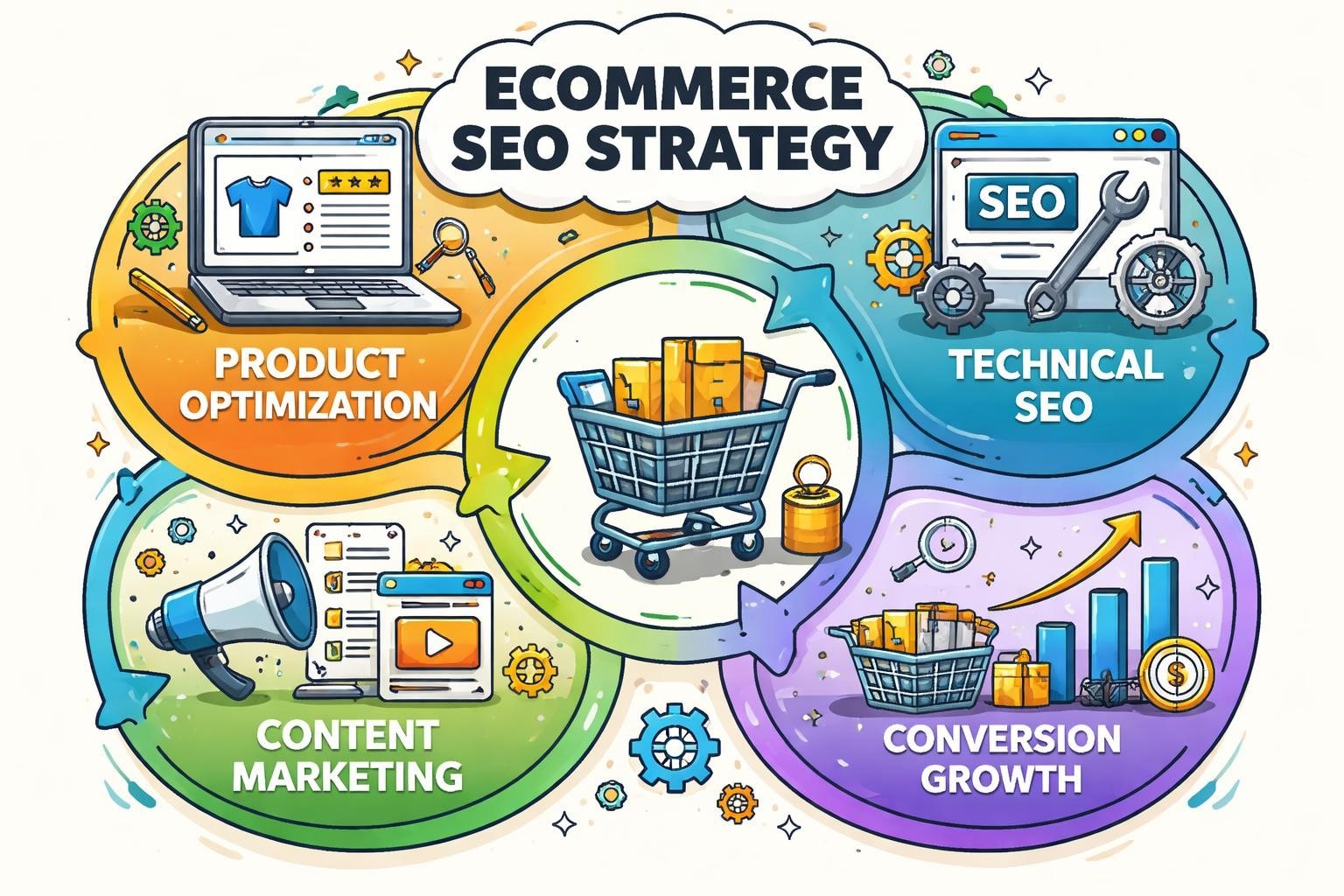
Running an online store in 2026 means competing in an incredibly crowded marketplace where visibility determines survival. Your products might be exceptional, your prices competitive, and your customer service outstanding, but none of that matters if potential customers can't find you. That's where professional SEO services for ecommerce websites become not just helpful, but essential. Unlike traditional websites, ecommerce platforms face unique challenges including duplicate content from product variations, complex site architecture, and constantly changing inventory. The right SEO strategy transforms your online store from an invisible digital storefront into a thriving hub that attracts qualified shoppers ready to buy.
Understanding the Unique SEO Landscape for Online Stores
Ecommerce websites operate differently than service-based or informational sites. Every product page represents a potential entry point for customers, which means you're optimizing not just a handful of pages, but potentially thousands.
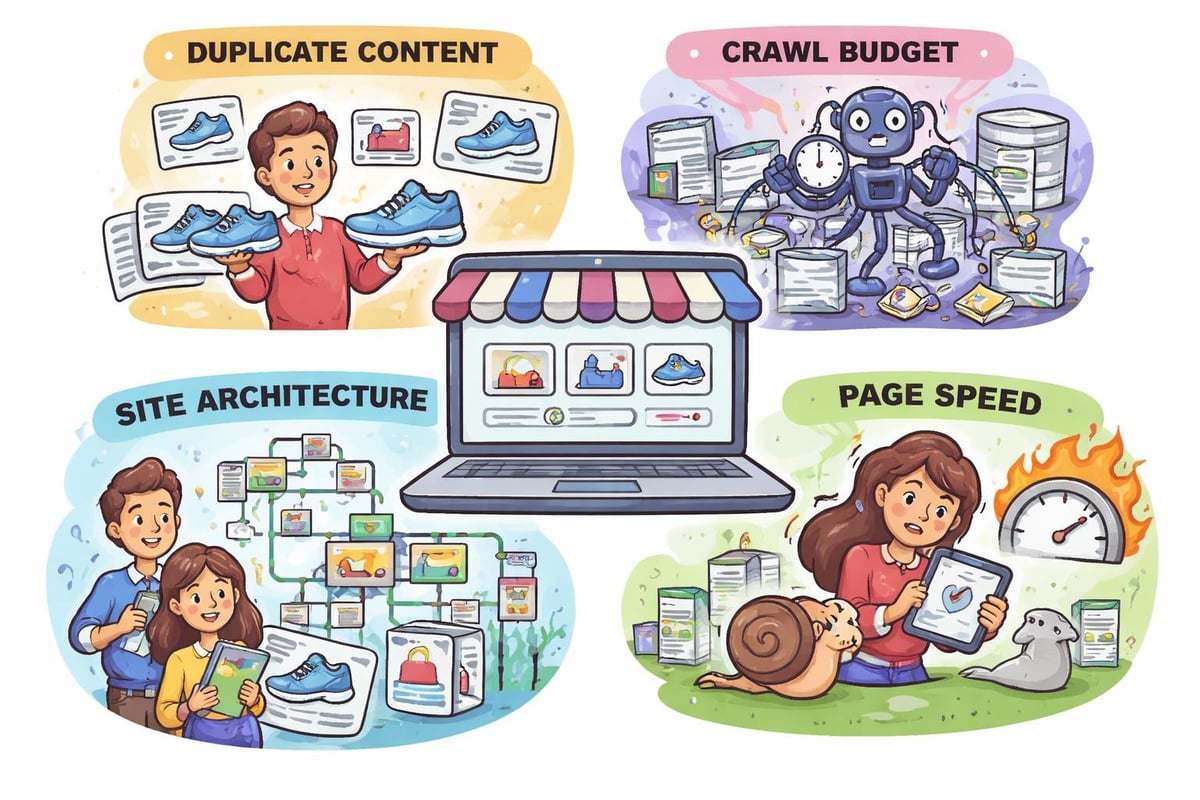
The complexity goes beyond sheer volume. Product pages often share similar descriptions, especially when you're selling variations of the same item. Categories might overlap, creating confusion for search engines about which page should rank for specific queries. Seasonal inventory changes mean pages appear and disappear, potentially creating broken links and lost SEO equity.
Key challenges ecommerce sites face include:
- Managing crawl budget efficiently across thousands of product pages
- Preventing thin or duplicate content from diluting rankings
- Maintaining fast page speeds despite image-heavy product galleries
- Creating unique, compelling content at scale
- Building authority in competitive product niches
These complexities require specialized knowledge. Generic SEO approaches simply won't cut it when you're dealing with the intricate ecosystem of an online store. Professional ecommerce SEO consulting addresses these specific challenges with targeted strategies.
Technical Foundation That Powers Ecommerce Success
Your site's technical infrastructure either supports or sabotages your SEO efforts. For ecommerce websites, technical SEO forms the bedrock upon which all other strategies build.
Site Architecture and Navigation
Think of your site structure like a well-organized retail store. Customers should find what they need within three clicks from your homepage. Search engines follow the same principle, using your navigation to understand relationships between products and categories.
A logical hierarchy might look like this:
- Homepage
- Main category pages (Men's Clothing, Women's Clothing, Accessories)
- Subcategory pages (Men's Shirts, Men's Pants, Men's Shoes)
- Individual product pages
This structure helps search engines understand context and distributes link equity efficiently throughout your site. According to Google’s ecommerce documentation, clear site structure significantly impacts how search engines crawl and index your pages.
Mobile Optimization Is Non-Negotiable
Over 60% of ecommerce traffic comes from mobile devices in 2026. If your site doesn't perform flawlessly on smartphones, you're essentially closing your doors to the majority of potential customers.
Mobile optimization encompasses several critical elements:
- Responsive design that adapts to any screen size
- Touch-friendly buttons and navigation elements
- Fast loading times on cellular connections
- Simplified checkout processes for smaller screens
- Readable text without zooming
A comprehensive SEO audit identifies mobile usability issues before they cost you rankings and revenue.
Page Speed Optimization
Every second counts. Research shows that a one-second delay in page load time can reduce conversions by 7%. For ecommerce sites with high-resolution product images and interactive elements, speed optimization requires careful balancing.
| Speed Optimization Technique | Impact | Implementation Difficulty |
|---|---|---|
| Image compression | High | Low |
| Browser caching | High | Medium |
| Code minification | Medium | Low |
| Content delivery network | High | Medium |
| Lazy loading for images | High | Medium |
Implementing these techniques while maintaining visual quality requires technical expertise that professional SEO services for ecommerce websites provide.
Product Page Optimization That Converts Visitors
Product pages serve double duty as both sales tools and SEO assets. Each page needs to rank well in search results while simultaneously convincing visitors to add items to their cart.
Crafting Unique Product Descriptions
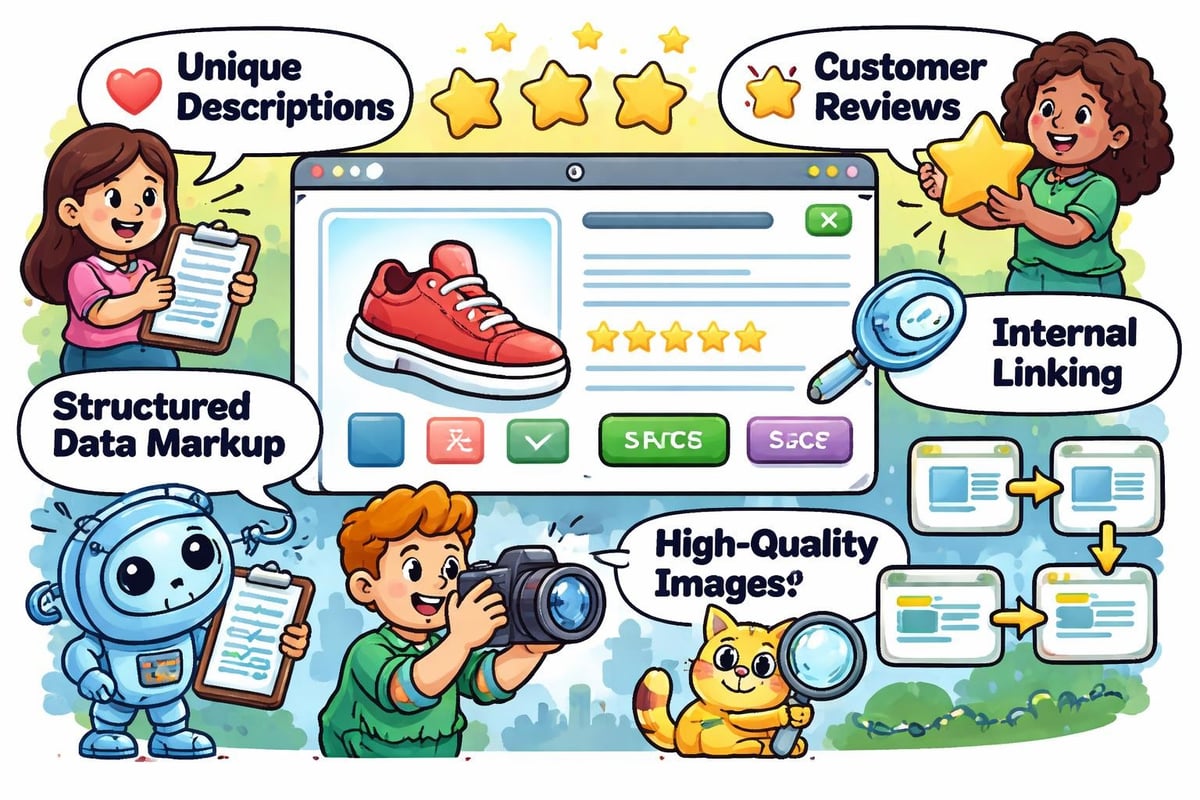
Manufacturer descriptions might save time, but they're deadly for SEO. When hundreds of retailers use identical product descriptions, search engines struggle to determine which page deserves the top ranking.
Creating unique descriptions for every product might seem daunting, but it's essential. Focus on these elements:
- Benefits over features: Explain how the product solves problems
- Target keywords naturally: Include search terms customers actually use
- Tell stories: Create emotional connections through descriptive language
- Answer questions: Address common customer concerns preemptively
For stores with extensive catalogs, prioritize your best-selling items and highest-margin products first. Even unique content on 20% of your products can significantly impact overall performance.
Leveraging User-Generated Content
Customer reviews aren't just social proof; they're SEO goldmines. Reviews naturally incorporate long-tail keywords that customers use when searching, and they continuously add fresh, unique content to your pages.
Encourage reviews through post-purchase emails, loyalty program incentives, and simplified review submission processes. Display reviews prominently on product pages, and respond to both positive and negative feedback to demonstrate engagement.
Category Pages That Rank and Guide
Category pages often represent your biggest SEO opportunity. They target broader, higher-volume keywords and serve as crucial navigation hubs for both users and search engines.
Many ecommerce sites treat category pages as simple product listings, but that's a missed opportunity. Best practices for ecommerce SEO emphasize creating rich category page content.
Creating Compelling Category Content
Beyond product grids, effective category pages include:
- Introductory paragraphs explaining the category (200-300 words minimum)
- Buying guides helping customers make informed decisions
- Featured products highlighting bestsellers or seasonal items
- Comparison tables for products within the category
- FAQ sections addressing common questions
This content serves multiple purposes: it provides keyword targeting opportunities, helps pages rank for informational queries, and builds topical authority within your niche.
Strategic Internal Linking
Category pages sit at the heart of your site's link architecture. They should link to relevant subcategories and featured products while receiving links from your homepage and blog content.
Create a linking strategy that:
- Passes authority from high-traffic pages to conversion-focused pages
- Uses descriptive anchor text that includes target keywords
- Maintains a natural linking pattern that doesn't feel forced
- Updates regularly as you add new products or categories
Content Marketing Beyond Product Pages
SEO services for ecommerce websites extend far beyond optimizing product listings. Content marketing establishes authority, captures traffic at different stages of the buying journey, and creates opportunities for backlinks.
Blog Content That Drives Qualified Traffic
A strategic blog targets informational queries that people search before they're ready to buy. For example, an outdoor gear retailer might create content about "how to choose hiking boots for beginners" or "essential camping gear for families."
Effective ecommerce blog strategies include:
- How-to guides that showcase your products in action
- Comparison articles that position your offerings favorably
- Industry trends and news that establish thought leadership
- Gift guides for seasonal shopping opportunities
- Behind-the-scenes content that builds brand connection
Each blog post should naturally link to relevant product and category pages, guiding readers toward conversion points when they're ready to purchase. Professional SEO content writing services ensure this content aligns with both user intent and search engine requirements.
Video Content and Visual Search
Visual search continues growing in 2026, with platforms like Google Lens and Pinterest Visual Search driving significant ecommerce traffic. Optimizing images and videos requires specific technical considerations.
For images, implement these practices:
- Descriptive, keyword-rich file names (not "IMG_1234.jpg")
- Comprehensive alt text that describes images for accessibility and SEO
- Appropriate file formats (WebP for photographs, SVG for logos)
- Image sitemaps helping search engines discover visual content
Video content, whether product demonstrations or style guides, keeps visitors engaged longer and reduces bounce rates, both positive ranking signals.
Technical Schema Markup for Enhanced Visibility
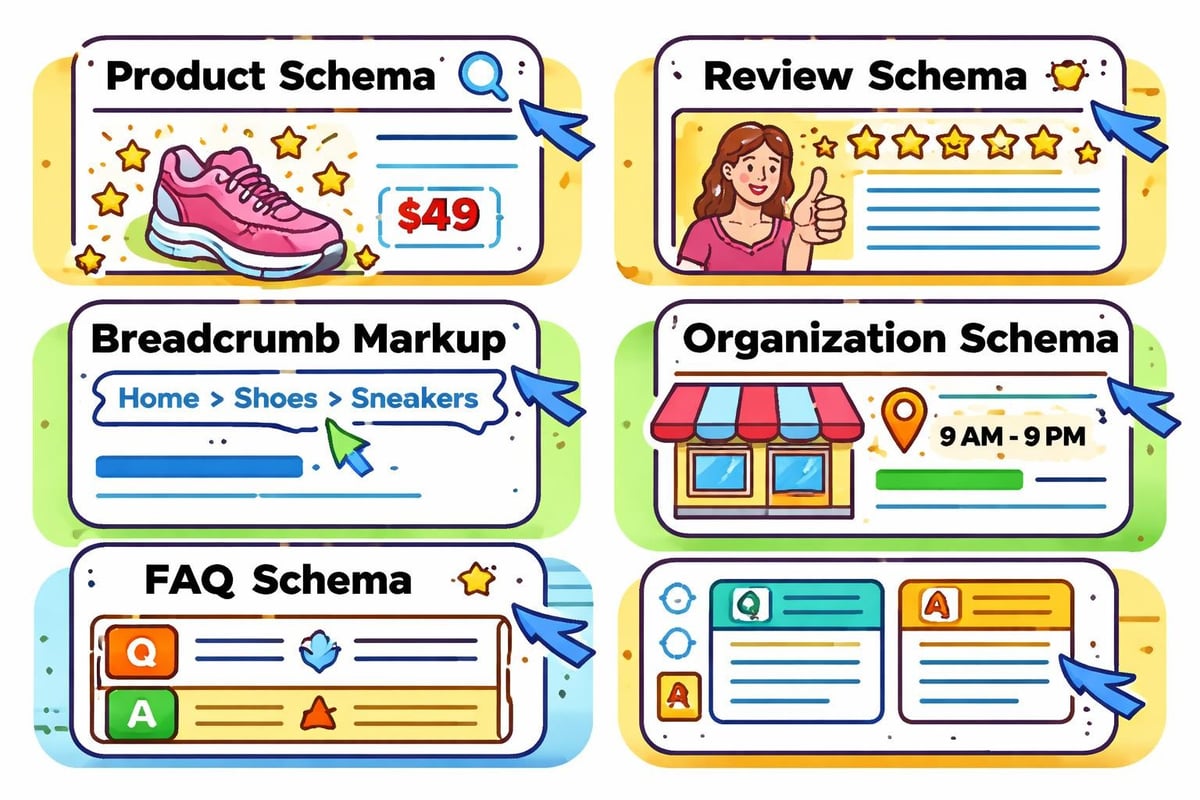
Structured data helps search engines understand your content's context and can earn rich snippets in search results. For ecommerce, schema markup can display product prices, availability, ratings, and more directly in search listings.
Essential Schema Types for Ecommerce
| Schema Type | What It Displays | SEO Impact |
|---|---|---|
| Product | Price, availability, images | High – Shows key info in search |
| Review | Star ratings, review count | High – Builds trust and CTR |
| Breadcrumb | Navigation path | Medium – Improves understanding |
| Organization | Business details | Medium – Builds brand presence |
| FAQ | Question/answer pairs | High – Captures featured snippets |
Implementing schema correctly requires technical knowledge. Resources like Blue Badger’s ecommerce SEO guide provide detailed implementation strategies, but professional implementation ensures accuracy and completeness.
Link Building Strategies for Ecommerce Authority
Building high-quality backlinks remains one of the most powerful ranking factors. For ecommerce sites, link building requires creative approaches that go beyond traditional tactics.
Product Reviews and Influencer Partnerships
Sending products to relevant bloggers and influencers can generate valuable backlinks and brand exposure. Focus on micro-influencers in your niche who maintain engaged audiences and produce quality content.
Create a structured outreach program:
- Identify influencers whose audiences match your target customers
- Personalize outreach explaining why your product fits their content
- Offer free products without requiring positive reviews
- Follow up professionally without being pushy
- Build long-term relationships rather than one-off transactions
Creating Link-Worthy Resources
Comprehensive guides, industry research, and unique data attract natural backlinks. An outdoor gear retailer might publish an annual "State of Outdoor Recreation" report with original survey data. A beauty supply store could create an interactive skin care routine builder.
These resources require investment but pay dividends through sustained link acquisition and brand authority. They also provide content that your sales team can share with potential wholesale partners and your marketing team can promote across channels.
Leveraging Manufacturer Relationships
If you're an authorized retailer for specific brands, request links from manufacturer websites. Many brands maintain dealer locator pages or featured retailer sections. These links carry strong relevance signals and can drive qualified traffic.
Local SEO for Ecommerce With Physical Locations
Retailers combining online stores with physical locations benefit from local SEO strategies. This hybrid approach captures both "near me" searches and broader product queries.
Optimize your Google Business Profile with accurate information, regular posts, and response to reviews. Ensure your NAP (name, address, phone number) remains consistent across all online directories and your website.
Create location-specific landing pages if you operate multiple stores. These pages should include unique content about each location, local promotions, and store-specific details rather than duplicated templates. For businesses in the Philadelphia area, working with an SEO agency in Bucks County provides local market expertise combined with ecommerce specialization.
Measuring Success and Ongoing Optimization
SEO services for ecommerce websites deliver measurable results, but you need to track the right metrics. Revenue and ROI matter more than vanity metrics like total traffic.
Key Performance Indicators to Monitor
- Organic revenue: Sales directly attributed to organic search traffic
- Conversion rate by traffic source: How organic visitors convert compared to other channels
- Average order value from organic traffic: Whether SEO attracts high-value customers
- Product page rankings: Visibility for key product-focused keywords
- Category page rankings: Performance on broader commercial terms
Tools like Google Analytics 4, Google Search Console, and ecommerce platform analytics provide these insights. Regular reporting helps identify trends, opportunities, and issues requiring attention.
Continuous Testing and Refinement
Successful ecommerce SEO requires ongoing optimization based on performance data. Test different approaches to product descriptions, category page layouts, and internal linking structures. Use A/B testing for elements that impact conversion rates while monitoring SEO impact.
Conversion rate optimization works hand-in-hand with SEO, ensuring the traffic you attract actually generates sales. This integrated approach maximizes return on your SEO investment.
Common Pitfalls That Undermine Ecommerce SEO
Even with the best intentions, ecommerce sites often make critical mistakes that limit their search visibility. Understanding these pitfalls helps you avoid costly errors.
Duplicate Content Issues
Product variations create duplicate content challenges. Multiple URLs for size or color variations confuse search engines about which page to rank. Implement canonical tags pointing to a primary version, or use parameter handling in Google Search Console.
Out-of-stock products present another dilemma. Rather than deleting these pages and losing accumulated SEO equity, consider these alternatives:
- Keep pages active with "out of stock" messaging and email notification signup
- Suggest similar in-stock products on the page
- Update content to explain when restocking is expected
- Use 301 redirects only for permanently discontinued products
Neglecting the Sales Funnel
Most ecommerce SEO focuses on bottom-funnel keywords like "buy [product]" or "[product] for sale." While these drive conversions, they represent a small fraction of total search volume.
Top-funnel content capturing informational searches builds awareness and authority. Middle-funnel content comparing options helps customers make decisions. A comprehensive strategy addresses all funnel stages, moving people from awareness to consideration to purchase.
Ignoring Technical Debt
As ecommerce platforms grow, technical issues accumulate: broken links from deleted products, slow page speeds from unoptimized images, crawl errors from improper redirects. These problems compound over time, gradually eroding your search visibility.
Regular technical audits identify and resolve these issues before they significantly impact rankings. An ecommerce SEO audit provides comprehensive analysis of technical health, content quality, and competitive positioning.
Seasonal SEO Planning for Ecommerce
Ecommerce follows seasonal patterns, with traffic and sales fluctuating based on holidays, weather, and shopping trends. Effective SEO anticipates these patterns rather than reacting to them.
Start optimizing for major shopping seasons at least three months in advance. This timeline allows search engines to crawl, index, and rank new content before peak demand hits. Create gift guides, holiday shopping pages, and seasonal category content early.
Seasonal optimization checklist:
- Update title tags and meta descriptions with seasonal keywords
- Create holiday-specific landing pages
- Optimize shipping and return policy information for gift buyers
- Develop content addressing seasonal pain points
- Build backlinks to seasonal content before peak season
After each season, analyze performance to inform next year's strategy. Which seasonal pages performed best? What content gaps existed? Which keywords drove the most valuable traffic?
The Investment in Professional SEO Services
Quality SEO services for ecommerce websites require significant expertise across multiple disciplines: technical SEO, content strategy, link building, analytics, and conversion optimization. Building this expertise in-house demands substantial time and resources.
Professional agencies bring established processes, proven strategies, and efficiency from managing multiple client campaigns. They stay current with algorithm updates, industry trends, and emerging opportunities without requiring your direct oversight.
When evaluating SEO partners, consider:
- Track record in ecommerce: General SEO differs substantially from ecommerce-specific optimization
- Transparent reporting: Clear metrics tied to business outcomes, not just traffic increases
- Customized strategies: Cookie-cutter approaches fail in competitive ecommerce spaces
- Technical capabilities: Ability to implement complex technical optimizations
- Communication style: Regular updates and accessibility for questions
The right partner functions as an extension of your team, understanding your business goals and aligning SEO strategy with broader marketing and revenue objectives.
Integration With Overall Marketing Strategy
SEO shouldn't exist in isolation. The most successful ecommerce businesses integrate search optimization with paid advertising, email marketing, social media, and content marketing.
SEO research reveals valuable customer insights applicable across channels. Keyword data shows what questions customers ask and what language they use. This information improves paid search campaigns, email subject lines, and social media content.
Conversely, other marketing channels support SEO. Social media builds brand awareness that increases branded search volume. Email marketing drives traffic that signals page quality to search engines. Paid advertising tests messaging and offers that inform organic content strategy.
This integrated approach, sometimes called "search engine marketing," maximizes visibility across all touchpoints where customers search and shop. According to Red Dog Group’s ecommerce SEO best practices, this holistic perspective drives the most sustainable growth.
Growing an ecommerce business in today's competitive landscape requires more than great products and competitive pricing. You need visibility where your customers search, optimized experiences that convert visitors to buyers, and sustainable strategies that drive long-term growth. With over two decades of experience and 500+ successful campaigns, Shawn the SEO Geek delivers customized, results-driven SEO services for ecommerce websites that increase rankings, traffic, and revenue. Let's discuss how a tailored SEO strategy can transform your online store's performance and drive measurable business growth.