
Ecommerce is more competitive than ever, and staying ahead means having a strong ecommerce seo audit strategy in place. With algorithms and digital trends changing rapidly, retailers who ignore their SEO risk falling behind and losing valuable customers.
In this guide, we break down the nine essential ecommerce seo audit steps every online store needs to boost visibility, drive more traffic, and increase sales. You'll discover practical tips spanning technical, on-page, content, UX, and off-page SEO, all backed by the latest best practices.
Ready to future-proof your store? Let’s dive into the steps that will help you succeed in 2026.
Understanding the Importance of Ecommerce SEO Audits
Staying visible in the crowded ecommerce space is a moving target. As search engines and ecommerce platforms evolve, so must our strategies. Regular ecommerce seo audit practices are the anchor that keeps our stores discoverable and competitive.
Why Regular SEO Audits Matter
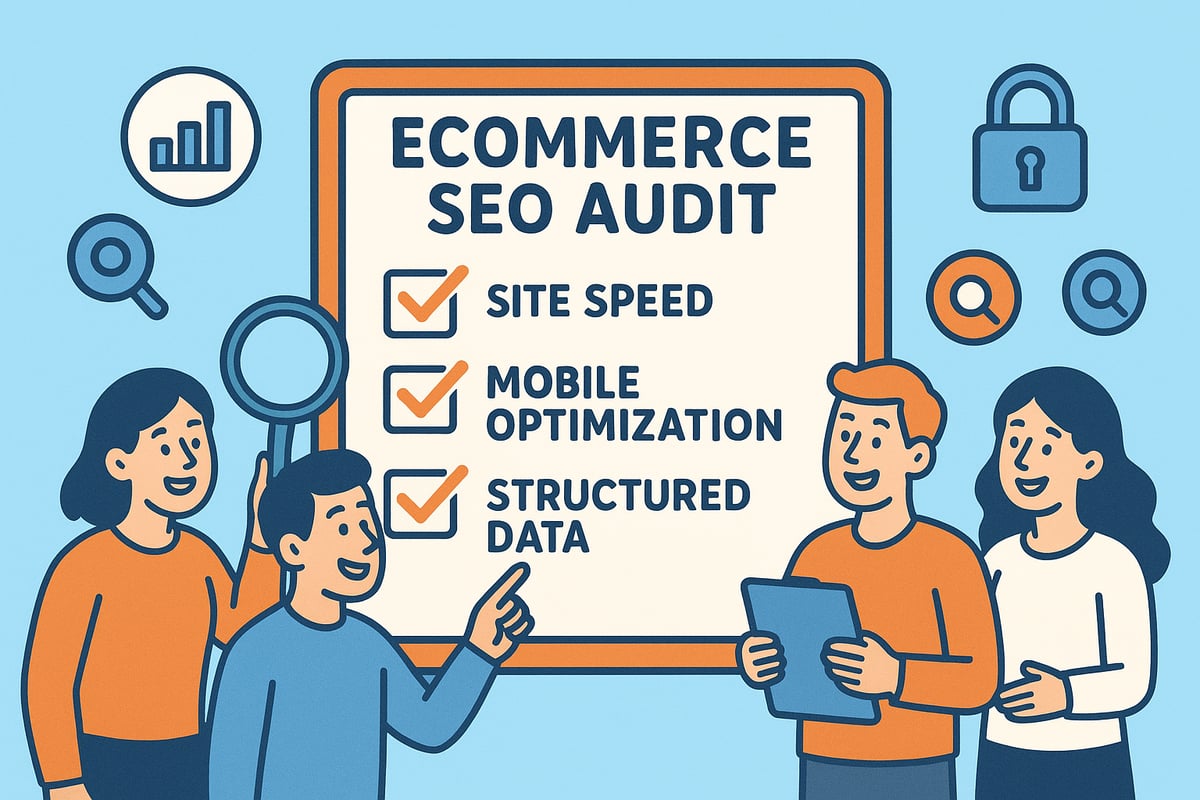
Search engines never stand still. Their algorithms shift, user behaviors change, and new ecommerce technologies emerge every year. If we want our stores to keep growing, we need to make ecommerce seo audit a regular habit, not a one-time fix.
Audits act as our early warning system. They catch technical issues like broken links, slow pages, or indexing problems before they cost us rankings. Content weaknesses, such as thin product descriptions or outdated resources, can be identified and improved. The impact is real: Industry studies show that ecommerce brands performing quarterly audits see up to 30% more organic revenue than those that don't.
Missed opportunities are everywhere. For example, an audit might reveal that a whole category of high-value products isn’t indexed or that outdated schema is blocking rich results. Proactive ecommerce seo audit efforts help us outpace rivals who only react when problems arise.
Neglecting audits means risking lost visibility, lower sales, or even search penalties. This is true for both large online retailers and niche stores. To dig deeper into why ecommerce audits are unique, check out this Differences in ecommerce SEO audits resource. It highlights what sets ecommerce SEO apart from general site audits and why our approach must be tailored.
Key SEO Challenges for Ecommerce Sites in 2026
Ecommerce platforms are growing more complex, with new integrations and features added every year. This complexity makes the ecommerce seo audit process even more vital as we move into 2026.
Today's shoppers expect blazing-fast load times, flawless mobile experiences, and seamless navigation. Personalization rules the search landscape, with engines using AI to match results to user intent and context. Product discovery is now powered by smarter algorithms, voice search, and even visual search tools.
At the same time, customers jump between channels—mobile, desktop, social, and marketplaces—creating fragmented journeys that are harder to track. Structured data and advanced schema have become table stakes for surfacing in rich results and AI-driven product suggestions.
Add privacy regulations into the mix, and tracking user behavior is more challenging than ever. Every ecommerce seo audit must account for these hurdles:
| 2026 SEO Challenge | Impact on Audits |
|---|---|
| Platform complexity | More technical checks |
| Speed & mobile expectations | Performance optimization |
| AI-powered search | Schema and intent focus |
| Fragmented journeys | Advanced attribution |
| Privacy compliance | Analytics validation |
Staying ahead means making these challenges a core part of every ecommerce seo audit. By addressing them head-on, we set ourselves up for long-term growth and resilience.
9 Essential Ecommerce SEO Audit Steps for 2026 Success
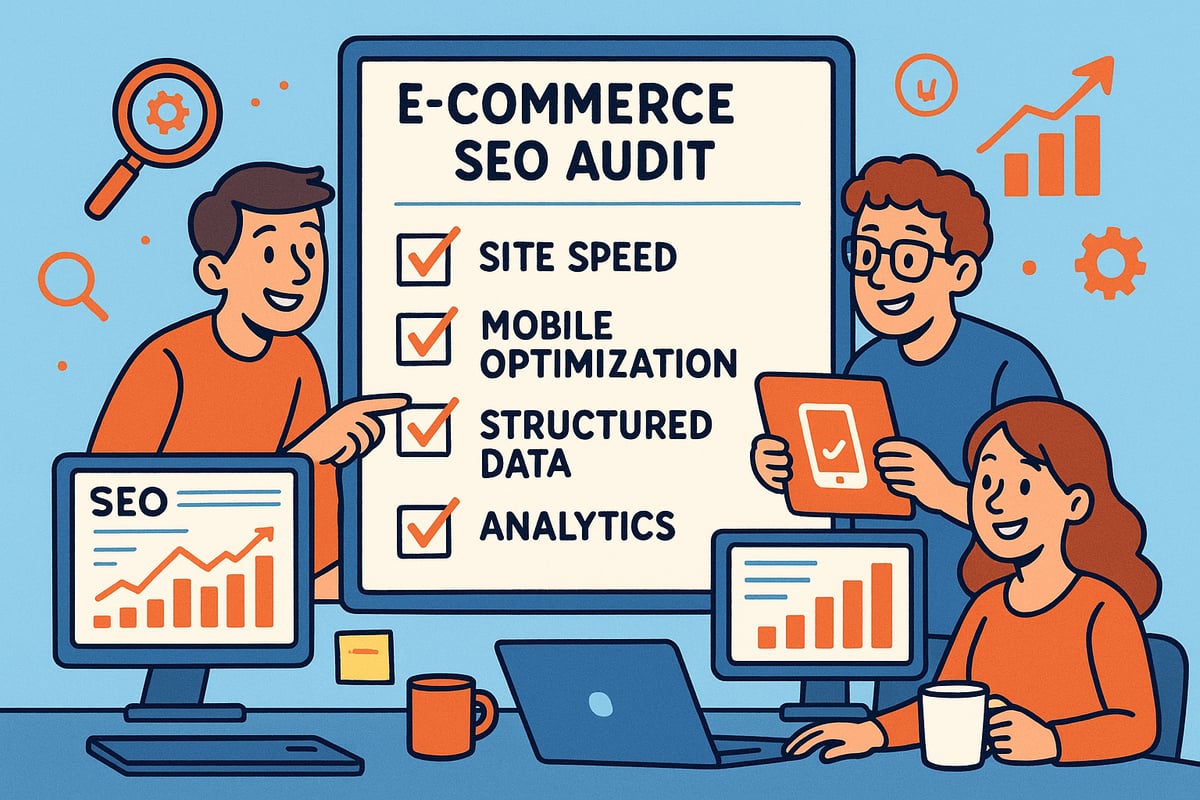
Staying ahead in ecommerce means being proactive, not reactive. A thorough ecommerce seo audit gives your store the roadmap it needs to thrive in 2026. Let’s break down the nine essential steps, each designed to help you spot weaknesses, seize opportunities, and future-proof your online business.
1. Step: Technical SEO Health Check
The foundation of any ecommerce seo audit is a technical health check. Start by crawling your site with tools like Screaming Frog or Sitebulb. Confirm that all critical pages are accessible to search engines. Check your robots.txt and XML sitemaps for accuracy and completeness.
Review your site’s architecture. Are URLs clean and logical? Is internal navigation intuitive for both users and bots? Mobile optimization is key in 2026. Use Google’s Mobile-Friendly Test to catch layout issues. Test site speed on both mobile and desktop, since slow load times can devastate conversions.
Security matters more than ever. Ensure SSL is implemented sitewide, especially for checkout and account pages. A single unsecured page can break customer trust. Here’s a quick checklist for this step:
| Technical SEO Element | Checkpoint | Tool/Method |
|---|---|---|
| Crawlability | All pages reachable | Screaming Frog, GSC |
| Mobile Optimization | Responsive, touch-friendly | Mobile-Friendly Test |
| Site Speed | Under 2s load time | PageSpeed Insights |
| Security | HTTPS everywhere | SSL Labs, browser check |
| Sitemaps/robots.txt | Up-to-date and error-free | Manual, GSC |
Example: Imagine a mobile checkout page that takes 6 seconds to load. Audit tools reveal uncompressed images and unused scripts. Fixing these boosts page speed, drops abandonment, and increases revenue.
If you’re new to auditing, consider seeking expert help. This Ecommerce SEO consultant guide explains how specialized consultants can guide you through complex technical issues.
2. Step: On-Page SEO Optimization
Next in your ecommerce seo audit, focus on on-page elements. Every product and category page needs a unique, keyword-rich title tag and meta description. These not only help rankings but also entice clicks from searchers.
Headers (H1, H2, H3) should be used logically and reflect the page’s main topics. Make sure your keywords mirror what shoppers are searching for in 2026, including long-tail and conversational queries. Image optimization is often overlooked. Use descriptive file names, compress images for speed, and always add relevant alt text.
Structured data is vital. Implement schema for products, reviews, and breadcrumbs to help search engines understand your content. Here’s a code snippet for a basic Product schema:
{
  "@context": "https://schema.org/",
  "@type": "Product",
  "name": "Sample Product",
  "image": "https://www.example.com/product.jpg",
  "description": "A brief description.",
  "offers": {
    "@type": "Offer",
    "priceCurrency": "USD",
    "price": "29.99"
  }
}
Example: After optimizing meta tags and adding schema, a client’s product pages saw a 15% increase in click-through rates from Google.
3. Step: Content Quality and Relevance Audit
Content is the lifeblood of your ecommerce seo audit. Review the depth, accuracy, and freshness of all key pages. Outdated or thin content can drag rankings down fast.
Check for duplicate content, especially in product descriptions. Each listing should be unique and genuinely helpful. Refresh your blog and resource sections regularly. In 2026, search engines favor brands that show topical authority and expertise.
User-generated content, like reviews and Q&A, can boost SEO if managed correctly. Monitor for spam and keep the conversation relevant. Here’s a quick content audit list:
- Update old guides to reflect current trends.
- Rewrite generic product blurbs.
- Remove or merge pages with thin content.
- Encourage customers to leave detailed reviews.
Example: Updating a 2022 buying guide with 2026 product trends led to a surge in organic traffic and longer session durations.
4. Step: User Experience (UX) and Conversion Optimization
A great ecommerce seo audit doesn’t just focus on search engines, but also on people. Analyze your navigation and site search. Can shoppers easily find what they need? Are filtering options intuitive?
Go through your checkout process step-by-step. Remove unnecessary fields, simplify forms, and make sure trust signals are front and center. On mobile, buttons should be large and accessible, and all content should be easy to read.
Accessibility is another priority. Use clear fonts, proper contrast, and alt text for images. Trust badges, transparent return policies, and visible reviews help build confidence.
Example: Streamlining a confusing navigation menu reduced cart abandonment by 10% and improved sales.
5. Step: Site Architecture and Internal Linking Audit
Your site’s architecture is like the skeleton of your ecommerce seo audit. Map out how categories, subcategories, and product pages relate. Avoid orphan pages, which have no internal links pointing to them.
Fix broken links immediately. Use descriptive, keyword-rich anchor text for internal links, but avoid over-optimization. Keep crawl depth shallow, so important pages are never more than three clicks from the homepage.
Breadcrumbs and contextual links guide both users and search engines. Here’s a simple breadcrumb example:
<nav aria-label="breadcrumb">
  <ol>
    <li><a href="/">Home</a></li>
    <li><a href="/shoes">Shoes</a></li>
    <li>Sneakers</li>
  </ol>
</nav>
Example: Improving internal linking to underperforming product pages led to a noticeable boost in organic visits.
6. Step: Backlink Profile and Off-Page SEO Review
A healthy backlink profile is a critical part of any ecommerce seo audit. Start by evaluating your backlink quality. Are your links from relevant, trustworthy sites? Identify and disavow toxic or spammy links that could hurt your rankings.
Track your link velocity. Natural growth is best. Benchmark your backlink profile against industry standards, but do not copy competitors blindly. Look for digital PR and content partnership opportunities to earn high-value links.
Here are some off-page audit steps:
- Use Ahrefs or SEMrush to analyze backlinks.
- Disavow harmful links in Google Search Console.
- Reach out for guest posting or partnership opportunities.
- Monitor for sudden spikes or drops in referring domains.
Example: Removing a batch of spammy links helped a retailer recover from a sudden ranking drop.
7. Step: Structured Data and Rich Snippet Audit
Structured data is the secret sauce for enhanced search visibility. For your ecommerce seo audit, review all product, review, and FAQ schema on your site. Test for errors using Google’s Rich Results Test or Schema.org Validator.
Check for missing fields, outdated schema types, or incorrect implementation. Make updates to align with new search features being rolled out in 2026, such as more detailed product attributes or availability signals.
Monitor your rich results in Google Search Console. Are you seeing more star ratings, price info, or FAQs in search? If not, refine your schema markup.
Example: After adding review schema, a store’s product listings began displaying star ratings and pricing, which increased clicks from organic search.
8. Step: Analytics, Tracking, and Reporting Validation
Data-driven decisions are at the heart of a successful ecommerce seo audit. Start by verifying your analytics setup. Is every important action—add to cart, checkout, sign-up—being tracked?
Set up ecommerce-specific goals and funnels in Google Analytics or GA4. Make sure your tracking is compliant with privacy laws like GDPR and CCPA. Analyze key metrics such as organic traffic, conversion rates, and revenue attribution.
Use segmented reports to uncover underperforming channels or products. Here’s a table of metrics to track:
| Metric | Why It Matters |
|---|---|
| Organic Traffic | Measures SEO effectiveness |
| Conversion Rate | Ties SEO to sales |
| Bounce Rate | Gauges user engagement |
| Revenue Attribution | Tracks ROI of SEO efforts |
Example: By segmenting analytics data, one retailer discovered that a specific product category was underperforming in organic search, prompting a targeted optimization campaign.
9. Step: Ongoing Monitoring and Continuous Improvement
An ecommerce seo audit is not a one-and-done task. Set a regular audit schedule—monthly or quarterly works for most stores. Use detailed checklists and document every finding for future reference.
Stay alert to algorithm updates and adapt your strategies quickly. Set clear KPIs and benchmarks so your team knows what success looks like. Encourage collaboration between SEO, development, and content teams. Automation and AI tools can help scale your monitoring and spot issues early.
- Schedule regular audits and reviews.
- Track progress against benchmarks.
- Foster a culture of continuous learning.
Example: A store that ran monthly ecommerce seo audits saw steady growth in organic sales, year after year.
Ecommerce SEO Audit Best Practices and Trends for 2026
Staying ahead in ecommerce means adapting to fast-moving SEO trends. As we look toward 2026, keeping your ecommerce seo audit process current is essential. Let’s explore the most impactful best practices and emerging trends that can help future-proof your strategy, boost performance, and keep your online store thriving.

Adapting to Algorithm Changes and AI Innovations
Search algorithms are evolving at lightning speed. In 2026, AI-driven updates, personalized search, and new features like Google’s AI Overviews are reshaping how shoppers find products. An ecommerce seo audit must now account for machine learning influences, semantic search, and intent-based ranking factors.
Staying proactive is key. Monitor search engine updates, adjust strategies for AI-powered search, and experiment with voice and visual search optimization. Voice search continues to grow, and visual discovery tools are changing the way users shop online. For a deeper dive into how Google’s AI features are impacting online stores, check out Google’s AI Overviews and ecommerce SEO.
Regular audits help you spot gaps and pivot quickly, ensuring your store remains visible and competitive in this new era.
Leveraging Automation and Scalable Audit Tools
Large ecommerce sites face unique challenges, from massive product catalogs to complex site structures. Automation is your ally here. By integrating scalable tools and automated crawlers, you can uncover technical issues, analyze backlink profiles, and monitor performance across thousands of pages in less time.
Modern ecommerce seo audit solutions blend automation with human expertise. Use automated reporting and site crawlers for speed, but always validate findings manually for accuracy. Prioritize flexible tools that adapt to your business needs and the ever-changing SEO landscape. For more insights on scalable strategies and new trends like voice search, visit Ecommerce SEO tips for 2026.
When you combine the efficiency of automation with strategic oversight, your audits become more actionable and reliable.
Building a Culture of Continuous SEO Improvement
The most successful ecommerce brands foster a culture where SEO is everyone’s business. Empower your team with ongoing education and regular training sessions. Encourage open communication between SEO, content, and development teams to quickly address issues flagged during your ecommerce seo audit.
Set up feedback loops, celebrate small wins, and make SEO a shared goal across departments. This approach not only boosts morale but leads to more consistent results. Remember, continuous improvement is a journey. By making SEO audits a regular habit, you’ll stay agile, adapt to trends faster, and keep your store at the top of search results.
Actionable Ecommerce SEO Audit Checklist for 2026
Ready to take control of your ecommerce seo audit process? Use this practical checklist to make your audits organized, effective, and stress-free. Whether you’re a solo founder or leading a team, these steps will keep your store’s SEO on track and ahead in 2026.

Ecommerce SEO Audit Checklist
| Step | Frequency | Estimated Time | Responsible Team/Role |
|---|---|---|---|
| Technical SEO Health Check | Quarterly | 2-4 hours | SEO/Dev |
| On-Page SEO Optimization | Quarterly | 2-3 hours | SEO/Content |
| Content Quality and Relevance Audit | Bi-annually | 3-5 hours | Content/SEO |
| User Experience & Conversion Optimization | Quarterly | 2-3 hours | UX/SEO |
| Site Architecture & Internal Linking Audit | Bi-annually | 2-3 hours | SEO/Dev |
| Backlink Profile & Off-Page SEO Review | Bi-annually | 2-4 hours | SEO/Outreach |
| Structured Data & Rich Snippet Audit | Quarterly | 1-2 hours | SEO/Dev |
| Analytics, Tracking & Reporting Validation | Monthly | 1-2 hours | Analytics/SEO |
| Ongoing Monitoring & Continuous Improvement | Monthly | 1 hour | SEO/All teams |
Keep your ecommerce seo audit findings organized in spreadsheets or dedicated tools. Document action items, set clear deadlines, and assign tasks to the right people. Prioritize steps based on what will have the biggest impact on your business goals, such as boosting organic sales or improving mobile speed.
Common Pitfalls to Avoid
- Skipping steps or rushing through the ecommerce seo audit.
- Overlooking mobile usability or site speed.
- Failing to monitor changes after implementing fixes.
- Not updating your checklist as algorithms and best practices evolve.
- Ignoring off-page factors or backlink health.
For more on what not to do, check out these key ecommerce SEO mistakes to keep your audit on the right track.
Treat this checklist as a living document. Update it regularly, involve your team, and celebrate the wins as you see your store’s SEO performance grow!
You’ve made it through the nine essential ecommerce SEO audit steps for 2026—nicely done! I know it’s a lot to take in, and every business is unique, so it’s normal if you still have a few questions or want a bit more guidance. If you’re ready to boost your rankings, drive more traffic, and see real growth, let’s chat about how we can tailor these strategies to fit your goals. Together, we can create a plan that helps your online store stand out in a crowded market. Ready to take the next step? Let’s Chat