
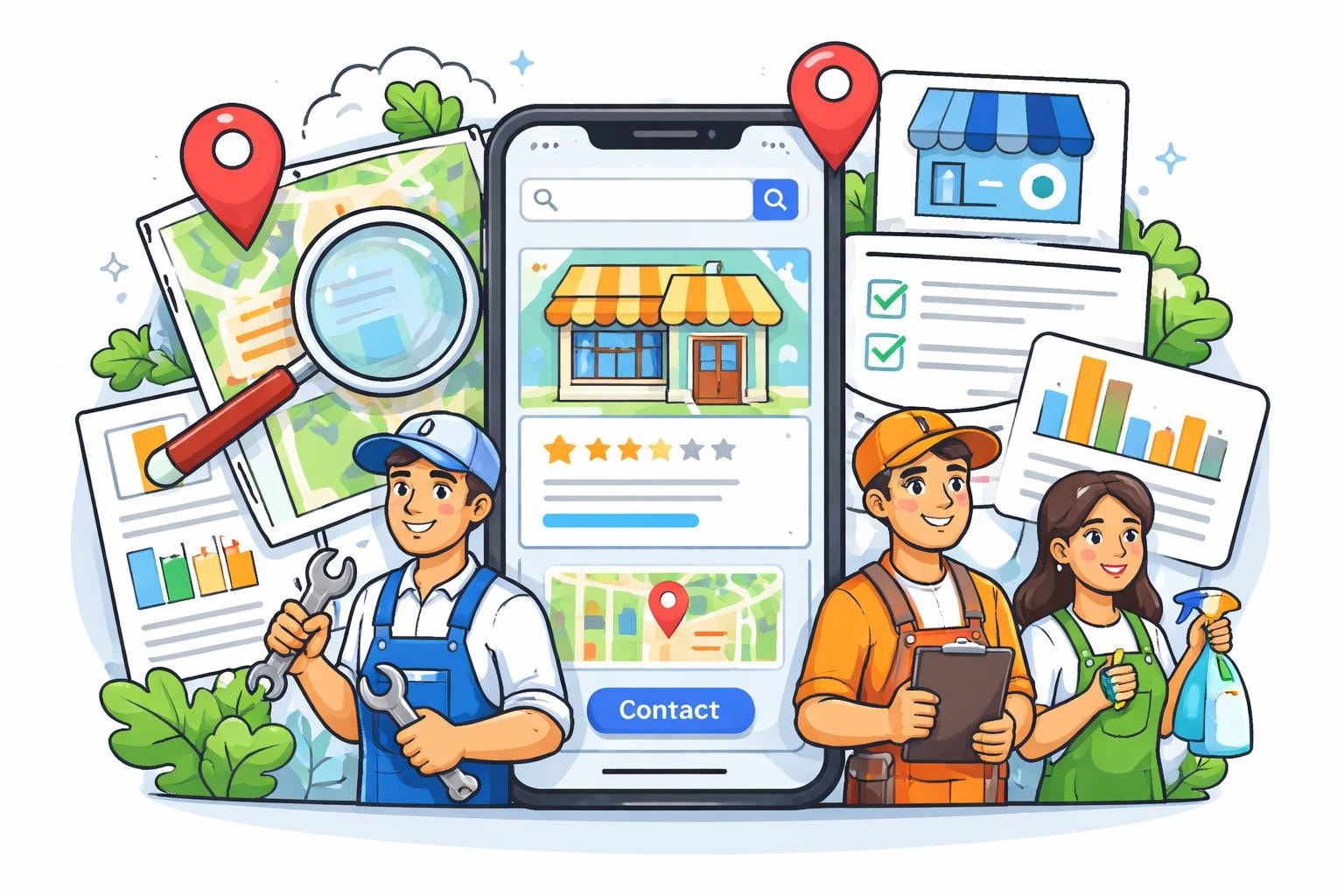
If you run a service-based business in 2026, you already know that being invisible online means missing out on valuable customers who are actively searching for what you offer. Whether you're a law firm, home service provider, or B2B consultant, mastering seo for service based business isn't optional anymore-it's the difference between thriving and barely surviving. The good news? With the right strategies tailored to service businesses, you can outrank competitors and attract clients who are ready to hire you.
Understanding Why SEO Matters for Service Providers
Service-based businesses face unique challenges that product-based companies don't encounter. You can't ship your expertise across the country overnight, and your target audience is often geographically limited. This makes local SEO strategies crucial for service providers, as you need to appear exactly when someone in your area searches for the services you offer.
The traditional marketing playbook has completely shifted. Your potential clients aren't flipping through Yellow Pages or asking neighbors for recommendations as their first step. They're pulling out their phones and typing "plumber near me" or "divorce attorney Bucks County" into Google. If your business doesn't show up in those critical moments, you've already lost the opportunity.
The Service Business SEO Advantage
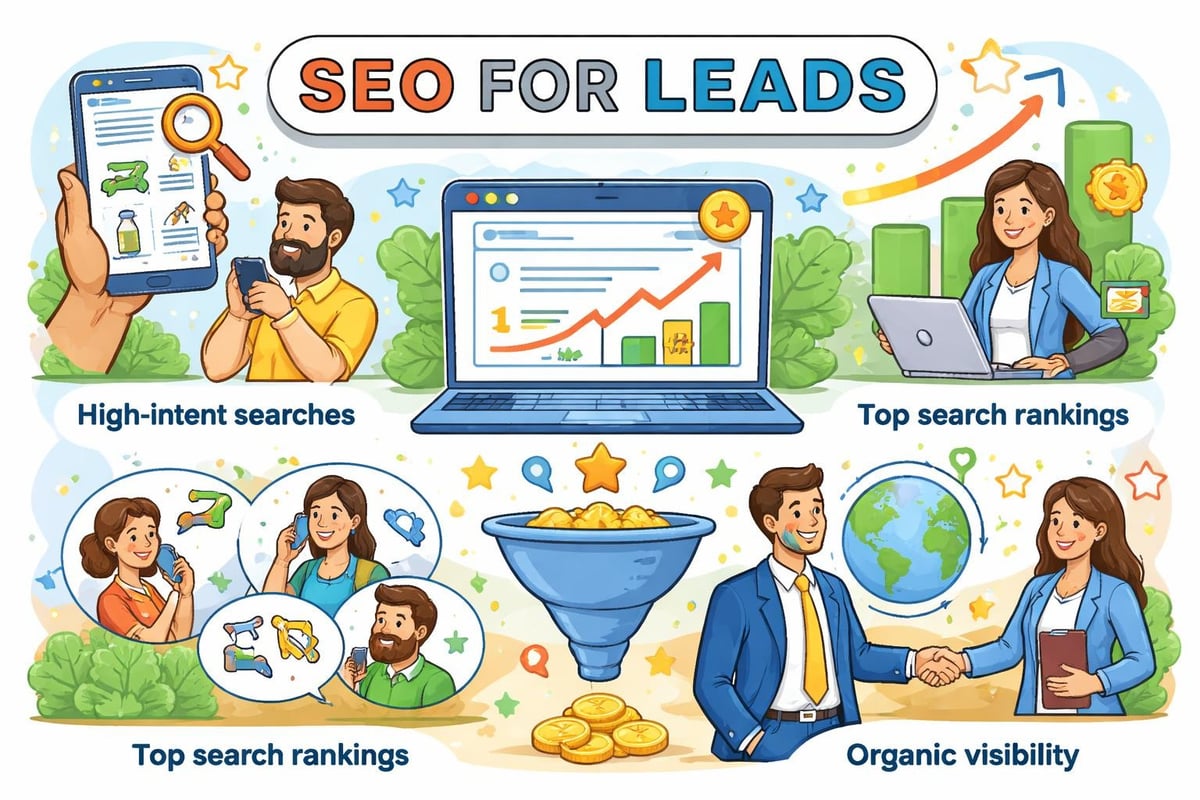
What makes seo for service based business so powerful is the intent behind the searches. When someone looks for a lawyer or an HVAC technician, they're not browsing-they're problem-solving. These are high-intent searches that convert at much higher rates than general informational queries.
Consider these compelling benefits:
- Consistent lead generation without paying for each click
- Enhanced credibility through top search rankings
- Better ROI compared to traditional advertising channels
- 24/7 visibility that works while you sleep
- Competitive advantage in crowded local markets
Building Your Local SEO Foundation
Your Google Business Profile represents the single most important asset for local service visibility. This free tool from Google can drive more qualified traffic to your business than any other single factor. Yet surprisingly, many service providers either ignore it completely or set it up once and never update it.
Optimizing your Google Business Profile requires attention to detail:
- Complete every section with accurate, detailed information
- Select the most specific business categories available
- Upload high-quality photos of your team, office, and completed work
- Post regular updates about services, offers, and company news
- Respond to every review within 24-48 hours
- Add service areas to define your geographic coverage
- Use Google Posts to highlight special promotions
The importance of creating location-specific content cannot be overstated. Your website should clearly communicate where you operate and what specific areas you serve. This geographic clarity helps Google understand when to show your business in local search results.
Local Citations and Directory Listings
Think of citations as digital references that validate your business exists and operates in specific locations. These mentions of your business name, address, and phone number (NAP) across the web build trust signals that Google uses to verify your legitimacy.
| Citation Type | Examples | Impact Level |
|---|---|---|
| Major Directories | Google Business Profile, Yelp, Bing Places | High |
| Industry-Specific | Avvo (lawyers), Angi (home services) | High |
| Local Chambers | County business associations | Medium |
| General Directories | Yellow Pages, Superpages | Medium |
Consistency matters enormously here. If your business address appears differently across various platforms, it creates confusion and dilutes your local SEO power. Ensure every citation uses identical formatting for your business information.
Creating Service Pages That Convert and Rank
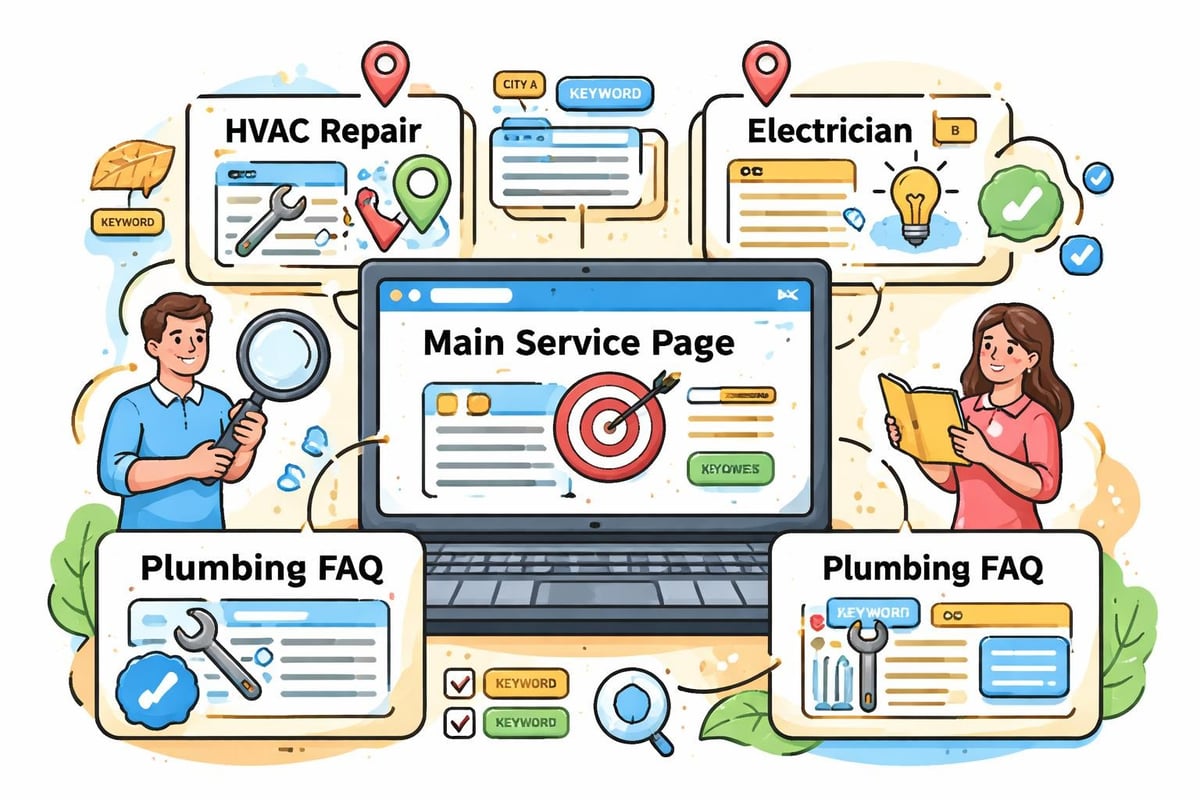
One of the biggest mistakes service businesses make is cramming all their offerings onto a single "Services" page. This approach fails both from an SEO perspective and a user experience standpoint. Creating dedicated pages for each service allows you to target specific keywords and provide the detailed information potential clients need.
Each service page should follow a strategic structure:
- Clear, keyword-rich H1 heading that matches search intent
- Comprehensive description of what the service includes
- Benefits explained from the customer's perspective
- Pricing information (when appropriate)
- Service area coverage
- Frequently asked questions
- Strong call-to-action with contact options
- Trust signals like certifications or guarantees
Let's say you're a dental practice. Instead of one generic "Dental Services" page, you'd create separate, in-depth pages for teeth whitening, dental implants, emergency dentistry, and preventive care. Each page becomes its own ranking opportunity for those specific service terms.
Location-Specific Service Pages
Taking this strategy further, combining services with locations creates powerful targeting opportunities. A roofing company serving multiple towns would benefit from pages like "Roof Repair in Doylestown" and "Roof Replacement in Philadelphia." This approach is particularly effective for businesses with service areas spanning multiple municipalities.
These location-specific pages shouldn't be thin duplicates. Each should include:
- Unique content about serving that specific area
- Local landmarks or neighborhood references
- Testimonials from customers in that location
- Service area maps
- Local driving directions
Technical SEO Essentials for Service Businesses
While content and local signals drive most service business success, technical SEO creates the foundation that makes everything else possible. Your website needs to be fast, mobile-friendly, and easily crawlable by search engines.
Mobile optimization deserves special attention. Over 60% of local searches happen on mobile devices, and Google uses mobile-first indexing. If your site doesn't provide an excellent mobile experience, you're handicapping your SEO efforts before they even start.
Site Speed and Performance
Page speed directly impacts both rankings and conversions. Research consistently shows that pages loading in under two seconds have significantly higher conversion rates than slower pages. For service businesses where every lead counts, a slow website literally costs you money.
Common speed improvements include:
- Compressing and optimizing images
- Minimizing JavaScript and CSS files
- Implementing browser caching
- Using a content delivery network (CDN)
- Choosing quality hosting with adequate resources
Don't forget about schema markup, the structured data that helps search engines understand your content better. Service business schema can highlight your operating hours, service areas, reviews, and contact information directly in search results. This enhanced appearance often leads to higher click-through rates.
Content Marketing That Attracts Service Clients
Many service businesses struggle with content creation because they think they have nothing interesting to write about. This couldn't be further from the truth. Your expertise, client questions, and industry knowledge represent endless content opportunities that can drive qualified traffic.
Think about the questions you answer repeatedly for clients. Each of those questions represents a content opportunity that can attract people searching for those exact answers. A personal injury attorney might create content around "What to do immediately after a car accident" or "How long do I have to file an injury claim in Pennsylvania?"
The Content Types That Work Best
Different content formats serve different purposes in your overall strategy:
| Content Type | Purpose | Ranking Potential |
|---|---|---|
| How-to Guides | Educational, builds authority | High |
| Local Area Guides | Geographic relevance | High |
| Case Studies | Demonstrates results | Medium |
| FAQ Pages | Answers common questions | High |
| Industry News Commentary | Establishes expertise | Medium |
The key is matching your content to the customer journey. Someone researching "signs you need a new roof" is earlier in their journey than someone searching "emergency roof repair near me." Both represent opportunities, but they require different content approaches and calls-to-action.
For regulated industries like law or healthcare, creating authoritative, compliant content becomes even more critical. You need to demonstrate expertise while ensuring everything meets industry regulations and ethical guidelines.
Building Authority Through Links and Partnerships
Link building remains one of the most powerful ranking factors, yet it's where many service businesses struggle. The good news is that service providers have natural link-building advantages that e-commerce sites don't enjoy.
Local sponsorships create excellent link opportunities. Supporting little league teams, community events, or charitable organizations often results in links from respected local organizations. These local links carry significant weight for service businesses targeting specific geographic areas.
Effective link building strategies for service businesses:
- Sponsoring local events or organizations
- Getting featured in local news stories
- Contributing expert quotes to journalists
- Creating shareable resources or tools
- Building relationships with complementary businesses
- Joining local chambers and business associations
Partnerships with complementary service providers also create link opportunities. A wedding photographer might build relationships with florists, venues, and caterers, leading to natural link exchanges that benefit everyone involved.

Tracking Results and Measuring ROI
Implementing seo for service based business requires tracking the right metrics to understand what's working and where to invest more resources. Vanity metrics like total traffic sound impressive but don't pay the bills. Focus on metrics that connect directly to business outcomes.
Key Performance Indicators That Matter
Rankings for your target keywords show whether your optimization efforts are moving you closer to visibility. Track both service-specific terms ("kitchen remodeling Doylestown") and broader service categories ("home remodeling contractor").
Organic traffic from local searches indicates how many people are finding you through search engines in your service area. Google Analytics can segment this traffic by geographic location, showing exactly where your visibility is strongest.
Conversion metrics reveal whether your traffic actually turns into leads and customers:
- Form submissions
- Phone calls from click-to-call buttons
- Direction requests to your location
- Live chat conversations initiated
- Email inquiries received
Many service businesses benefit from call tracking that attributes phone leads back to specific marketing channels. This helps you understand whether your SEO efforts are driving actual conversations with potential clients, not just website visits.
Optimizing for Voice Search and Featured Snippets
Voice search continues growing in 2026, with more people using smart speakers and voice assistants to find local services. These searches often sound different than typed queries. Someone might type "plumber Doylestown PA" but say "Hey Google, find a plumber near me who can come today."
Optimizing for voice search means focusing on conversational, question-based queries. Structure content to directly answer specific questions in concise, clear language. The goal is appearing in the featured snippet or becoming the direct answer Google's voice assistant reads aloud.
Voice search optimization tactics:
- Target question keywords (who, what, where, when, why, how)
- Provide clear, concise answers early in your content
- Optimize for local "near me" queries
- Structure content with proper heading hierarchies
- Include FAQ sections on service pages
- Ensure your Google Business Profile is completely filled out
Featured snippets represent position zero in search results-appearing above even the number one organic result. While you can't directly control snippet selection, you can optimize your chances by formatting content in ways Google tends to feature: lists, tables, step-by-step instructions, and direct question-and-answer formats.
Handling Reviews and Reputation Management
Online reviews have become inseparable from seo for service based business. Google considers review quantity, quality, and recency as ranking factors for local search results. Beyond rankings, reviews heavily influence whether people choose to contact you after finding your business.
Developing a systematic approach to review generation ensures you're consistently building this critical asset. The best time to request a review is immediately after delivering excellent service, when satisfaction is highest. Make the process easy by sending direct links to your Google Business Profile review page.
Review generation best practices:
- Ask satisfied clients personally (in-person, phone, or email)
- Send review requests within 24-48 hours of service completion
- Provide direct links to make reviewing effortless
- Never offer incentives for reviews (violates Google policies)
- Follow up once if there's no response
- Make review requests part of your standard workflow
Responding to reviews-both positive and negative-shows you value customer feedback and demonstrates active engagement. This responsiveness itself becomes a trust signal. For negative reviews, respond professionally and offer to resolve issues offline. Many potential clients judge businesses by how they handle criticism.
Just as professionals can benefit from specialized SEO approaches, understanding SEO strategies for specific industries can provide additional insights for your particular service sector. Different industries face unique challenges and opportunities that generic advice doesn't address.
Competitive Analysis and Market Positioning
Understanding what your competitors are doing with SEO helps you identify opportunities they're missing and strategies that work in your market. Competitive analysis isn't about copying-it's about learning from others' successes and failures to inform your own strategy.
Start by identifying your top 5-10 competitors in search results for your most important keywords. Analyze their websites to understand:
- Which keywords they're ranking for
- Their content types and publishing frequency
- Their backlink profiles and link sources
- Their Google Business Profile optimization
- Their service area coverage
- Their site structure and user experience
| Analysis Area | What to Look For | Action to Take |
|---|---|---|
| Content Gaps | Topics they haven't covered | Create comprehensive content on those topics |
| Keyword Opportunities | Terms they rank poorly for | Target those keywords aggressively |
| Backlink Sources | Where their links come from | Pursue similar link opportunities |
| Service Offerings | Services they don't prominently feature | Highlight your differentiation |
Tools like Ahrefs, SEMrush, or Moz can reveal detailed competitive intelligence that manual research misses. While these tools require investment, the insights they provide often justify the cost for serious service businesses.
Beyond direct competitors, analyze businesses ranking well in adjacent service categories. A dental practice’s SEO strategy might offer insights applicable to other healthcare providers, even if they're not direct competitors.
Adapting to Algorithm Updates and Industry Changes
Google updates its algorithm hundreds of times yearly, with several major updates that can significantly impact rankings. Service businesses need to build SEO strategies on solid foundations that withstand these changes rather than chasing every algorithmic shift.
The core principles remain consistent: create genuinely helpful content, provide excellent user experiences, build legitimate authority, and focus on serving your audience's needs. Businesses that chase shortcuts or manipulative tactics inevitably get caught by algorithm updates and face penalties.
Future-proofing your SEO strategy involves:
- Prioritizing user experience over algorithmic manipulation
- Creating genuinely valuable, in-depth content
- Building real relationships that lead to natural links
- Maintaining accurate, consistent business information
- Focusing on E-E-A-T (Experience, Expertise, Authoritativeness, Trustworthiness)
- Staying informed about industry changes without overreacting
The rise of AI and changing search behaviors continue reshaping how people find service providers. Staying adaptable while maintaining focus on fundamental principles keeps your strategy effective regardless of these changes.
Working with experienced professionals who understand these evolving dynamics can provide significant advantages. An SEO audit from specialists often reveals opportunities and issues you might miss on your own.
Integrating SEO with Other Marketing Channels
SEO for service based business works best when integrated with your broader marketing strategy rather than existing in isolation. The insights gained from SEO research inform better advertising, content marketing, and even offline marketing decisions.
Your keyword research reveals exactly what language your potential customers use when searching for services. This same language should appear in your pay-per-click ads, social media content, email marketing, and even your phone scripts. Consistency across channels reinforces your message and improves overall marketing effectiveness.
Social media doesn't directly impact SEO rankings, but it amplifies your content reach and can drive traffic that leads to links and brand searches. When you publish valuable content on your website, sharing it through social channels extends its visibility beyond organic search.
Channel integration opportunities:
- Use SEO keyword insights to inform PPC campaigns
- Repurpose blog content for social media posts
- Include email signup forms on high-traffic pages
- Feature popular content in email newsletters
- Use retargeting ads for people who visited service pages
- Coordinate content calendars across all channels
Email marketing to existing customers and leads keeps your business top-of-mind, potentially leading to reviews, referrals, and repeat business. While conversion rate optimization might seem separate from SEO, optimizing your website to convert visitors affects your ultimate ROI from organic traffic.
Implementing effective seo for service based business strategies requires ongoing effort, but the returns-consistent qualified leads without paying for each click-make it one of the most valuable investments you can make. With over 500 successful campaigns and more than two decades of experience helping service businesses dominate their local markets, Shawn the SEO Geek delivers customized, results-driven SEO solutions tailored to your specific industry and goals. Whether you're a law firm, home service provider, or B2B business, let's work together to boost your search rankings and grow your business.