

The legal industry has become increasingly competitive online, with potential clients turning to search engines before they ever pick up the phone. Finding the best SEO for law firms isn't just about ranking higher; it's about connecting with clients when they need legal help most. Whether you're a solo practitioner or a multi-attorney firm, implementing a comprehensive SEO strategy can transform your online presence and drive qualified leads consistently. Understanding how search engines work and what potential clients are searching for forms the foundation of effective legal marketing in 2026.
Understanding Why Law Firms Need Specialized SEO
Legal SEO differs significantly from other industries because of the competitive landscape and the high-stakes nature of legal services. Potential clients searching for attorneys are often dealing with urgent, sensitive matters, from personal injury cases to divorce proceedings.
The unique challenges law firms face include:
- Extremely competitive search results for lucrative practice areas
- High cost-per-click for paid advertising alternatives
- Geographic limitations based on licensure and jurisdiction
- Complex service offerings that require clear organization
- Reputation sensitivity and review management needs
When someone searches "personal injury lawyer near me" or "divorce attorney in Philadelphia," they're typically ready to hire. This makes the best SEO for law firms incredibly valuable compared to other marketing channels. The comprehensive strategies for law firms focus on building local citations and optimizing content specifically for legal searchers.
Unlike retail or e-commerce businesses, law firms need to establish trust and credibility before the first contact. Your website must convey expertise, professionalism, and accessibility simultaneously. That's why a specialized approach matters more than generic SEO tactics.
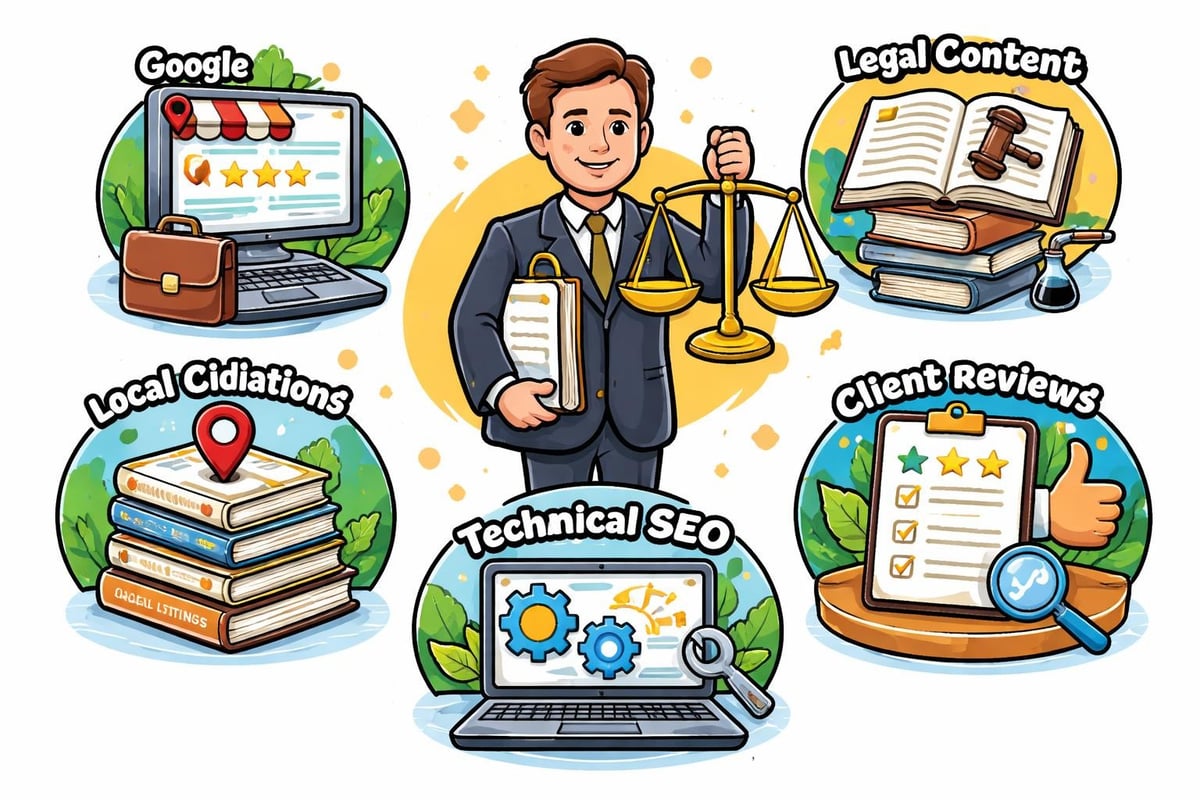
Local SEO: The Foundation for Legal Practices
For most law firms, local search dominates client acquisition. Google processes over 8.5 billion searches daily in 2026, and a significant portion includes location-based queries. Your firm needs maximum visibility when potential clients search within your service area.
Optimizing Your Google Business Profile
Your Google Business Profile serves as your digital storefront. Complete every section thoroughly, including:
- Accurate NAP (Name, Address, Phone) consistent across all platforms
- Primary and secondary practice area categories selected strategically
- High-quality photos of your office, team, and community involvement
- Regular posts about legal topics, firm news, and helpful resources
- Prompt review responses to every client testimonial
Adding location signals throughout your website strengthens your local SEO efforts significantly. Include your city and service areas in strategic places like page titles, headers, and footer information.
Building Local Citations and Directories
Citations are mentions of your firm's NAP information across the web. They validate your business location to Google and other search engines.
Priority citation sources for law firms:
- Legal-specific directories (Avvo, Justia, FindLaw, Lawyers.com)
- General business directories (Yelp, Yellow Pages, BBB)
- Local chamber of commerce listings
- State bar association profiles
- Industry-specific platforms
Consistency matters tremendously. Even small variations in how your address appears can dilute your local SEO strength. Consider working with an experienced SEO agency specializing in legal services to ensure accuracy across hundreds of potential citation sources.
Technical SEO Essentials for Law Firm Websites
Your website's technical foundation determines whether search engines can properly crawl, index, and rank your content. Even the best content won't rank if technical issues prevent Google from accessing it.
Site Speed and Performance Optimization
Page speed has been a confirmed ranking factor since 2010, and its importance continues growing. In 2026, users expect pages to load in under three seconds, especially on mobile devices.
| Performance Factor | Target Metric | Impact on Rankings |
|---|---|---|
| First Contentful Paint | Under 1.8 seconds | High |
| Largest Contentful Paint | Under 2.5 seconds | Very High |
| Cumulative Layout Shift | Under 0.1 | Medium |
| Time to Interactive | Under 3.8 seconds | High |
The technical SEO aspects include fixing broken links, ensuring HTTPS security, and implementing proper XML sitemaps. A comprehensive SEO website audit identifies these technical barriers that might be holding your rankings back.
Mobile Optimization Requirements
Over 62% of legal searches now happen on mobile devices. Google's mobile-first indexing means your mobile site version determines your rankings for all devices.
Essential mobile optimization elements:
- Responsive design that adapts to all screen sizes
- Touch-friendly buttons and navigation menus
- Readable text without zooming required
- Fast-loading images with proper compression
- Click-to-call functionality prominently displayed
Your mobile experience should feel effortless. Potential clients won't struggle with tiny text or confusing navigation when they're stressed and seeking legal help urgently.
Content Strategy That Establishes Authority
Creating valuable content positions your firm as the trusted authority in your practice areas. The best SEO for law firms combines technical optimization with genuinely helpful information that answers client questions.
Practice Area Pages Optimized for Search Intent
Each practice area deserves a dedicated, comprehensive page targeting specific search queries. These aren't just service descriptions; they're educational resources that demonstrate your expertise.
Structure for effective practice area pages:
- Clear headline with primary keyword (e.g., "Philadelphia Personal Injury Attorney")
- Overview paragraph explaining what the practice area covers
- Common case types you handle within this area
- Legal process explanation breaking down what clients can expect
- FAQ section answering the most common questions
- Call-to-action guiding visitors toward consultation
Similar to how SEO for service-based businesses requires detailed service pages, law firms must thoroughly explain each legal specialty. Include location-specific information naturally throughout the content.
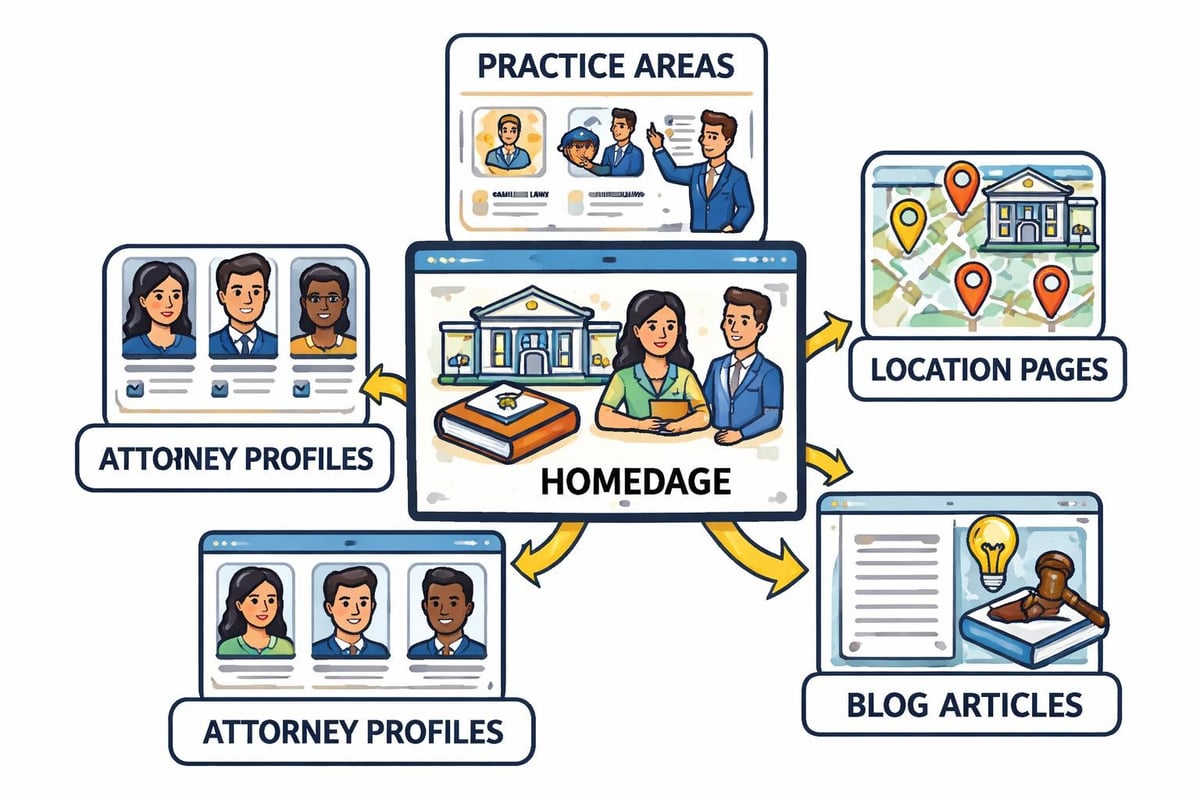
Blogging and Thought Leadership
Regular blog content serves multiple SEO purposes: it targets long-tail keywords, demonstrates current expertise, and gives search engines fresh content to index. In 2026, consistency matters more than occasional viral posts.
Focus your blog topics on:
- Answers to common client questions
- Recent legal developments in your practice areas
- Case study discussions (maintaining client confidentiality)
- Local legal news and its implications
- Step-by-step guides for legal processes
Each blog post should target specific keywords while genuinely helping readers. The goal isn't just rankings but establishing the trust that converts visitors into clients.
Link Building Strategies for Legal Websites
Backlinks remain one of the strongest ranking signals Google uses. Quality links from reputable sources tell search engines your firm deserves to rank highly. However, building authority through link building requires ethical, strategic approaches.
Local Partnership Opportunities
Building genuine community connections creates natural link opportunities:
- Sponsor local events or charities (with website links)
- Partner with complementary businesses (real estate agents, financial planners)
- Join and participate in local business organizations
- Offer to speak at community events or local colleges
- Participate in local media as a legal expert
These relationships provide value beyond just SEO, strengthening your local reputation simultaneously.
Legal Directory and Association Links
Professional directories specifically for attorneys provide valuable, relevant backlinks. Unlike generic directories, these signals directly relate to legal expertise.
High-value legal directory opportunities:
| Directory Type | SEO Value | Additional Benefits |
|---|---|---|
| State Bar Associations | Very High | Credibility, required listing |
| Practice-specific organizations | High | Networking, referrals |
| Legal rating sites (Avvo, Martindale) | High | Client reviews, visibility |
| Local lawyer directories | Medium-High | Local relevance boost |
| University alumni associations | Medium | Professional network |
The off-site SEO strategies like legal guest posting on reputable publications can significantly boost your domain authority. Focus on quality over quantity when building your backlink profile.
Review Management and Reputation Signals
Online reviews have become critical ranking factors for local search results. They also heavily influence potential clients' decisions when comparing attorneys.
Generating Consistent Client Reviews
Systematize your review generation process rather than leaving it to chance. Happy clients often need a gentle reminder and simple process to leave feedback.
Effective review generation system:
- Identify the best timing (after successful case resolution)
- Send personalized email requests with direct review links
- Make the process easy by linking to your preferred platforms
- Thank clients who leave reviews (but don't incentivize them)
- Monitor multiple platforms consistently
Google Business Profile reviews carry the most SEO weight, but diversify across Avvo, Yelp, and legal-specific platforms too. The volume, recency, and rating all influence rankings.
Responding to All Reviews Professionally
Every review deserves a response, positive or negative. Your responses show both Google and potential clients how you handle feedback.
Response best practices:
- Thank clients for positive reviews specifically mentioning what they appreciated
- Address concerns in negative reviews professionally without violating confidentiality
- Keep responses concise but personalized (avoid templates)
- Respond within 48 hours when possible
- Never argue or become defensive publicly
These interactions become public demonstrations of your professionalism and client care approach.
Tracking Results and Measuring ROI
The best SEO for law firms includes comprehensive tracking to understand what's working and where to focus resources. In 2026, data-driven decisions outperform guesswork consistently.
Essential Metrics for Law Firm SEO
| Metric Category | Key Indicators | Why It Matters |
|---|---|---|
| Rankings | Position for target keywords | Visibility in search results |
| Traffic | Organic sessions, new users | Website visitor volume |
| Engagement | Pages per session, time on site | Content quality and relevance |
| Conversions | Contact forms, phone calls | Lead generation effectiveness |
| Local | Google Business Profile views, actions | Local visibility and interest |
Set up proper tracking through Google Analytics 4 and Google Search Console. These free tools provide invaluable insights into how people find and interact with your website.
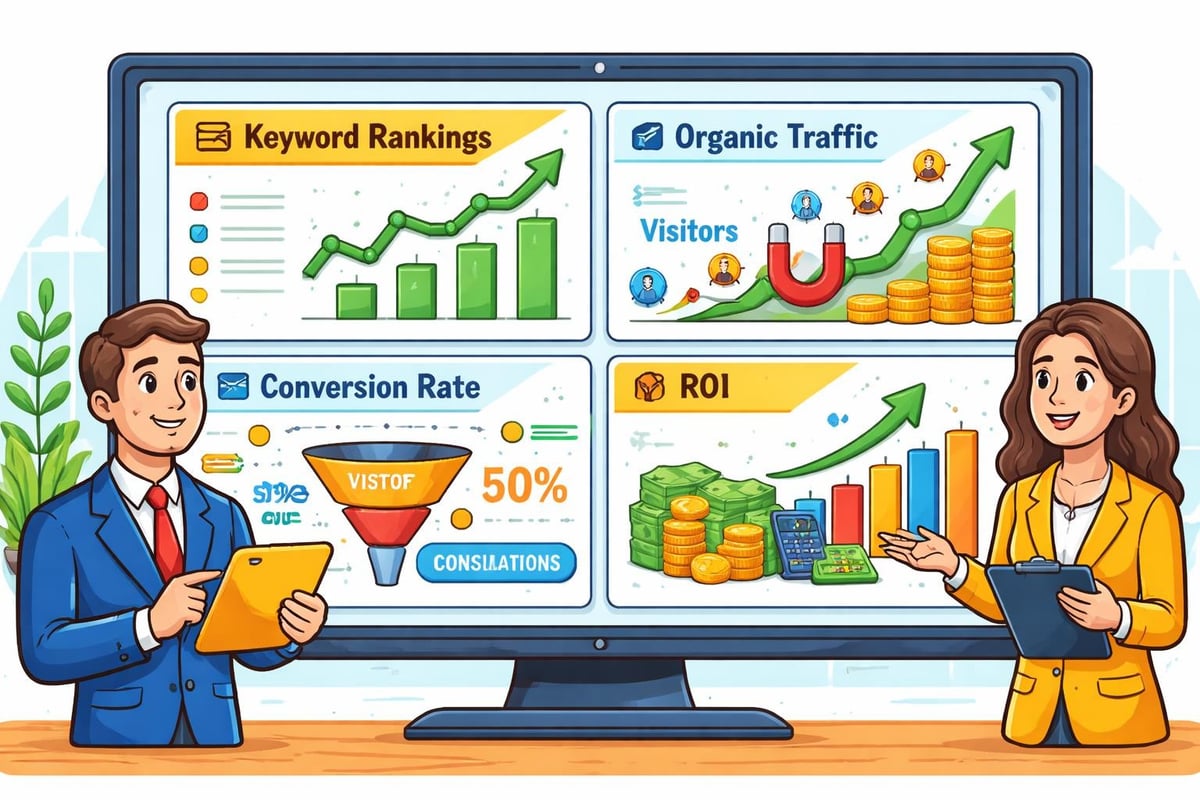
Conversion Tracking Beyond Rankings
Rankings matter, but conversions pay the bills. Track every path potential clients take to contact your firm:
- Contact form submissions with source tracking
- Phone call tracking with dynamic number insertion
- Live chat interactions and their originating pages
- Email inquiries tagged by landing page
- Consultation booking completions
Understanding which keywords and pages drive actual consultations helps refine your strategy. A keyword ranking #1 that never converts has less value than a #5 ranking that brings qualified leads weekly.
Similar to tracking methods used by SEO audit companies, establish baseline metrics before implementing changes, then monitor progress monthly. SEO results compound over time rather than appearing overnight.
Common SEO Mistakes Law Firms Must Avoid
Even well-intentioned firms make critical errors that undermine their SEO efforts. Understanding these pitfalls helps you avoid wasting time and resources.
Neglecting Mobile Experience
Despite mobile-first indexing being standard since 2019, some law firm websites still provide poor mobile experiences. This common mistake directly impacts rankings and conversions.
Test your site on multiple devices regularly. If forms are difficult to complete or text requires zooming, you're losing potential clients and rankings simultaneously.
Duplicate Content Across Practice Areas
Many firms use the same template content for different locations or similar practice areas, just changing the city name or minor details. Google recognizes this duplication and may not rank any version well.
Each page needs substantive, unique content that provides genuine value. The effort required to create truly distinct pages pays dividends in both rankings and user experience.
Ignoring Technical SEO Fundamentals
Beautiful design means nothing if search engines can't properly crawl your site. The technical SEO essentials include site speed, mobile compatibility, and clear website structure.
Common technical issues to address:
- Missing or improperly configured XML sitemaps
- Broken internal links creating dead ends
- Missing alt text on images
- Slow server response times
- Missing HTTPS security certificates
- Poorly structured URL hierarchies
Regular technical audits identify these issues before they significantly impact your rankings. Many firms benefit from partnering with specialists who monitor these factors continuously.
Advanced Strategies for Competitive Markets
In highly competitive legal markets like personal injury or divorce law, basic SEO isn't enough. Advanced tactics separate the firms dominating page one from those struggling on page three.
Schema Markup Implementation
Schema markup helps search engines understand your content context, potentially earning enhanced search results with rich snippets. For law firms, specific schema types provide advantages.
Valuable schema types for attorneys:
- LocalBusiness and LegalService schema for your firm
- Attorney schema for individual lawyer profiles
- FAQPage schema for question-and-answer content
- Review schema to display ratings in search results
- BreadcrumbList schema for clear site navigation
Implementing schema requires technical knowledge but delivers measurable visibility improvements in search results.
Competitive Content Gap Analysis
Study what's ranking for your target keywords and identify content gaps you can fill. Tools can reveal topics your competitors cover that you've missed, or areas where existing content falls short.
Create comprehensive resources that outperform competitor content in depth, clarity, and helpfulness. A single exceptional resource often outranks multiple mediocre pages.
Video Content Optimization
Video content engagement has grown 120% since 2024. Law firms creating video content about legal topics can capture featured snippet positions and video carousel placements.
Effective legal video topics:
- Common legal question explanations
- Attorney introductions and firm tours
- Client testimonial videos
- Legal process walkthroughs
- Community involvement highlights
Optimize video titles, descriptions, and transcripts with relevant keywords. Host videos on YouTube while embedding them on your website for maximum visibility.
Building Long-Term SEO Success
The best SEO for law firms isn't a one-time project but an ongoing commitment. Search algorithms evolve, competitors improve their strategies, and new opportunities emerge constantly.
Staying Current With Algorithm Updates
Google updates its algorithms thousands of times yearly, with major updates occurring several times annually. Staying informed helps you adapt quickly rather than watching rankings drop unexpectedly.
Follow reputable SEO news sources and consider working with an agency that monitors these changes professionally. The investment in specialized legal SEO services often costs less than recovering from algorithm penalties.
Continuous Content Expansion
Your content library should grow continuously. Adding new blog posts, expanding practice area pages, and updating existing content signals ongoing expertise and relevance.
Set realistic publishing goals: two to four quality blog posts monthly provides consistent fresh content without overwhelming your schedule. Quality always trumps quantity.
Building Sustainable Link Acquisition
One-time link building campaigns provide temporary benefits. Sustainable SEO requires ongoing relationship building and content creation that naturally attracts links.
Develop a comprehensive SEO strategy that includes regular outreach, community participation, and thought leadership. These efforts compound over months and years.
Implementing the best SEO for law firms requires technical expertise, consistent effort, and strategic focus across multiple channels simultaneously. From local optimization and technical foundations to content creation and link building, each element contributes to long-term visibility and client acquisition. Whether you're just starting your SEO journey or looking to enhance existing efforts, partnering with specialists who understand the legal industry can accelerate your results significantly. Shawn the SEO Geek brings over two decades of experience helping law firms dominate their local markets through customized, transparent SEO strategies that deliver measurable results and consistent lead flow.