
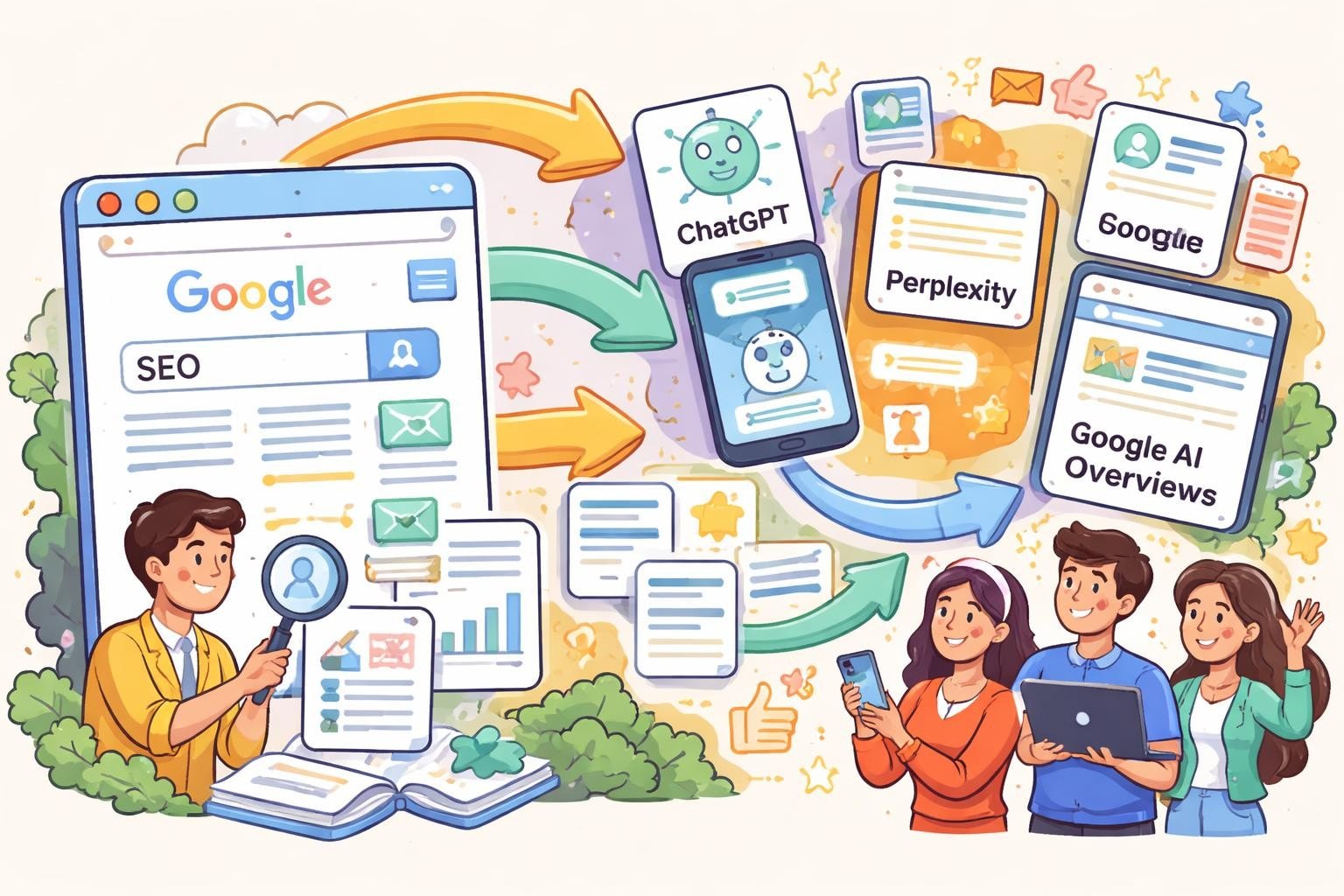
The search landscape is experiencing its most dramatic shift since Google first introduced its algorithm. As AI-powered platforms like ChatGPT, Google's AI Overviews, Perplexity, and Claude reshape how people find information, businesses must adapt their strategies to stay visible. This evolution isn't about abandoning traditional SEO tactics. It's about expanding them to meet the demands of artificial intelligence that summarizes, cites, and recommends content to users. Understanding seo for ai means recognizing that your content needs to serve both human searchers and the AI systems that answer their questions.
What SEO for AI Actually Means
Traditional SEO focused on ranking your website on search engine results pages. Users would click through to your site, browse your content, and hopefully convert. SEO for ai takes a fundamentally different approach because AI search engines often provide answers directly without requiring users to visit multiple websites.
When someone asks ChatGPT for recommendations or uses Google's AI Overviews, the AI synthesizes information from trusted sources and presents a consolidated answer. Your goal shifts from simply ranking to becoming one of those trusted, cited sources. AI is transforming how search works, making authority and structured information more critical than ever.
The New Search Behavior Pattern
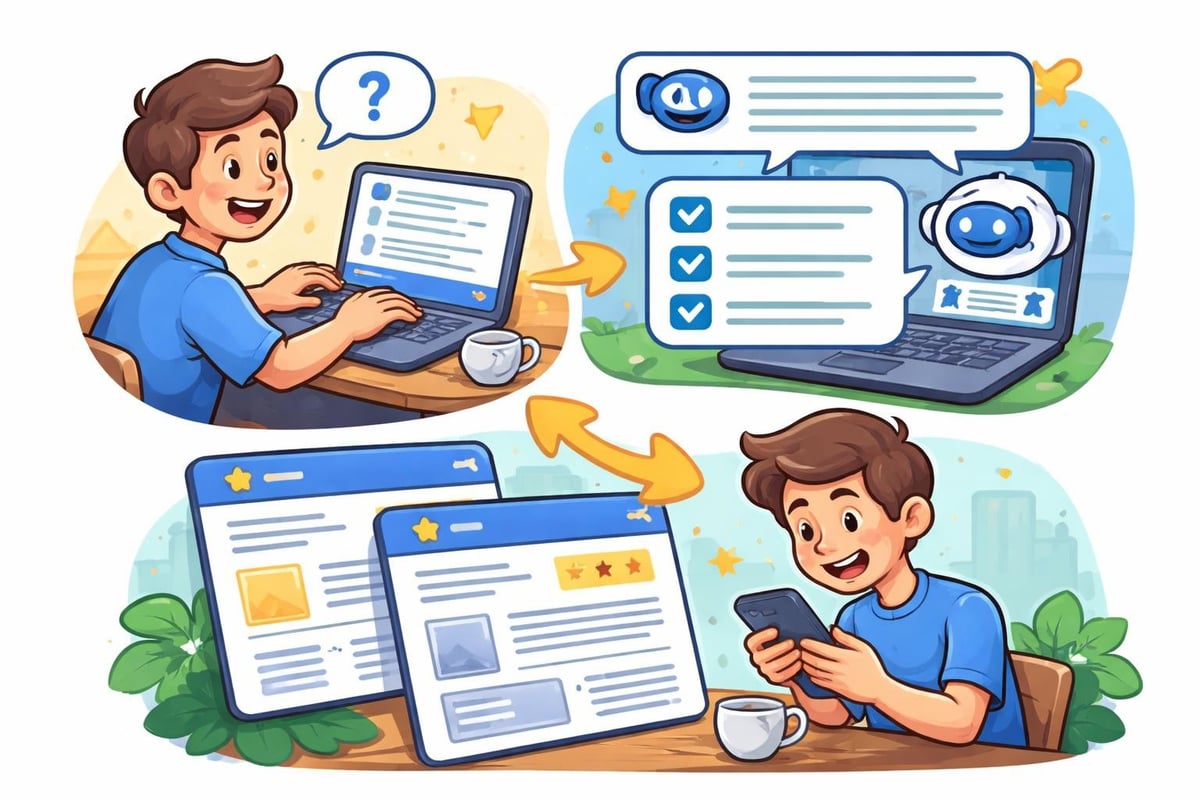
Consider how your potential customers now search for information:
- They ask conversational questions to AI assistants
- They expect immediate, comprehensive answers
- They trust AI recommendations for products and services
- They only visit websites when AI cites them as authoritative sources
This behavior fundamentally changes your optimization strategy. You're no longer just competing for position one on Google. You're competing to be the source that AI engines trust and reference.
Building Authority That AI Engines Recognize
AI systems prioritize authoritative, trustworthy sources when generating responses. Building this authority requires a multi-faceted approach that goes beyond traditional backlink strategies.
Domain expertise becomes your foundation. AI engines analyze the depth and consistency of your content within specific topic areas. If you're a law firm, publishing comprehensive legal guides demonstrates expertise that AI can verify and cite. Home service businesses should create detailed how-to content, project galleries, and educational resources that establish topical authority.
Your content must demonstrate E-E-A-T principles (Experience, Expertise, Authoritativeness, Trustworthiness) more explicitly than ever. AI algorithms evaluate author credentials, publication dates, citation quality, and fact-checking accuracy. Understanding what AI means for SEO helps clarify these new ranking factors.
Structured Data Implementation
| Schema Type | Purpose | AI Benefit |
|---|---|---|
| Organization | Company details, contact info | Helps AI identify your business accurately |
| Article | Content metadata, authors | Enables proper citation and verification |
| FAQ | Question-answer pairs | Direct feeding into AI responses |
| HowTo | Step-by-step guides | Powers AI instructional answers |
| Review | Customer feedback | Builds trust signals for recommendations |
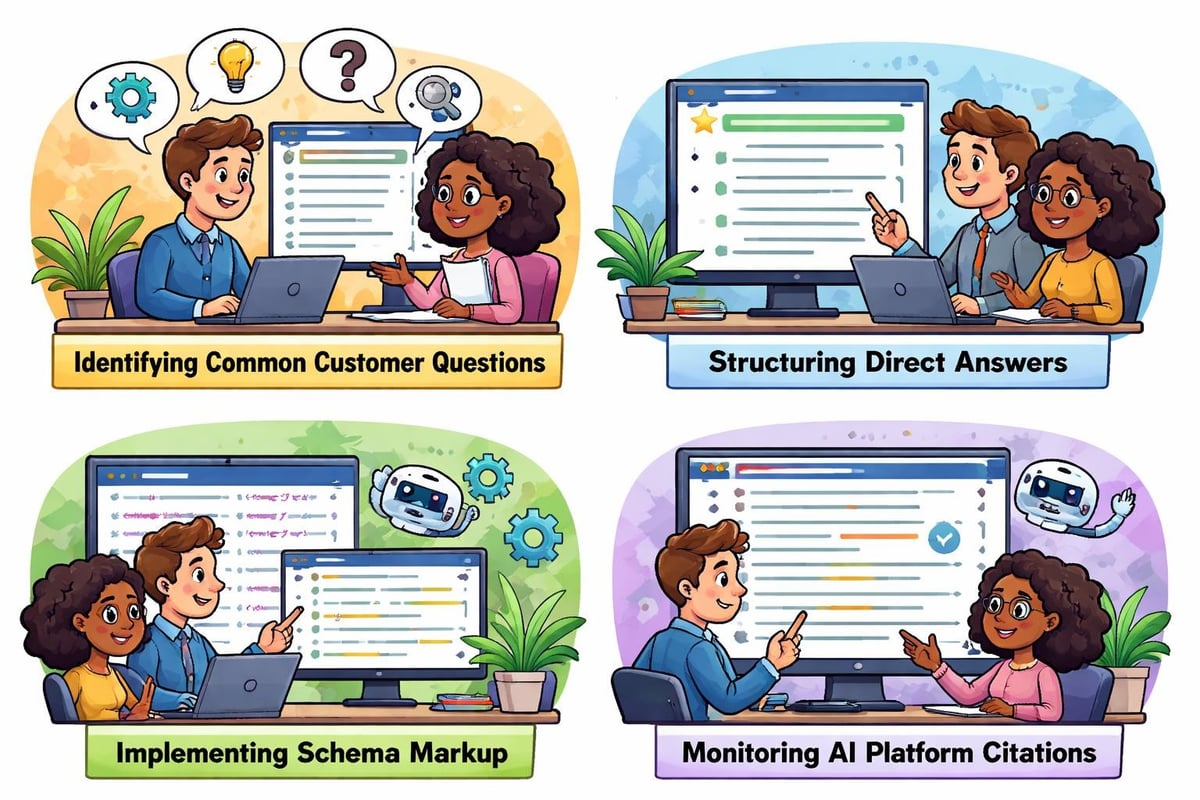
Implementing structured data through schema markup helps AI systems understand and categorize your content precisely. This isn't optional anymore. It's essential infrastructure for seo for ai success. Becoming a trusted source for AI engines requires making your content machine-readable through proper markup.
Content Optimization for AI Citation
Creating content that AI engines want to cite requires rethinking your content development process. AI doesn't just scan for keywords; it evaluates comprehensiveness, accuracy, and unique value.
Answer-focused content structure performs exceptionally well. Start articles with direct, clear answers to common questions. Follow with detailed explanations, examples, and supporting evidence. This structure mirrors how AI presents information to users.
Your content should include:
- Clear, factual statements that AI can extract and quote
- Statistical data with proper citations to original sources
- Expert quotes from credentialed individuals
- Updated information with recent publication or revision dates
- Comprehensive coverage of topics rather than surface-level overviews
Many businesses working with SEO services for contractors discover that detailed project breakdowns, material comparisons, and cost analyses perform better in AI search than generic service descriptions.
Topic Clustering Strategy
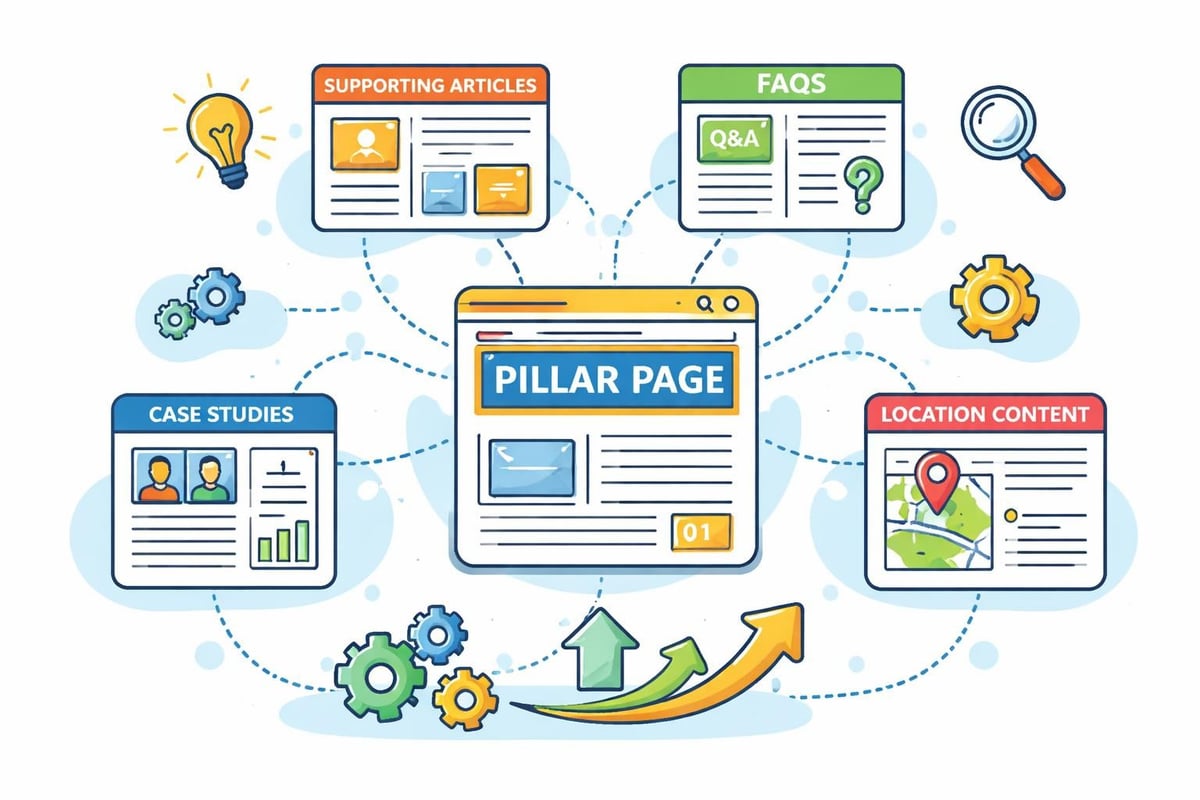
Rather than creating isolated blog posts, develop content clusters around core topics relevant to your business. A personal injury law firm might create a comprehensive cluster around "car accident claims" that includes:
- Main pillar content explaining the entire process
- Supporting articles on specific accident types
- FAQ pages addressing common concerns
- Case study examples with outcomes
- State-specific legal requirement guides
This interconnected content structure helps AI understand your expertise depth and provides multiple citation opportunities across related queries.
Technical Infrastructure for AI Discoverability
Your website's technical foundation determines whether AI systems can access, understand, and trust your content. Many aspects of SEO in web design directly impact AI discoverability.
Site speed and performance matter differently for AI crawlers than human visitors. AI systems often process large amounts of content quickly, and slow-loading sites create barriers to comprehensive indexing. Core Web Vitals remain important, but server response times and efficient code become even more critical.
Clean, semantic HTML structure helps AI parse your content accurately. Use proper heading hierarchies (H1, H2, H3) to show content organization. Implement descriptive alt text for images that explains context, not just what's visible. Structure lists, tables, and data in HTML rather than embedding them in images.
API and Feed Optimization
Some AI platforms access content through APIs or RSS feeds rather than traditional web crawling. Ensure you have:
- A properly formatted XML sitemap updated regularly
- RSS feeds for blog content and news updates
- JSON-LD structured data on key pages
- Open Graph and Twitter Card metadata
- Robots.txt configuration that allows AI crawler access
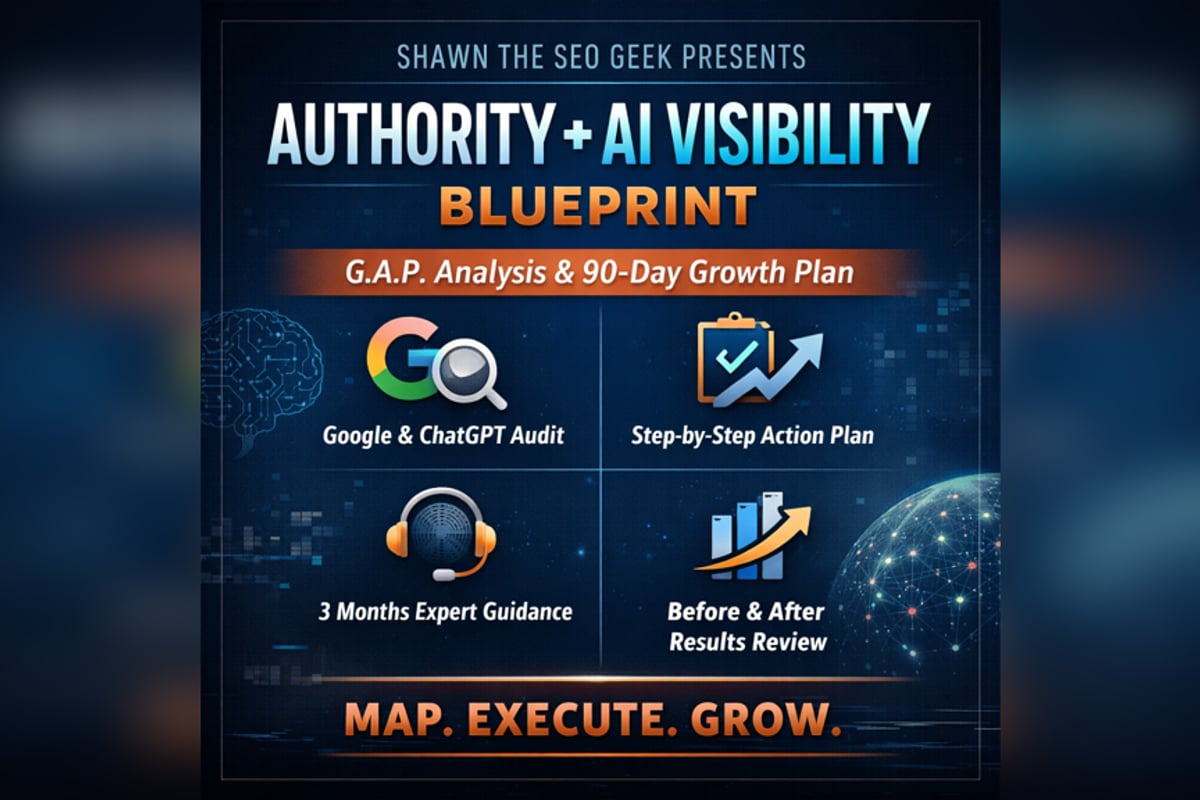
Understanding how to optimize for AI visibility requires both strategic content planning and technical implementation. If you're looking to establish your presence in both traditional search and emerging AI platforms, the Authority + AI Visibility Blueprint provides a comprehensive roadmap showing exactly how to get found for keywords and phrases that generate leads across Google and AI search engines like ChatGPT.
Link Building in the AI Era
Backlinks remain valuable, but their role in seo for ai extends beyond PageRank transfer. AI systems evaluate your link profile to assess authority, relevance, and trustworthiness within specific domains.
Quality over quantity reaches new importance levels. A single link from a recognized industry publication or .edu domain carries more weight with AI than dozens of directory listings. AI algorithms can identify link schemes and devalue entire domains that participate in manipulative practices.
Focus your link-building efforts on:
- Industry publications and news sites
- Professional association websites
- Government and educational institutions
- Research papers and academic citations
- Guest contributions to authoritative blogs
For service-based businesses, local partnerships, chamber of commerce memberships, and supplier relationships often provide valuable linking opportunities that AI recognizes as legitimate authority signals.
Citation Without Links
Interestingly, brand mentions without hyperlinks increasingly influence AI recommendations. When your business name appears in positive contexts across forums, social media, reviews, and news articles, AI systems note these signals even without traditional backlinks.
Monitor and encourage:
- Customer reviews on Google, Yelp, and industry-specific platforms
- Social media mentions and shares
- Forum discussions and Q&A site answers
- Press coverage and news mentions
- Podcast interviews and video appearances
This broader digital footprint helps AI understand your reputation and relevance within your industry.
Answer Engine Optimization (AEO)
The shift from SEO to Answer Engine Optimization represents the next evolution in search marketing. AEO focuses specifically on optimizing content to be selected as the direct answer AI provides to user queries.
Question-answer format content performs exceptionally well. Create FAQ pages, Q&A blog posts, and conversational content that directly addresses common customer questions. Format these clearly with the question as a heading and the answer immediately following.
Natural language processing means you should write how people actually speak. Instead of targeting "Philadelphia personal injury lawyer cost," optimize for "How much does a personal injury lawyer cost in Philadelphia?" AI understands conversational queries and rewards content written in similar style.
Featured Snippet Optimization
While featured snippets target traditional Google search, the same optimization techniques help with AI citations:
| Element | Optimization Technique |
|---|---|
| Answers | 40-60 word concise responses |
| Lists | Numbered or bulleted format |
| Tables | Comparison data in HTML tables |
| Definitions | Clear, dictionary-style explanations |
| Steps | Sequential how-to instructions |
When Google features your content in snippets, AI platforms often reference the same content when answering similar queries.
Monitoring AI Platform Visibility
Tracking your seo for ai performance requires new tools and metrics beyond traditional Google Analytics. You need to monitor where and how AI platforms reference your content.
Set up brand monitoring alerts across ChatGPT, Perplexity, Claude, and Google's AI Overviews. Regularly search for key topics in your industry and note which sources AI platforms cite. Are you appearing? How frequently? In what context?
Tools and techniques for monitoring include:
- Manual queries across multiple AI platforms weekly
- Brand mention tracking software
- Referral traffic analysis from AI platforms
- Citation tracking in AI-generated content
- Screenshot documentation of AI references
Many businesses conducting SEO audit services now include AI visibility assessment as a standard component, evaluating how well content performs across both traditional and AI-powered search.
Key Performance Indicators
Traditional metrics like rankings and click-through rates don't fully capture AI search performance. Consider tracking:
- Citation frequency across AI platforms
- Recommendation rate when AI suggests businesses or solutions
- Source attribution quality and context
- Query coverage for how many relevant questions you appear
- Competitor comparison of AI visibility
These metrics provide insight into your AI search authority and identify optimization opportunities.
Creating Conversational, Natural Content
AI systems favor content that reads naturally and provides genuine value rather than keyword-stuffed articles designed solely for search engines. AI-powered tools are transforming content creation, but the human element remains critical for authenticity.
Write in first or second person when appropriate. "We recommend" or "You should consider" creates more engaging, conversational content than passive voice constructions. This style aligns with how AI presents information to users.
Incorporate real examples, case studies, and specific scenarios. Instead of generic advice, share actual results. For instance, home services businesses see better AI citations when they include specific project details, material costs, and timeline information rather than vague service descriptions.
The Human-AI Content Balance
While AI tools can assist with content creation, they shouldn't replace human expertise and experience. The most effective approach combines:
- AI assistance for research, outline creation, and initial drafts
- Human expertise for unique insights, industry knowledge, and nuanced understanding
- Editorial review ensuring accuracy, brand voice, and strategic alignment
- Regular updates keeping content current and relevant
Content that demonstrates genuine expertise and original thinking earns citations more reliably than AI-generated generic information.
Local SEO Meets AI Search
For businesses serving specific geographic areas, local seo for ai requires special consideration. AI platforms increasingly provide location-aware recommendations when users search for nearby services.
Optimize your Google Business Profile meticulously. AI systems often pull business recommendations from Google's local data, making your profile a crucial citation source. Complete every section, maintain accurate hours, respond to reviews, and regularly post updates.
Location-specific content helps AI understand your service areas. Create dedicated pages or comprehensive sections for each location you serve. A Bucks County SEO agency might develop separate resources for Doylestown, Newtown, and surrounding communities, each with locally relevant information.
Geographic Authority Signals
Build location-based authority through:
- Local news coverage and press mentions
- Community organization partnerships
- Location-specific case studies and testimonials
- Regional industry association memberships
- City or county government supplier relationships
These signals help AI platforms confidently recommend your business for location-specific queries.
Industry-Specific AI Optimization
Different industries require tailored approaches to seo for ai. Legal, home services, and B2B companies each face unique challenges and opportunities.
Legal practices benefit from comprehensive legal guides, state-specific regulation explanations, and detailed case type breakdowns. Law firm SEO strategies now prioritize educational content that AI can cite when answering legal questions, positioning attorneys as trusted information sources.
Home service businesses should focus on project galleries, material comparisons, cost breakdowns, and process explanations. Detailed before-and-after case studies with specific challenges and solutions provide citation-worthy content that AI references when recommending contractors.
B2B companies need thought leadership content, industry trend analysis, and comprehensive product or service comparisons. White papers, research reports, and expert commentary establish the authority that B2B SEO strategies leverage for AI visibility.
The Future of SEO for AI
The integration of AI into search will only accelerate. New platforms emerge regularly, and existing ones continuously refine their algorithms. Staying ahead requires ongoing adaptation and learning.
Prepare for increased personalization in AI responses. Search results will vary more dramatically based on user history, preferences, and context. Creating diverse content that appeals to different user segments becomes increasingly important.
Multimodal search combining text, images, voice, and video will expand. How AI is transforming every phase of SEO includes optimizing for these varied content types, not just written text.
Voice search integration with AI assistants means conversational, question-focused content gains even more importance. Optimize for how people naturally speak questions aloud, not just how they type search queries.
Understanding and implementing seo for ai isn't optional anymore; it's essential for maintaining visibility as search evolves. The strategies we've covered help you build authority, structure content effectively, and position your business as a trusted source that AI platforms confidently cite and recommend. If you're ready to establish strong visibility in both traditional Google search and emerging AI platforms, Shawn the SEO Geek brings over two decades of expertise to help you navigate this new landscape. With customized strategies tailored to your industry and hands-on implementation, we'll help you capture leads from wherever your customers are searching.