
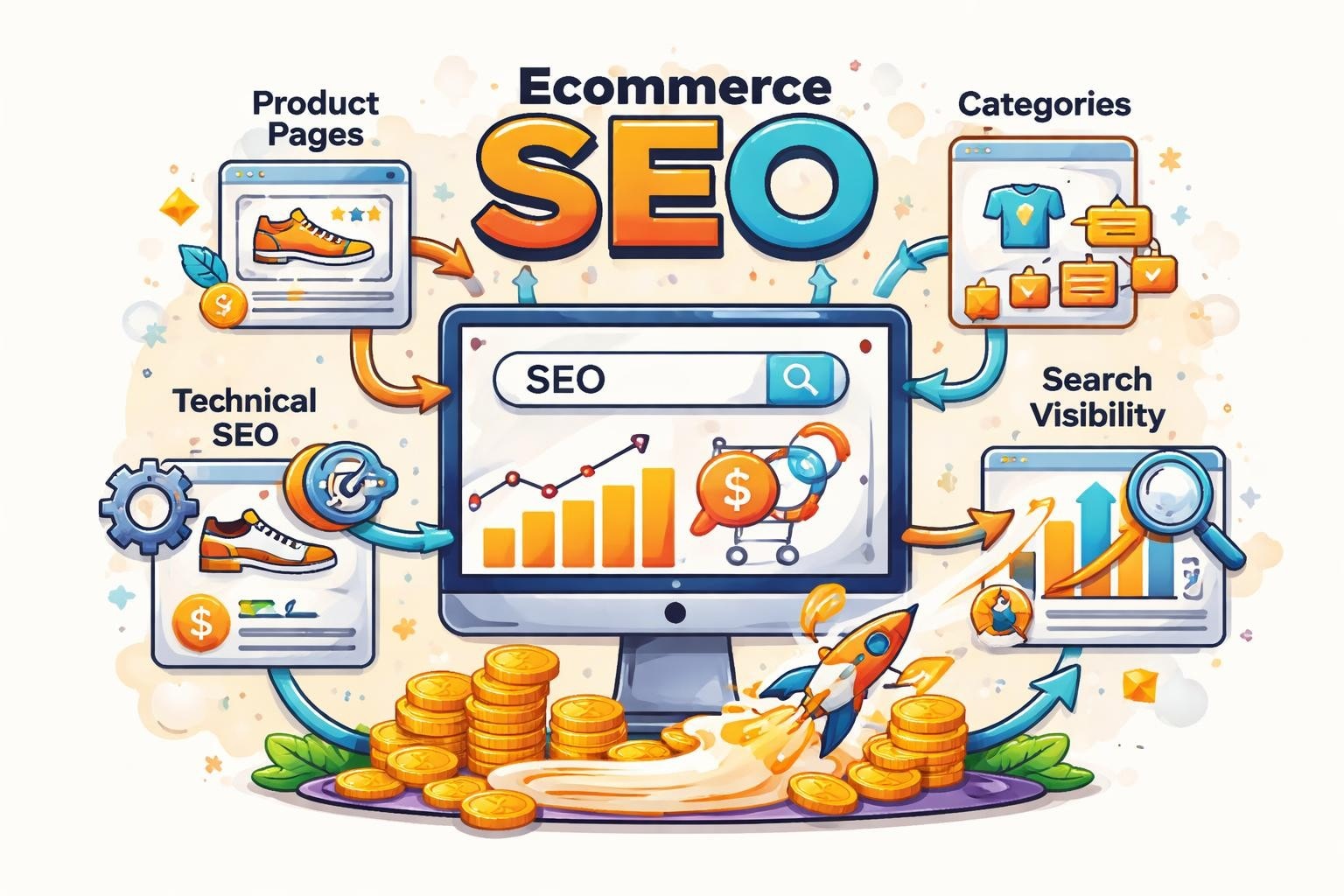
Running an online store in 2026 means competing in one of the most crowded digital landscapes ever. With millions of product pages vying for attention, standing out requires more than just great products and competitive prices. This is where an ecommerce SEO expert becomes invaluable. These specialists understand the unique challenges of optimizing online stores, from managing thousands of product variations to creating seamless user experiences that convert browsers into buyers. Whether you're launching a new store or trying to scale an existing one, working with an ecommerce SEO expert can transform your organic search presence and drive sustainable revenue growth.
What Makes Ecommerce SEO Different from Other SEO
Ecommerce SEO presents unique challenges that set it apart from traditional website optimization. Unlike service-based businesses or content sites, online stores must optimize hundreds or thousands of product pages while maintaining site speed and user experience.
The complexity multiplies when you consider product variations, seasonal inventory changes, and the constant battle against duplicate content. An ecommerce SEO expert knows how to navigate these challenges without compromising site performance or user satisfaction.
Key differences include:
- Managing large-scale site architecture with category hierarchies
- Optimizing product pages with limited unique content
- Handling out-of-stock items without losing SEO value
- Balancing technical performance with rich media requirements
- Implementing structured data for product-rich snippets
Traditional SEO focuses heavily on content creation and link building, but ecommerce requires equal attention to technical optimization and conversion rate factors. When someone searches for "blue running shoes size 10," they want immediate answers and seamless purchasing options.

The Technical Foundation Every Online Store Needs
A solid technical foundation separates successful online stores from those struggling to rank. Site speed becomes critical when shoppers compare multiple options, and technical SEO elements directly impact both rankings and conversions.
Mobile optimization isn't optional anymore. With mobile commerce accounting for over 60% of online sales in 2026, your store must deliver flawless experiences across all devices. This means fast loading times, easy navigation, and simple checkout processes that work perfectly on smartphones.
| Technical Element | Why It Matters | Target Metric |
|---|---|---|
| Page Load Speed | Reduces bounce rate | Under 2.5 seconds |
| Mobile Responsiveness | Captures mobile shoppers | 100% functionality |
| SSL Certificate | Builds trust and security | HTTPS on all pages |
| Structured Data | Enhances search snippets | All products marked up |
| XML Sitemap | Helps search engines crawl | Updated automatically |
Working with a specialized SEO agency in Bucks County means getting expertise in implementing these technical elements correctly from the start.
Product Page Optimization Strategies That Convert
Product pages are your money-makers, and optimizing them requires balancing search engine requirements with user needs. An ecommerce SEO expert knows that product pages must serve multiple masters: search algorithms, potential customers, and conversion tracking systems.
Start with compelling product titles that incorporate target keywords naturally. Instead of "Blue Shoes," use "Men's Blue Running Shoes – Lightweight Athletic Footwear." This approach provides clarity for both search engines and shoppers.
Product descriptions present a unique challenge. Many stores use manufacturer descriptions, creating massive duplicate content issues across the web. Custom, detailed descriptions that answer customer questions while incorporating relevant keywords make the difference.
Essential product page elements:
- Unique, keyword-rich product titles
- Custom descriptions (minimum 300 words)
- High-quality images with optimized alt text
- Customer reviews and ratings
- Clear pricing and availability
- Related product recommendations
- Breadcrumb navigation
- Trust signals (secure checkout, returns policy)
Image optimization deserves special attention. Optimizing product images improves load times while providing additional ranking opportunities through image search. Compress files without sacrificing quality, use descriptive filenames, and always include alt text.
Leveraging User-Generated Content for SEO
Customer reviews and questions represent goldmine opportunities that many stores overlook. These elements provide fresh, unique content that search engines love while building trust with potential buyers.
Reviews naturally incorporate long-tail keywords that customers actually use. When someone writes "These shoes are perfect for wide feet," you've gained valuable keyword content you couldn't ethically create yourself.
Encourage reviews through post-purchase emails, loyalty program incentives, or simple follow-up requests. Display them prominently on product pages, and respond to both positive and negative feedback to show engagement.
Category Page Architecture and Navigation
Category pages often get neglected in favor of product pages, but they're crucial for both SEO and user experience. These pages target broader keywords and help organize your store's structure in ways that search engines can understand.
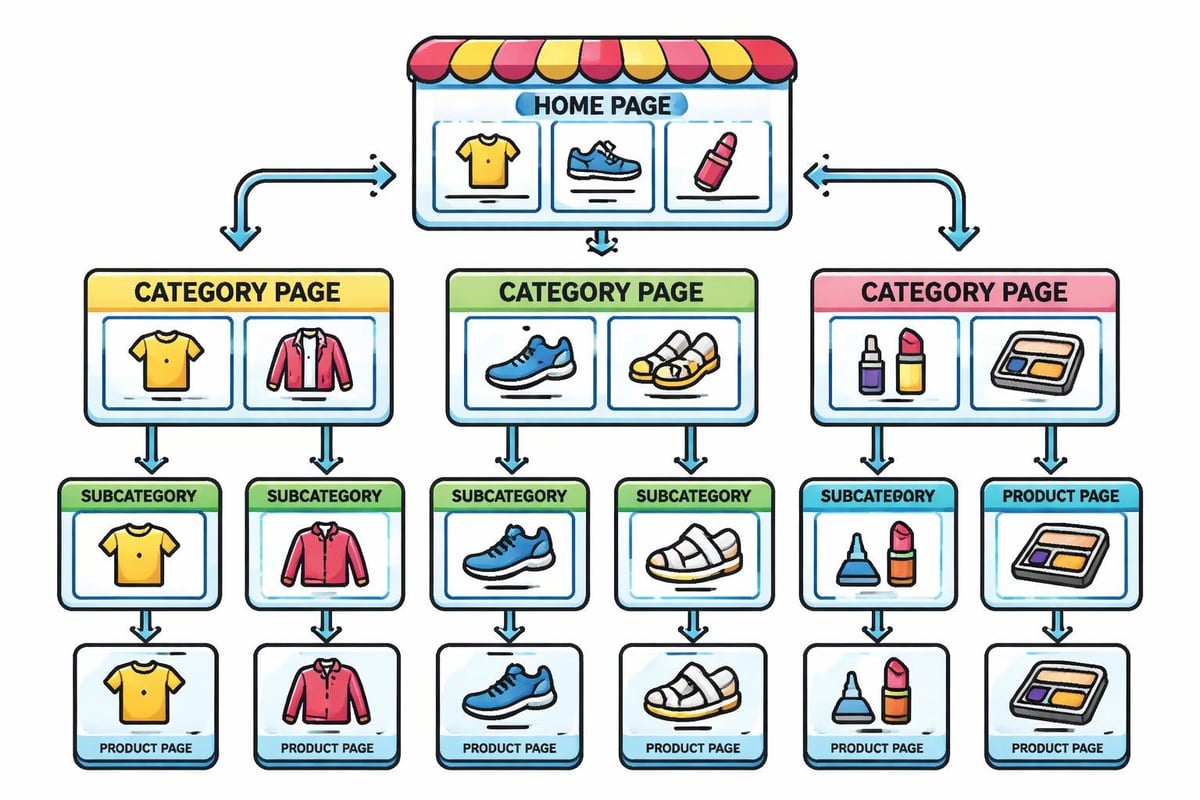
An ecommerce SEO expert structures categories logically, creating clear hierarchies that flow from broad to specific. Your main navigation should reflect this structure, making it easy for both users and search crawlers to find everything.
Think of your category structure as a pyramid. At the top, you have broad categories like "Men's Clothing." These branch into subcategories like "Men's Shirts," which further divide into "Men's Dress Shirts" and "Men's Casual Shirts."
Optimizing Category Pages for Rankings
Category pages need unique content beyond just product listings. Add 300-500 words of descriptive text explaining what shoppers will find, why these products matter, and how to choose the right option.
Place this content strategically. Some stores put it above products, others below. Testing shows that content below product grids often performs better, as it doesn't push products below the fold.
Category page best practices:
- Create unique meta titles and descriptions
- Include keyword-rich headings (H1, H2)
- Add descriptive content (not just product listings)
- Implement faceted navigation carefully
- Use canonical tags to prevent duplicate content
- Include internal links to related categories
Improving navigation enhances both SEO and user experience, helping customers find what they need while distributing link equity throughout your site.
Managing URL Structure and Site Architecture
Clean, logical URLs help search engines understand your site structure while making navigation intuitive for users. An ecommerce SEO expert pays careful attention to URL architecture, knowing that cluttered URLs hurt rankings.
Keep URLs short and descriptive. Instead of "www.store.com/products?id=12345&cat=shoes&color=blue," use "www.store.com/mens-shoes/running-shoes/blue-athletic-trainers."
URL structure guidelines:
- Use hyphens (not underscores) to separate words
- Include target keywords naturally
- Keep URLs under 75 characters when possible
- Avoid unnecessary parameters and session IDs
- Maintain consistency across the site
- Use lowercase letters exclusively
Breadcrumb navigation reinforces your URL structure while helping users understand where they are. It also creates additional internal linking opportunities that strengthen your site's SEO foundation.
Handling Common Ecommerce SEO Challenges
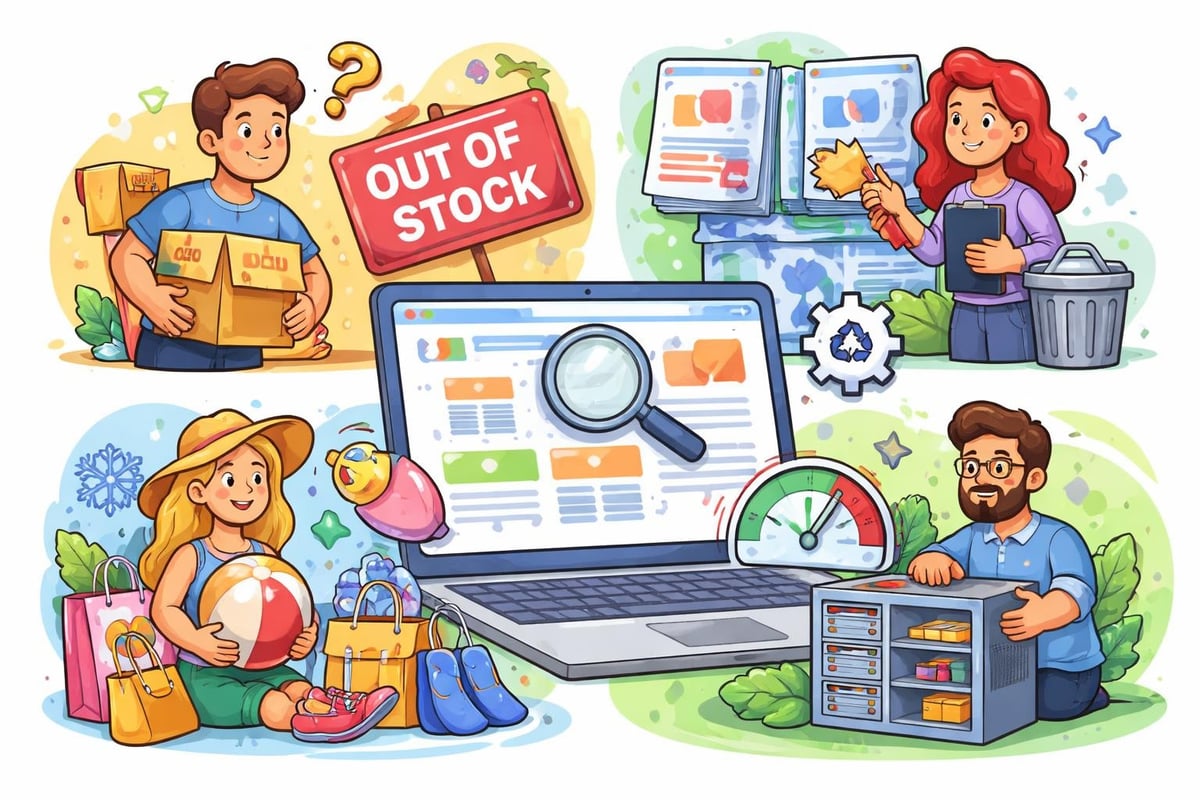
Every online store faces specific SEO obstacles. Out-of-stock items present a dilemma: delete the page and lose its SEO value, or keep it live with disappointed visitors? An ecommerce SEO expert knows to keep the URL active, mark items as temporarily unavailable, and suggest similar products.
Duplicate content plagues ecommerce sites. Product variations (same shirt in different colors), manufacturer descriptions, and filter pages create multiple URLs with identical content. Solutions include canonical tags, noindex directives for filter pages, and creating unique descriptions for each variation.
Seasonal products require careful planning. Don't delete pages for seasonal items; update them with "coming soon" messaging and related products during the off-season. This preserves accumulated SEO value year-round.
| Challenge | Problem | Solution |
|---|---|---|
| Out-of-stock items | Lost pages hurt SEO | Keep pages, show alternatives |
| Product variations | Duplicate content issues | Use canonical tags, unique descriptions |
| Seasonal products | Temporary relevance | Maintain pages year-round |
| Thin content | Pages lack substance | Add detailed descriptions, FAQs |
| Large inventories | Crawl budget limitations | Optimize site architecture, sitemaps |
SEO services for ecommerce websites address these challenges with proven strategies tailored to online retail environments.
Content Marketing for Ecommerce Stores
Beyond product and category pages, content marketing drives traffic and builds authority. Blog posts, buying guides, and comparison articles target informational keywords that bring shoppers early in their journey.
Create content that answers questions your customers ask. If you sell camping gear, write about "How to Choose a Sleeping Bag for Cold Weather" or "10 Essential Items for First-Time Campers." These pieces attract traffic and position your store as an authority.
Link strategically from content to relevant products. A buying guide about sleeping bags should naturally link to your sleeping bag category and specific products mentioned. This drives traffic while strengthening your internal linking structure.
Effective ecommerce content types:
- Buying guides and product comparisons
- How-to tutorials using your products
- Industry trend articles and news
- Customer success stories
- FAQ pages addressing common concerns
- Video content demonstrating products
- Seasonal gift guides
SEO in content writing requires balancing keyword optimization with genuine value, creating resources that both rank well and convert readers into customers.
Local SEO for Ecommerce with Physical Locations
If your online store has physical locations, local SEO provides additional opportunities. Create location pages optimized for local searches, maintain consistent NAP (name, address, phone) information, and manage Google Business Profile listings.
Local inventory ads show nearby shoppers what's available at their closest store, combining the convenience of online browsing with the immediacy of local pickup. This strategy has grown significantly in 2026 as consumers seek flexible shopping options.
Encourage location-specific reviews and create locally-relevant content. A sporting goods store might write about "Best Hiking Trails Near Philadelphia" while linking to relevant products and their Doylestown location.
Link Building Strategies for Online Stores
Quality backlinks remain crucial for ecommerce SEO success. An ecommerce SEO expert develops link-building strategies that work for product-based businesses, which face different challenges than service companies or publishers.
Product-focused link building includes getting featured in gift guides, securing reviews from industry bloggers, and creating shareable content like infographics or industry research. These approaches generate natural links while building brand awareness.
Effective ecommerce link building tactics:
- Submit products for editorial gift guides
- Send products to reviewers and influencers
- Create data-driven industry reports
- Develop useful tools or calculators
- Build relationships with industry publications
- Participate in relevant online communities
- Sponsor events or charitable causes
Avoid buying links or participating in link schemes. Search engines have become incredibly sophisticated at identifying manipulative link patterns, and penalties can devastate an ecommerce site's visibility.
Measuring Success and ROI
An ecommerce SEO expert tracks metrics that matter for business growth, not just vanity numbers. Organic traffic matters, but revenue from organic search matters more.
Key performance indicators include organic revenue, conversion rate from organic traffic, rankings for money keywords, and return on SEO investment. Track these monthly to understand what's working and where adjustments are needed.
Set up proper tracking in Google Analytics 4 and Google Search Console. Monitor product page performance, category page rankings, and how organic visitors move through your sales funnel.
| Metric | What It Measures | Why It Matters |
|---|---|---|
| Organic Revenue | Sales from organic search | Direct business impact |
| Conversion Rate | Visitors who purchase | Effectiveness of optimization |
| Average Order Value | Revenue per transaction | Profitability of organic channel |
| Keyword Rankings | Position for target terms | Visibility and potential traffic |
| Click-Through Rate | Searches that become visits | Appeal of title and meta tags |
Conversion rate optimization works hand-in-hand with SEO, ensuring that increased traffic translates into increased revenue.
Mobile Commerce Optimization
Mobile optimization extends beyond responsive design. Mobile users have different behaviors and needs than desktop shoppers. They want quick answers, easy navigation, and streamlined checkout processes.
Page speed becomes even more critical on mobile devices. Compress images aggressively, minimize code, and prioritize above-the-fold content. Google's mobile-first indexing means your mobile site determines your rankings.
Simplify forms and checkout for mobile users. Offer guest checkout, enable autofill, and provide multiple payment options including digital wallets. Mobile optimization directly impacts both rankings and conversion rates.
Advanced Schema Markup for Products
Structured data helps search engines understand your products and display rich results. Product schema includes price, availability, reviews, and other details that appear in search results.
Implement schema for products, reviews, breadcrumbs, and organization information. This markup enables rich snippets that improve click-through rates and drive qualified traffic.
Rich results showcase your products more prominently in search results, displaying star ratings, prices, and availability directly in search listings. These enhanced listings attract more clicks and qualified shoppers.
Seasonal SEO Planning and Execution
Smart ecommerce SEO experts plan for seasonal fluctuations months in advance. Holiday shopping seasons require preparation starting in summer, optimizing gift guides and seasonal categories before peak traffic arrives.
Create seasonal landing pages that you update and refresh annually rather than building new ones each year. This approach preserves SEO value while keeping content fresh and relevant.
Monitor trending searches and adjust strategy accordingly. In 2026, staying agile means responding quickly to emerging trends while maintaining focus on core optimization efforts.
Seasonal SEO timeline:
- Six months out: Plan seasonal content and campaigns
- Three months out: Create and optimize seasonal pages
- Two months out: Build links to seasonal content
- One month out: Refine and test all seasonal elements
- During season: Monitor performance and adjust
- Post-season: Analyze results and plan improvements
Working with an Ecommerce SEO Expert
Choosing the right ecommerce SEO expert makes all the difference in your online store's success. Look for specialists with proven ecommerce experience, not generalists who dabble in every type of SEO.
Ask about their approach to technical optimization, content strategy, and link building. Request case studies showing measurable results for other ecommerce clients. Understanding common ecommerce SEO mistakes helps you evaluate potential partners more effectively.
Transparency matters. Your SEO expert should explain strategies clearly, provide regular reporting, and maintain open communication about progress and challenges. They should function as a partner in your business growth, not just a vendor completing tasks.
A comprehensive SEO audit identifies current issues and opportunities, providing a roadmap for improvement. This audit forms the foundation of any successful ecommerce SEO campaign.
Growing an ecommerce business in 2026 requires sophisticated SEO strategies that address technical performance, user experience, and conversion optimization simultaneously. The unique challenges of online retail demand specialized expertise that understands both search algorithms and shopping behavior. If you're ready to transform your online store's organic performance and drive measurable revenue growth, Shawn the SEO Geek brings over two decades of proven expertise and a track record of 500+ successful campaigns across diverse industries, delivering tailored strategies and transparent results that help ecommerce businesses thrive.