

When you're running a B2B company, attracting the right clients online requires a fundamentally different approach than consumer-focused marketing. SEO for B2B companies demands patience, precision, and a deep understanding of how business decision-makers search for solutions. Unlike B2C customers who might make impulse purchases, your potential clients are researching extensively, comparing vendors, and seeking expertise before they ever fill out a contact form. We're here to walk you through everything you need to know about building an SEO strategy that connects you with the businesses that need your services most.
Understanding Why B2B SEO Is Different
The business buying journey doesn't happen in a single search session. Your prospects might spend weeks or even months researching solutions, reading case studies, and evaluating options before reaching out. This extended timeline means your SEO strategy needs to address multiple touchpoints and provide value at every stage of the decision-making process.
The Search Volume Reality
Here's something that surprises many B2B marketers: your target keywords will likely have much lower search volumes than consumer-focused terms. A keyword like "enterprise software solutions" might only get searched a few hundred times monthly, compared to thousands for consumer products. But those searches are incredibly valuable because they come from people with purchasing authority and substantial budgets.
According to comprehensive research comparing B2B and B2C SEO approaches, this difference in search volume requires a completely different mindset when evaluating keyword opportunities.
Key differences that shape your strategy:
- Longer sales cycles requiring nurturing content
- Multiple stakeholders involved in decisions
- Higher transaction values justifying extensive research
- Industry-specific terminology and jargon
- Emphasis on expertise and credibility signals
Building Your B2B Keyword Strategy
The foundation of effective SEO for B2B companies starts with understanding how your ideal clients actually search. They're not looking for quick fixes. They're searching for comprehensive solutions, comparing methodologies, and seeking partners who understand their specific challenges.
Targeting Long-Tail Keywords That Matter
While consumer brands chase high-volume keywords, your sweet spot lies in highly specific, low-volume keywords that target the right audience. A manufacturing company might target "automated quality control systems for pharmaceutical production" rather than just "quality control software."
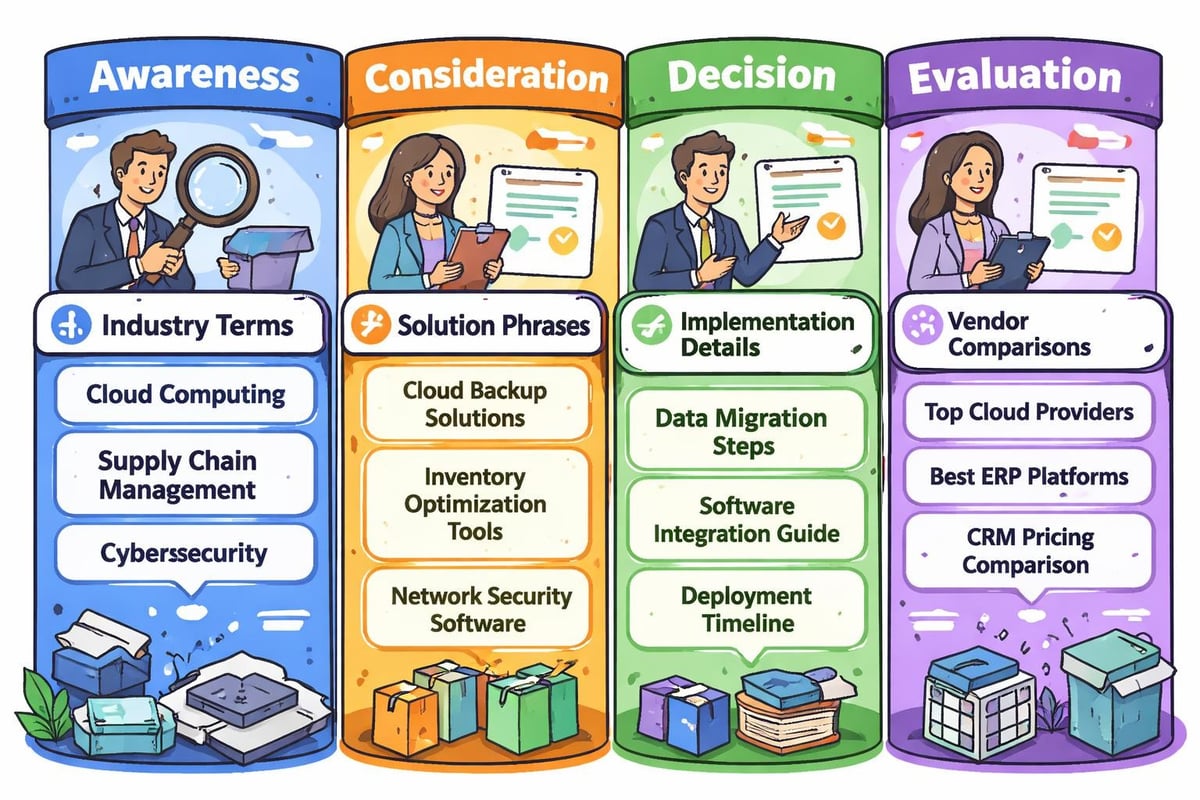
| Keyword Type | Example | Search Volume | Intent |
|---|---|---|---|
| Industry Problem | "supply chain inefficiencies" | Medium | Awareness |
| Solution Category | "supply chain management software" | Low-Medium | Consideration |
| Specific Solution | "real-time inventory tracking platform" | Low | Decision |
| Comparison | "NetSuite vs SAP for distribution" | Very Low | Decision |
These lower-volume searches convert at much higher rates because they come from prospects who know exactly what they're looking for. A well-executed B2B SEO agency understands how to identify and prioritize these opportunities.
Creating Content for Every Funnel Stage
Your content strategy needs to mirror the B2B buying journey. Early-stage prospects need educational content about their challenges. Mid-stage researchers want to understand different approaches and methodologies. Late-stage buyers are comparing vendors and looking for proof points.
Top-of-funnel content formats:
- Industry trend reports and analysis
- Problem-focused blog posts
- Educational guides and whitepapers
- Data-driven research studies
Middle-of-funnel resources:
- Methodology comparisons
- Implementation frameworks
- ROI calculators
- Detailed case studies
Bottom-of-funnel assets:
- Product comparison pages
- Customer testimonials and reviews
- Pricing and packaging information
- Free trials or demos
Technical SEO Foundations for B2B Success
Your website's technical health directly impacts your ability to rank and convert visitors. B2B buyers expect professional, fast-loading websites that work flawlessly across devices. Technical issues send a message that you might not be detail-oriented with your actual services either.
Essential Technical Elements
Technical SEO for B2B sites requires attention to details that directly impact user experience and search engine crawlability. Site speed matters enormously when decision-makers are comparing multiple vendors and won't wait for slow-loading pages.
Run a comprehensive SEO website audit to identify technical issues holding back your rankings. The most common problems we see include:
- Slow page load times (especially on resource-heavy pages)
- Mobile responsiveness issues with complex tables or charts
- Missing or poorly implemented structured data
- Duplicate content from product variations
- Crawl errors preventing indexation of key pages
Site Architecture That Scales
As your B2B company grows and adds services, your site structure needs to accommodate expansion without creating a confusing maze. We recommend a clear hierarchy that groups related services and makes it easy for both users and search engines to understand your offerings.
Your main service categories should be accessible within three clicks from your homepage. Use descriptive URLs that include relevant keywords, and create topic clusters that link related content together. This approach signals expertise to search engines while helping prospects find exactly what they need.
Creating Authority-Building Content
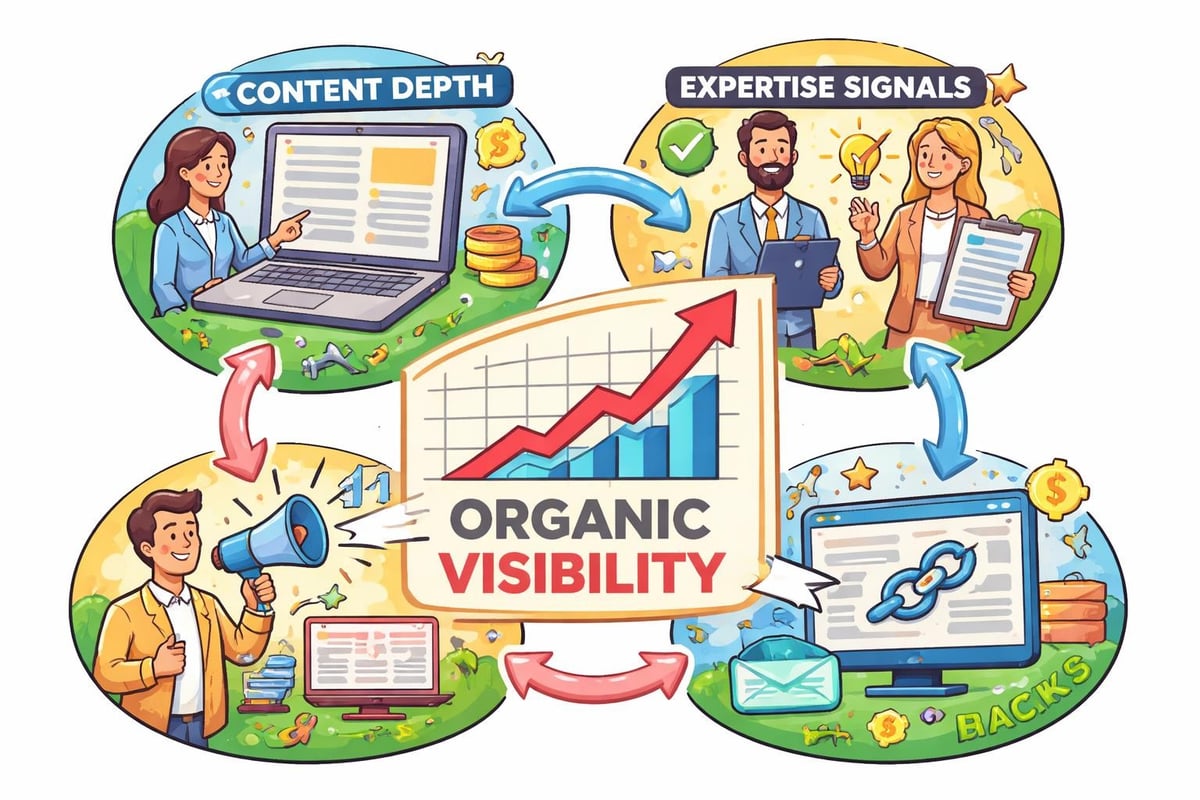
SEO for B2B companies requires demonstrating expertise that builds trust with sophisticated buyers. Your content needs to prove you understand their industry, challenges, and the nuances of implementation. Surface-level blog posts won't cut it when you're trying to win six-figure contracts.
Thought Leadership That Ranks
According to insights on demonstrating expertise through thought leadership, B2B companies must publish content that showcases deep industry knowledge and unique perspectives. This means going beyond basic how-to articles to create genuinely valuable resources.
High-impact content types for B2B:
- Original research and industry surveys
- Comprehensive implementation guides
- Expert interviews and roundups
- Technical deep-dives on methodologies
- ROI analysis and business case templates
Each piece should target specific keywords while providing actionable insights your competitors aren't offering. We've found that longer, comprehensive resources (2,500+ words) tend to perform better in B2B sectors than shorter posts.
Case Studies That Convert
Nothing builds credibility like proof you've solved problems similar to what your prospects face. Detailed case studies serve dual purposes: they're excellent SEO content targeting problem-specific keywords, and they're powerful conversion tools for late-stage buyers.
Structure your case studies around the specific challenges, your unique approach, measurable results, and lessons learned. Include relevant industry keywords naturally, and create dedicated landing pages for different use cases or industries you serve.
Link Building for B2B Companies
Building high-quality backlinks in B2B spaces requires a different approach than consumer link building. You're not going after lifestyle bloggers or general news sites. Instead, you're targeting industry publications, trade associations, and respected thought leaders in your sector.
Strategic Partnership Opportunities
The best B2B backlinks come from genuine relationships and valuable contributions to your industry. Consider these approaches:
- Guest posting on industry-specific publications
- Speaking at conferences and getting listed on event sites
- Contributing to industry association resources
- Partnering with complementary service providers
- Sponsoring relevant industry research or reports
| Link Source | Value | Difficulty | Timeline |
|---|---|---|---|
| Industry Publications | Very High | High | 2-4 months |
| Trade Associations | High | Medium | 1-3 months |
| Partner Websites | High | Low-Medium | 1-2 months |
| Conference Sites | Medium | Low | Immediate |
| Directory Listings | Low-Medium | Very Low | Immediate |
Quality matters far more than quantity in B2B link building. A single link from a respected industry publication is worth dozens of low-quality directory links. Focus your efforts on building relationships that lead to natural link opportunities over time.
Creating Linkable Assets
Instead of asking for links, create resources that others naturally want to reference. Original research, comprehensive guides, useful tools, and unique frameworks all attract links organically. When you publish something genuinely valuable, industry peers will cite it without you asking.
Optimizing for Industry-Specific Search Intent
Understanding exactly what your prospects mean when they search is crucial for SEO for B2B companies. A search for "CRM implementation" might come from someone who needs implementation services, or someone looking for in-house implementation guidance. Your content needs to match the specific intent behind each query.
Addressing the Full Question
B2B searchers ask complex questions that require comprehensive answers. They're not satisfied with 300-word blog posts that barely scratch the surface. They want detailed explanations, comparisons, and practical advice they can apply to their specific situations.
When someone searches for implementation guidance, they probably also want to know about costs, timelines, common pitfalls, and how to get buy-in from stakeholders. Address the full scope of their needs in single comprehensive resources rather than forcing them to bounce between multiple pages.
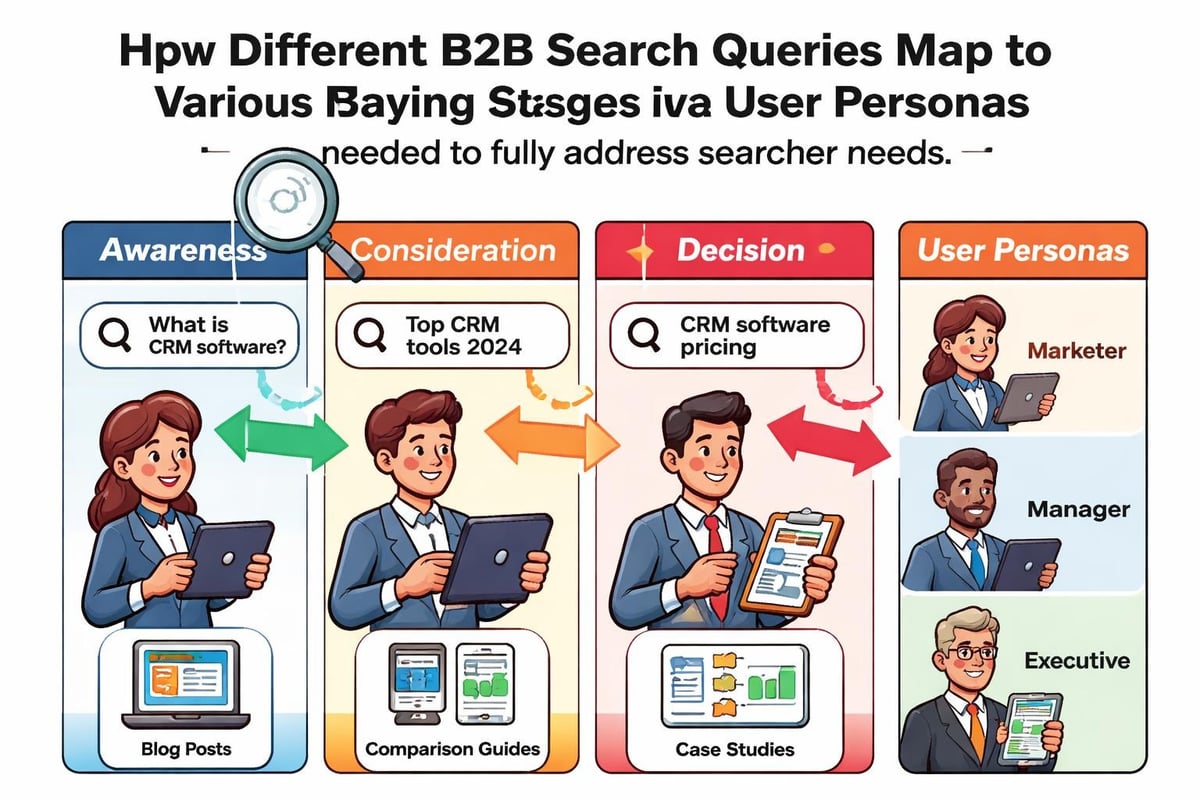
Search intent categories in B2B:
- Informational: Learning about problems or solutions
- Navigational: Finding specific companies or tools
- Commercial: Comparing options and evaluating vendors
- Transactional: Ready to request demos or proposals
Measuring B2B SEO Success
Traditional ecommerce metrics don't translate well to B2B SEO. You're not tracking shopping cart conversions. Instead, you're measuring lead quality, pipeline influence, and long-term revenue impact. This requires connecting your SEO data with your CRM and understanding which organic visitors eventually become clients.
Metrics That Actually Matter
Looking at case studies showing significant B2B SEO results, successful companies track metrics that align with their actual business goals. Vanity metrics like total traffic or keyword rankings mean little if they're not driving qualified leads.
Essential B2B SEO metrics:
- Organic traffic from target accounts (using firmographic data)
- Keyword rankings for high-intent commercial terms
- Form submissions and demo requests from organic
- Content engagement on late-stage pages
- Assisted conversions through multi-touch attribution
Set up conversion tracking for all meaningful actions: whitepaper downloads, newsletter subscriptions, demo requests, and contact form submissions. Then track which of these leads actually progress through your sales pipeline. This closed-loop reporting proves SEO's actual business impact.
Attribution Challenges and Solutions
B2B buyers interact with your content multiple times before converting. They might read a blog post, download a guide, attend a webinar, and then finally request a demo weeks later. Single-touch attribution misses this reality entirely.
Implement multi-touch attribution models that give appropriate credit to each touchpoint in the journey. Google Analytics 4 offers data-driven attribution that can help, but you'll get even better insights by connecting your analytics with your CRM system. This reveals how organic search assists deals even when it's not the final touchpoint before conversion.
Local SEO Considerations for B2B
Even if you serve clients nationally or globally, local SEO can still matter for B2B companies. Many businesses prefer working with nearby partners for certain services, especially those requiring on-site support or regular in-person meetings. For agencies like those offering SEO services for contractors or home services, local visibility is critical.
Optimizing Your Local Presence
Claim and optimize your Google Business Profile even if most clients find you through organic search. Include detailed service descriptions, select accurate business categories, and regularly post updates about projects or insights. This helps you appear for "near me" searches and builds local authority signals.
If you serve multiple markets, consider creating location-specific landing pages that address regional differences in regulations, common challenges, or market conditions. These pages should offer genuine local value rather than being thin variations of template content.
Advanced Strategies for Competitive B2B Industries
When you're competing in saturated B2B markets, basic SEO best practices aren't enough. You need advanced approaches that differentiate your content and build authority faster than established competitors. Following best practices for B2B SEO provides a solid starting point, but staying ahead requires innovation.
Programmatic Content at Scale
For B2B companies serving multiple industries or offering solutions with many variations, programmatic content generation can help you achieve coverage at scale. This doesn't mean spammy auto-generated pages. It means using templates and structured data to create genuinely useful comparison pages, solution guides, and resource centers.
A marketing automation platform might create dedicated landing pages for "marketing automation for [industry]" targeting dozens of verticals. Each page features industry-specific challenges, use cases, and examples rather than generic template content.
Leveraging Structured Data
Schema markup helps search engines understand your content and can earn you enhanced search results. B2B companies should implement:
- Organization schema for your company information
- Product schema for your services
- FAQ schema for common questions
- Review schema for client testimonials
- Article schema for your blog content
These structured data elements make it easier for search engines to feature your content prominently and understand the relationships between different pages on your site. Our SEO consulting services include comprehensive structured data implementation tailored to B2B needs.
Content Refresh and Optimization Cycles
SEO for B2B companies isn't a one-time project. Your existing content needs regular updates to maintain rankings and relevance. Industry changes, algorithm updates, and competitor actions all require ongoing attention to your content library.
Identifying Refresh Opportunities
Look for content that's ranking on page two or positions 5-10 on page one. These pages are close to breaking through and often need just minor optimizations to jump higher. Update statistics, expand sections that competitors cover better, improve internal linking, and refresh meta descriptions to boost click-through rates.
Prioritize refreshes based on:
- Current ranking position (8-20 = high priority)
- Search volume of target keywords
- Business value of the topic
- Content age (12+ months old)
- Competitor content quality
Set up a quarterly review process where you analyze your top 50 pages and identify optimization opportunities. This systematic approach ensures nothing falls through the cracks as your content library grows.
Building an Internal Linking Strategy
Your internal linking structure tells search engines which pages are most important and helps distribute authority throughout your site. For B2B companies with complex service offerings, strategic internal linking is essential for ranking deeper pages that target specific solutions or industries.
Topic Cluster Architecture
Organize your content into topic clusters with pillar pages covering broad topics and cluster content addressing specific subtopics. The pillar page links to all cluster content, and cluster pages link back to the pillar and to related cluster content.
This structure makes it easy for both users and search engines to understand your expertise depth. It also concentrates ranking signals around your most important commercial pages while supporting them with informational content that attracts top-of-funnel traffic.
Use descriptive anchor text that includes relevant keywords, but keep it natural. Instead of "click here," use phrases like "learn more about technical SEO audits" that tell users and search engines exactly what they'll find on the linked page.
Mastering SEO for B2B companies requires patience, expertise, and a strategy tailored to your unique buying cycle and audience. From targeting the right long-tail keywords to building thought leadership content that demonstrates your industry knowledge, every element works together to attract qualified prospects who are actively seeking solutions like yours. If you're ready to build an SEO strategy that drives real business results, Shawn the SEO Geek brings over two decades of experience helping B2B companies dominate their markets. Our hands-on approach and transparent communication ensure your SEO investment delivers measurable growth. Let's start your journey to better rankings and more qualified leads today.