
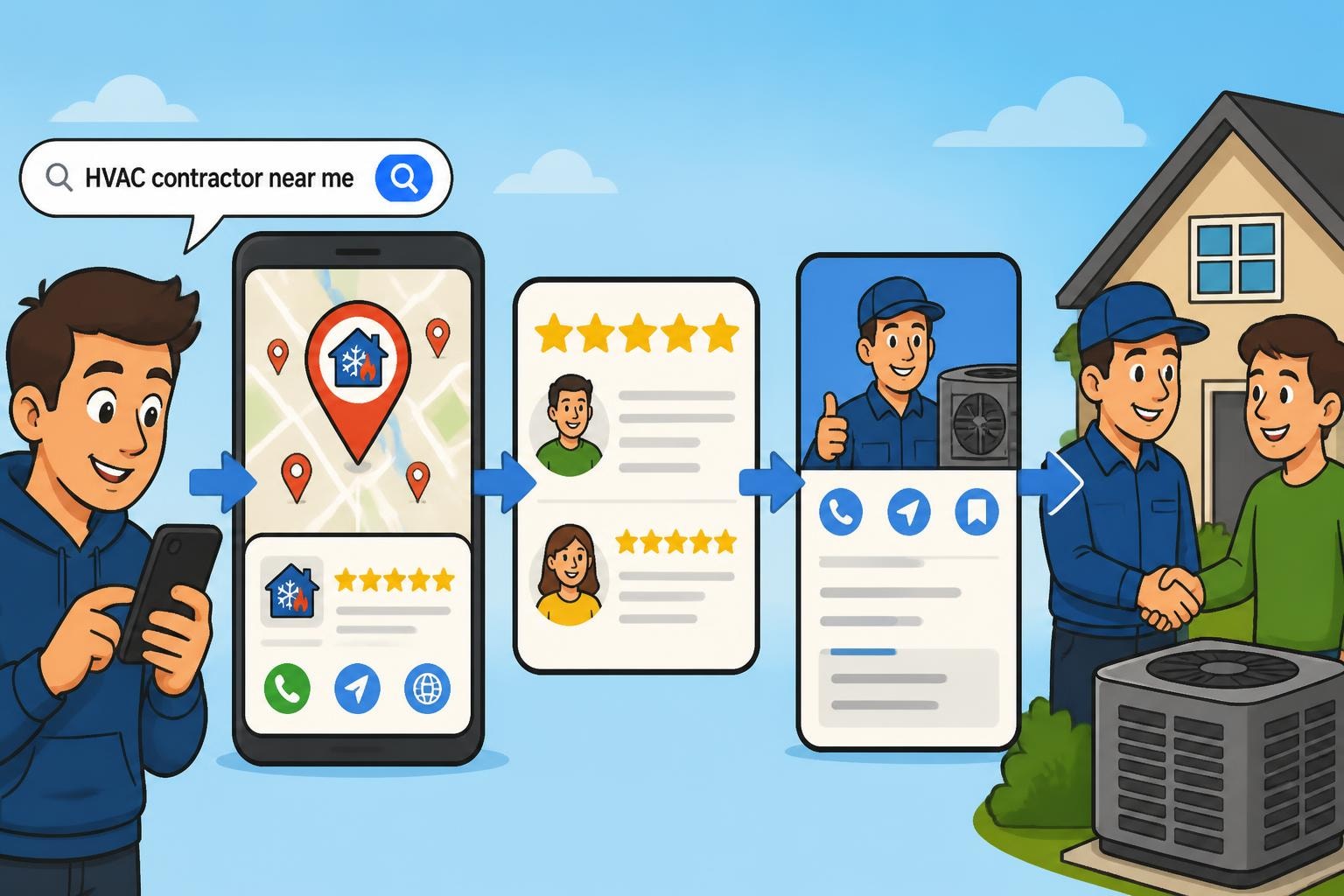
When homeowners face a broken air conditioner in July or a failing furnace in January, they don't browse through phone books or ask neighbors for recommendations anymore. They grab their phones and search "HVAC contractor near me" or "emergency AC repair." If your HVAC business doesn't appear in those critical moments, you're handing customers directly to your competitors. Local SEO marketing for HVAC contractors isn't just about rankings; it's about being present when people desperately need your services.
The heating and cooling industry is uniquely positioned to benefit from local search optimization. Your customers are always nearby, your services can't be shipped across state lines, and emergency situations create immediate demand. Understanding how to leverage local SEO marketing for HVAC contractors means positioning your business as the obvious choice in your service area.
Why Local SEO Matters More for HVAC Companies Than Almost Any Other Business
HVAC services are inherently local. You can't install a furnace remotely or repair an air conditioner from across the country. This geographic limitation becomes your greatest advantage when you implement proper local SEO strategies.
The numbers tell a compelling story. Studies consistently show that over 76% of people who search for local services on their smartphones visit a business within 24 hours. For HVAC contractors, these aren't casual browsers; they're homeowners with urgent problems who are ready to make decisions quickly.
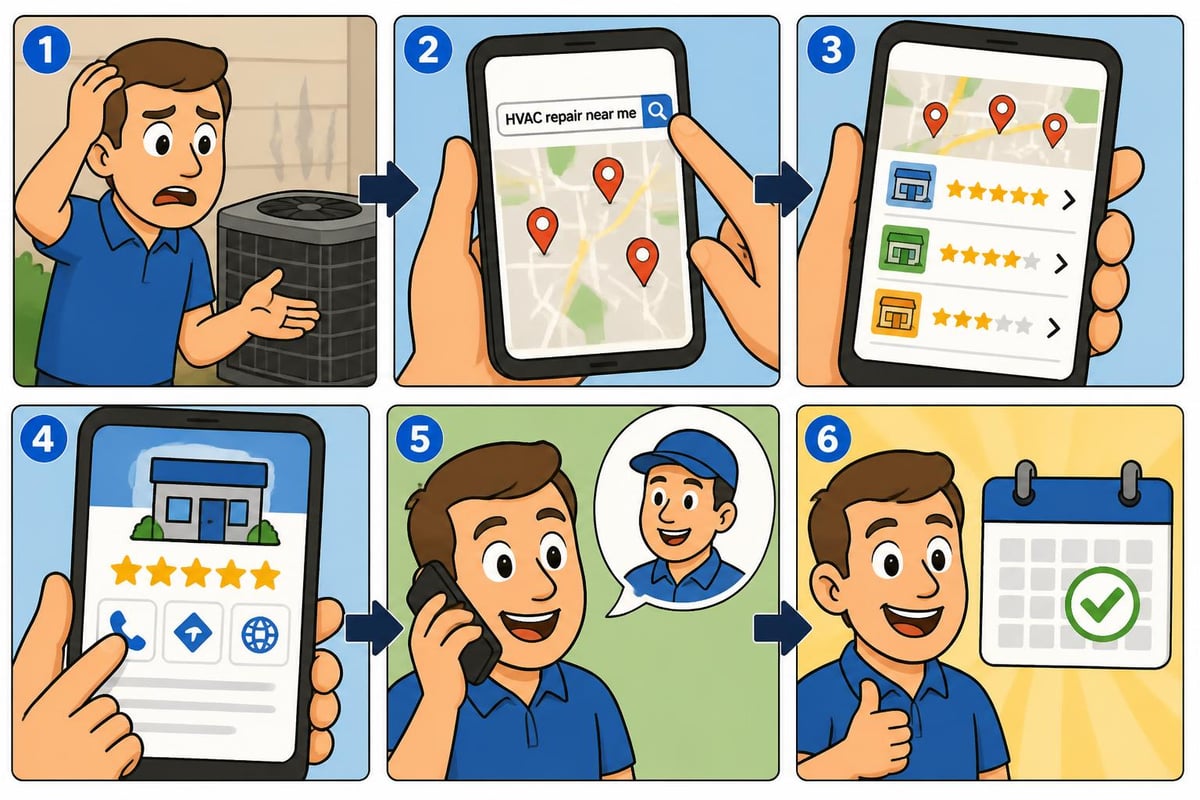
Consider the customer journey for HVAC services:
- Homeowner experiences heating or cooling problem
- Searches on mobile device for immediate help
- Reviews top 3-5 results in Google Maps
- Calls the business with best reviews and clear information
- Books appointment within hours
If you're not visible in step three, you've already lost the opportunity. This is precisely why local SEO for home services requires specialized attention and strategy.
Google Business Profile: Your Most Important Local SEO Asset
Your Google Business Profile (formerly Google My Business) functions as your digital storefront in local search results. When optimized properly, it dominates the map pack-those three business listings that appear above organic results.
Essential GBP Optimization Elements
Every field in your Google Business Profile matters. Incomplete profiles send signals to Google that your business might not be legitimate or active, which damages your rankings.
Complete these critical components:
- Business name (exact legal name, no keyword stuffing)
- Primary and secondary categories (HVAC contractor, heating contractor, air conditioning repair, etc.)
- Service area definition (specific cities and zip codes you serve)
- Business hours including emergency availability
- Phone number and website URL
- Business description with natural keyword usage
Your business description offers 750 characters to explain your services, experience, and value proposition. Use this space to naturally incorporate phrases like "local HVAC contractor serving [your city]" while focusing on what makes your business trustworthy and reliable.
The Power of Regular Posts and Updates
Google Business Profile posts work like social media updates but appear directly in your search listing. These posts keep your profile fresh and give you opportunities to highlight:
- Seasonal maintenance specials
- Emergency service availability
- New equipment installations
- Customer success stories
- Helpful HVAC tips and advice
Posting weekly signals to Google that your business is active and engaged. Posts remain visible for seven days, so consistency matters more than occasional bursts of activity.
Building a Review Foundation That Drives Decisions
Reviews aren't just about reputation; they're ranking factors. Google considers review quantity, quality, recency, and diversity when determining local search positions. For HVAC contractors competing in crowded markets, reviews often make the difference between first and fifth position.
| Review Factor | Impact on Rankings | Impact on Conversions |
|---|---|---|
| Quantity (50+ reviews) | High | Medium |
| Average Rating (4.5+) | Medium | Very High |
| Recency (within 30 days) | High | High |
| Response Rate | Medium | High |
| Keyword Mentions | Medium | Low |
Creating a systematic review generation process:
The best time to request reviews is immediately after successful service completion. Customers are most satisfied and motivated to help when you've just solved their problem. Implement a simple three-step process:
- Send a thank-you text or email within 24 hours of service
- Include a direct link to your Google review page
- Make leaving a review as frictionless as possible
Never incentivize reviews with discounts or payments, as this violates Google's guidelines. Instead, focus on exceptional service and genuine requests. Many HVAC contractors find success simply asking: "If we've earned it, would you mind sharing your experience online?"
Responding to every review-positive and negative-demonstrates professionalism and engagement. When addressing negative reviews, stay professional, acknowledge concerns, and offer to resolve issues offline. These responses often influence potential customers more than the original review.
NAP Consistency: The Foundation of Local Trust Signals
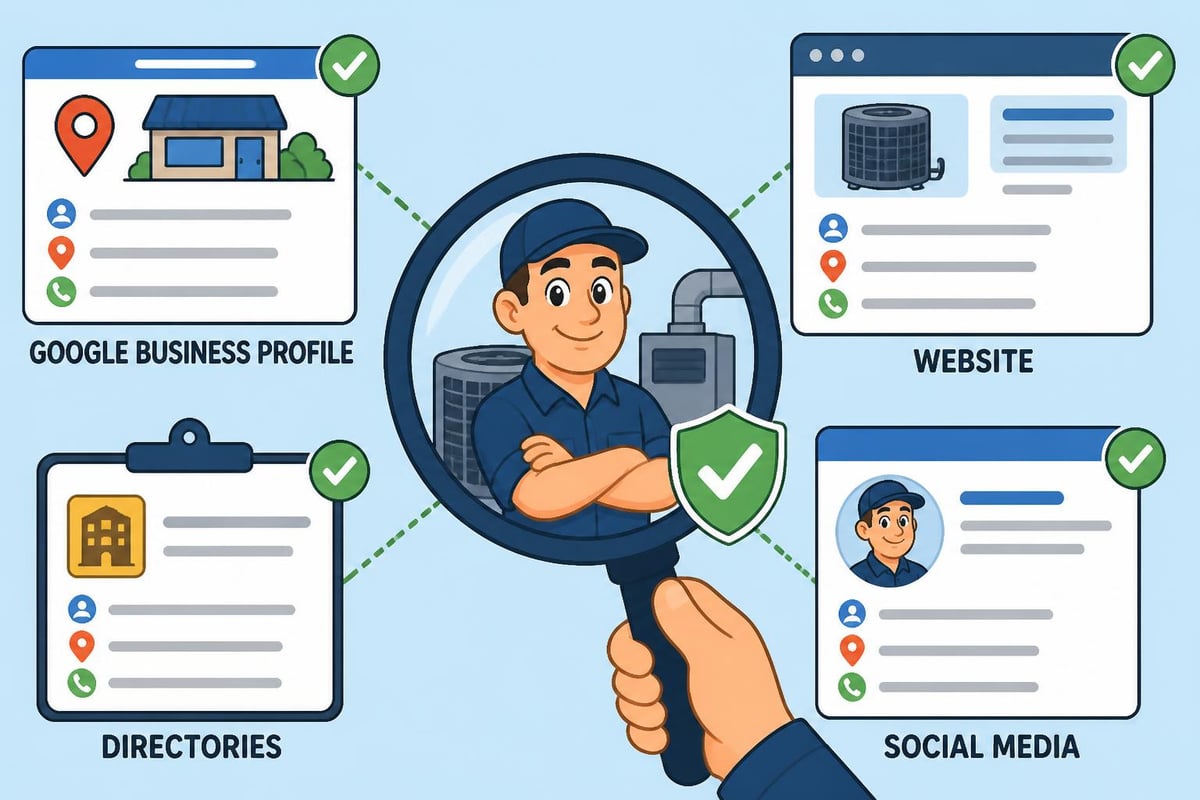
NAP stands for Name, Address, and Phone number. Google cross-references this information across hundreds of online sources to verify your business legitimacy. Inconsistent NAP details create confusion and erode trust signals that impact rankings.
Where NAP consistency matters most:
- Your website (footer, contact page, about page)
- Google Business Profile
- Facebook business page
- Industry directories (Yelp, Angi, HomeAdvisor)
- Local business directories (Chamber of Commerce, Better Business Bureau)
- Citation sites specific to your region
Even minor variations cause problems. "Street" versus "St." or including suite numbers inconsistently can confuse search engines. Standardize your NAP format and use it identically everywhere. The comprehensive local SEO guide from SteadyCalls provides excellent checklists for maintaining consistency across platforms.
Creating Location-Specific Service Pages That Convert
Generic "HVAC Services" pages don't capture local search traffic effectively. Smart contractors create dedicated pages for each major service area and service type combination. This strategy aligns perfectly with how people actually search.
Structuring High-Performing Service Area Pages
Someone in Doylestown doesn't search for "HVAC contractor." They search for "HVAC contractor Doylestown" or "AC repair near me" while Google knows their location. Service area pages target these specific search patterns.
Essential elements for each location page:
- Unique, valuable content (minimum 800 words)
- Specific location name in title tag and H1 heading
- Local landmarks and neighborhood references
- Service-specific information relevant to that area
- Customer testimonials from that location
- Embedded Google Map centered on the service area
- Local photos showing your team or work in that area
Avoid duplicate content by making each page genuinely unique. Discuss climate considerations specific to each region, mention local building codes, or reference neighborhood characteristics. This approach mirrors strategies used in local SEO for remodeling contractors, adapted for HVAC-specific searches.
Technical SEO Elements That HVAC Contractors Can't Ignore
While local signals dominate HVAC search rankings, technical SEO provides the foundation that makes everything else possible. Slow websites, broken pages, and mobile unfriendliness sabotage even the best local optimization efforts.
Mobile Optimization Is Non-Negotiable
Over 60% of HVAC service searches happen on mobile devices, often during emergencies. Your website must load quickly and function perfectly on smartphones.
Test your mobile experience by pulling up your website on your phone and trying to:
- Find your phone number and tap to call
- View your service area information
- Read customer reviews
- Fill out a contact form
- Navigate to service descriptions
If any of these actions feel clunky or slow, you're losing customers. Google's mobile-first indexing means your mobile site determines your rankings across all devices.
Schema Markup for Enhanced Search Visibility
Schema markup is code that helps search engines understand your business information. For HVAC contractors, LocalBusiness schema provides structured data about your services, location, hours, and reviews.
| Schema Type | Purpose | Ranking Impact |
|---|---|---|
| LocalBusiness | Defines core business info | High |
| Service | Details specific HVAC services | Medium |
| Review | Showcases rating and reviews | Medium |
| FAQ | Displays Q&A in search results | Low-Medium |
Implementing schema isn't technically complex, but it requires precision. Many HVAC contractors benefit from professional implementation as part of comprehensive technical SEO audit services that ensure everything is configured correctly.
Content Marketing That Attracts Local Customers
Publishing helpful content establishes authority, captures informational searches, and creates pathways for customers to find you before emergencies strike. Smart HVAC contractors blog about topics their customers actually care about.
High-value content topics for HVAC contractors:
- Seasonal maintenance checklists
- Energy efficiency improvements
- Signs you need system replacement
- Choosing between repair and replacement
- Understanding HVAC warranties
- Indoor air quality solutions
- Emergency troubleshooting guides
Each piece of content should serve two purposes: providing genuine value to readers and capturing search traffic. A blog post titled "5 Signs Your Air Conditioner Needs Repair Before Summer" targets homeowners researching symptoms while positioning you as the expert who can help.
Incorporate local references naturally. Discuss how humidity levels in your specific region affect system performance, or mention local energy programs that offer rebates for efficient equipment. These details make content more relevant and capture geo-specific searches.
Link Building Strategies That Work for Local HVAC Businesses
Backlinks from reputable local sources signal authority and relevance. For HVAC contractors, quality local links matter far more than quantity from irrelevant national sites.
High-Value Local Link Opportunities
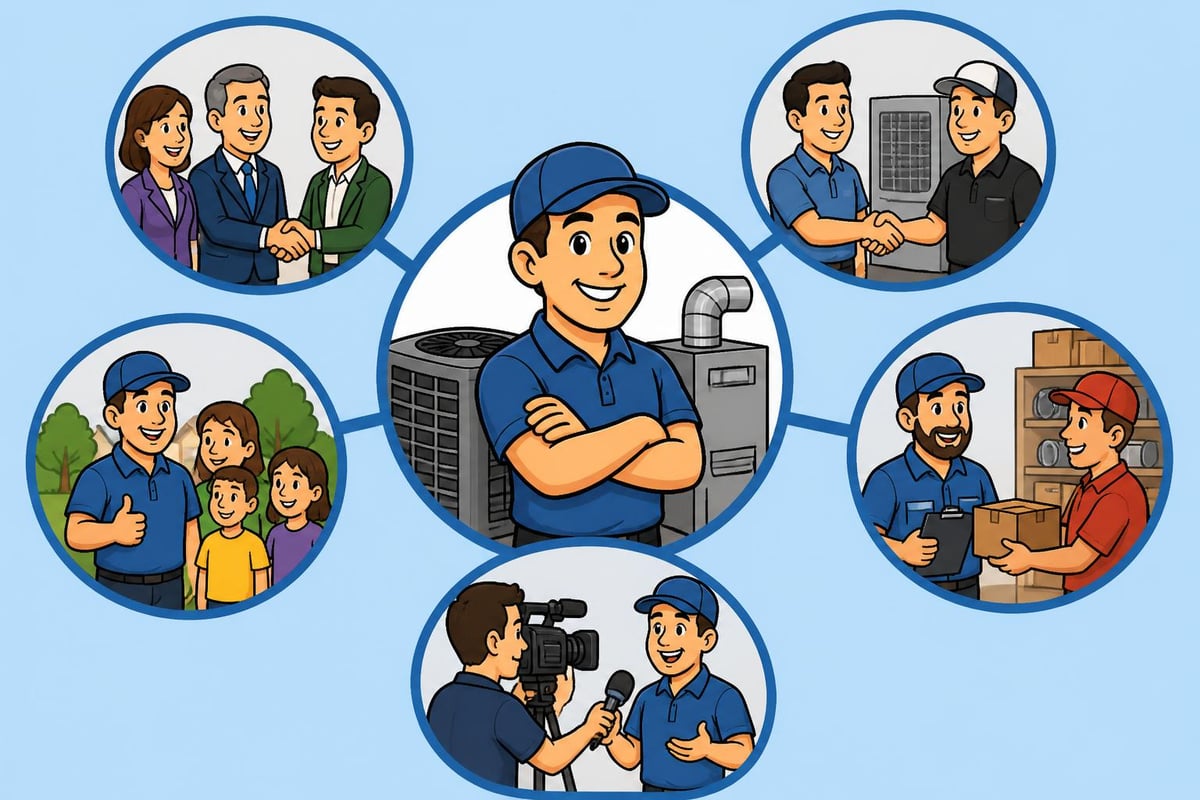
Start with these accessible link-building strategies:
- Local business associations – Chamber of Commerce membership typically includes website listing
- Manufacturer partnerships – Certified dealers often receive links from manufacturer sites
- Community sponsorships – Youth sports teams, charity events, and local festivals
- Supply house relationships – Many suppliers feature contractor partners
- Local news coverage – Share expertise for news stories about HVAC topics
The local SEO strategies outlined by Gushwork emphasize authentic relationship-building over manipulative link tactics. Focus on genuine community involvement that naturally generates links.
Managing Citations Across the Local SEO Ecosystem
Citations are online mentions of your business NAP, even without a backlink. Search engines use citation quantity and consistency as trust signals. For local SEO marketing for HVAC contractors, citations provide foundational credibility.
Priority Citation Sources
Not all citations carry equal weight. Focus on these high-authority platforms first:
National directories:
- Google Business Profile (most important)
- Bing Places for Business
- Apple Maps
- Yelp
- Better Business Bureau
HVAC-specific directories:
- Angi (formerly Angie's List)
- HomeAdvisor
- Carrier dealer locator (if applicable)
- Trane dealer locator (if applicable)
- Local HVAC association listings
Local directories:
- City business directories
- Regional news site business listings
- Chamber of Commerce
- Local service guides
Tools like Moz Local, BrightLocal, or Yext can distribute your NAP information across dozens of directories simultaneously, though manual verification ensures accuracy. As detailed in this HVAC local SEO checklist, systematic citation building requires patience but delivers cumulative benefits.
Tracking Performance and Measuring ROI
Local SEO marketing for HVAC contractors should drive measurable business results. Tracking the right metrics helps you understand what's working and where to invest more effort.
Essential Metrics to Monitor Monthly
| Metric | Tool | Why It Matters |
|---|---|---|
| Google Maps impressions | GBP Insights | Visibility in local pack |
| Phone calls from GBP | GBP Insights | Direct conversion actions |
| Website sessions from local search | Google Analytics | Organic traffic growth |
| Keyword rankings for target terms | Rank tracking tools | Competitive positioning |
| Review volume and rating | Manual tracking | Reputation momentum |
| Form submissions from organic | Google Analytics | Lead generation |
Set baseline measurements when you begin your local SEO efforts, then track monthly progress. Some results appear quickly (GBP optimization impacts within weeks), while others build gradually (content marketing and link building take months).
Most importantly, connect SEO metrics to business outcomes. How many phone calls convert to booked jobs? What's the average customer value? These calculations demonstrate that investing in local SEO marketing for HVAC contractors generates significant returns.
Competing Against National Lead Generation Sites
HomeAdvisor, Angi, and similar platforms dominate many HVAC search results. These sites have massive SEO budgets and brand recognition. However, you possess advantages they can't replicate: local expertise, direct relationships, and no middleman fees.
Your competitive advantages:
- Zero lead fees or commissions
- Established local reputation
- Ability to offer better pricing without referral costs
- Direct customer relationships
- Faster response times
Position yourself as the local alternative to national platforms. Create comparison content explaining why hiring directly saves customers money and delivers better service. Many homeowners prefer supporting local businesses when they understand the benefits.
The strategies shared by Tofu’s HVAC SEO guide emphasize building such strong local presence that you outrank lead generation platforms for high-intent searches in your specific service area.
Seasonal SEO Strategies for HVAC Success
HVAC demand fluctuates dramatically with weather. Smart contractors adjust their local SEO marketing for HVAC contractors to match seasonal patterns and capture demand before peak seasons hit.
Spring Optimization Focus
As temperatures warm, homeowners think about air conditioning. Optimize for:
- AC tune-up and maintenance
- Air conditioning installation
- System efficiency upgrades
- Indoor air quality improvements
Begin content creation and optimization in late winter, so you're ranking when search volume increases in April and May.
Fall Optimization Focus
Heating system preparation dominates fall searches. Target keywords around:
- Furnace inspection and maintenance
- Heating system repair
- Furnace replacement
- Emergency heating service
Start optimizing these pages in August, well before peak season demand.
Year-Round Emergency Coverage
Emergency HVAC searches happen constantly. Maintain strong visibility for emergency-related keywords throughout the year with dedicated service pages and Google Business Profile posts highlighting 24/7 availability.
Voice Search Optimization for Local HVAC Queries
Smart speakers and voice assistants change how people search for HVAC services. Voice queries tend to be longer, more conversational, and hyper-local. Optimizing for voice search means adapting content to natural language patterns.
Traditional text search: "HVAC repair Philadelphia"
Voice search equivalent: "Who can fix my furnace near me today?"
Create FAQ pages that address these conversational queries directly. Structure content around question-and-answer formats that match voice search patterns. This approach aligns with how INSIDEA’s local SEO techniques recommend structuring content for emerging search behaviors.
When implementing these strategies feels overwhelming or you're unsure where to start, expert guidance can accelerate your progress. Our Authority + AI Visibility Blueprint service provides a comprehensive audit of your current visibility in both Google and emerging AI search platforms like ChatGPT, then delivers a customized roadmap showing exactly which keywords and optimization steps will generate the most leads for your HVAC business.

Local SEO Integration With Paid Advertising
Local SEO and Google Local Services Ads work synergistically. While LSAs provide immediate visibility through paid placement, organic local SEO builds sustainable long-term presence. The most successful HVAC contractors use both strategically.
The hybrid approach:
- Use LSAs for immediate lead generation while building SEO
- Invest SEO savings from reduced ad dependency into service expansion
- Target competitive keywords with ads while optimizing for long-tail organic terms
- Leverage ad data to identify high-converting keywords for SEO focus
As your organic rankings improve, you can gradually reduce ad spending while maintaining lead volume. This transition from paid to organic traffic dramatically improves profitability over time, as explained in resources about why HVAC companies must prioritize local SEO.
Building Authority Through Customer Education
Educational content builds trust before customers need emergency service. When homeowners learn from your blog posts or videos throughout the year, you become their first call when problems arise.
Educational content formats that work:
- How-to videos on basic maintenance
- Seasonal preparation guides
- Equipment buying guides
- Energy efficiency tips
- System troubleshooting articles
Each piece of educational content serves as a lead generation asset. Someone researching "how often to change HVAC filters" today might need AC repair next month. Your helpful article creates awareness and positions you as the trusted expert.
Distribute this content across multiple channels-your website, YouTube, social media, and email newsletters. Multi-channel presence reinforces your local authority and creates numerous pathways for customers to discover your business.
Leveraging Social Proof Beyond Reviews
While Google reviews dominate local SEO, other forms of social proof strengthen your overall online presence and support conversion once customers find you.
Additional social proof elements:
- Before/after installation photos
- Video testimonials from satisfied customers
- Case studies showing problem resolution
- Industry certifications and awards
- Years in business and customer counts
- Association memberships and affiliations
Feature these elements prominently on your website and Google Business Profile. Social proof reduces purchase anxiety and accelerates decision-making, especially for high-ticket services like system replacements.
Common Local SEO Mistakes HVAC Contractors Make
Understanding what doesn't work is as important as knowing effective strategies. Avoid these frequent missteps that waste effort and damage rankings.
Costly mistakes to avoid:
- Inconsistent business hours – Updating your website but forgetting GBP creates confusion
- Ignoring negative reviews – Unaddressed complaints signal poor customer service
- Keyword stuffing business name – "Joe's HVAC Repair AC Heating Contractor Philadelphia" violates guidelines
- Duplicate content across location pages – Creates thin, low-value pages
- Neglecting mobile experience – Loses majority of emergency service searches
- Buying fake reviews – Violates guidelines and risks suspension
- Inconsistent NAP information – Confuses search engines and dilutes authority
The Red Brick Web local SEO tips provide additional guidance on avoiding these common pitfalls while building sustainable local visibility.
Building Long-Term Local SEO Success
Local SEO marketing for HVAC contractors isn't a one-time project but an ongoing process. Search algorithms evolve, competitors improve their strategies, and customer behaviors shift. Sustained success requires consistent attention and adaptation.
Monthly maintenance tasks:
- Monitor and respond to reviews
- Update Google Business Profile posts
- Check NAP consistency across platforms
- Add fresh content to your website
- Review ranking changes and adjust strategy
- Analyze traffic and conversion data
Quarterly strategic reviews:
- Assess ranking progress for target keywords
- Evaluate content performance and identify gaps
- Review competitor positioning and tactics
- Update service area pages with fresh information
- Audit technical SEO health
- Refresh photos and videos
This systematic approach compounds over time. Small consistent improvements create significant competitive advantages as months and years accumulate, particularly when you follow structured approaches like those outlined by Contractor Marketing Pros.
Implementing effective local SEO marketing for HVAC contractors requires strategic thinking, consistent execution, and ongoing optimization across multiple channels. The businesses that dominate local search results don't get there by accident-they systematically build visibility through optimized profiles, valuable content, genuine reviews, and technical excellence. If you're ready to stop losing customers to competitors and start capturing the local search traffic that drives real business growth, Shawn the SEO Geek specializes in helping home service businesses like yours develop and execute customized local SEO strategies that deliver measurable results. With over two decades of experience and hundreds of successful campaigns, we understand exactly what it takes to get your HVAC business found when customers need you most.