

Finding new clients in the construction industry has shifted dramatically over the past few years. Homeowners and property managers no longer flip through phone books or drive around looking for contractor signs. Instead, they search online, and if your general contracting business isn't showing up in those search results, you're missing out on valuable leads. SEO for general contractors is the key to getting your business in front of people actively searching for construction services in your area. With the right approach, you can dominate local search results and build a steady stream of qualified leads.
Why SEO Matters for General Contractors
The construction industry is incredibly competitive, especially in metropolitan areas where dozens of contractors vie for the same projects. When someone searches "general contractor near me" or "kitchen remodeling company," Google shows only a handful of results on the first page. If you're not among them, potential clients will never know you exist.
SEO levels the playing field. You don't need the biggest marketing budget to outrank competitors. You need the right strategy, consistent effort, and a deep understanding of how homeowners search for contractors online. SEO for contractors has evolved beyond simple keyword stuffing into a comprehensive approach that includes technical optimization, content creation, and building local authority.
The Financial Impact of Better Rankings
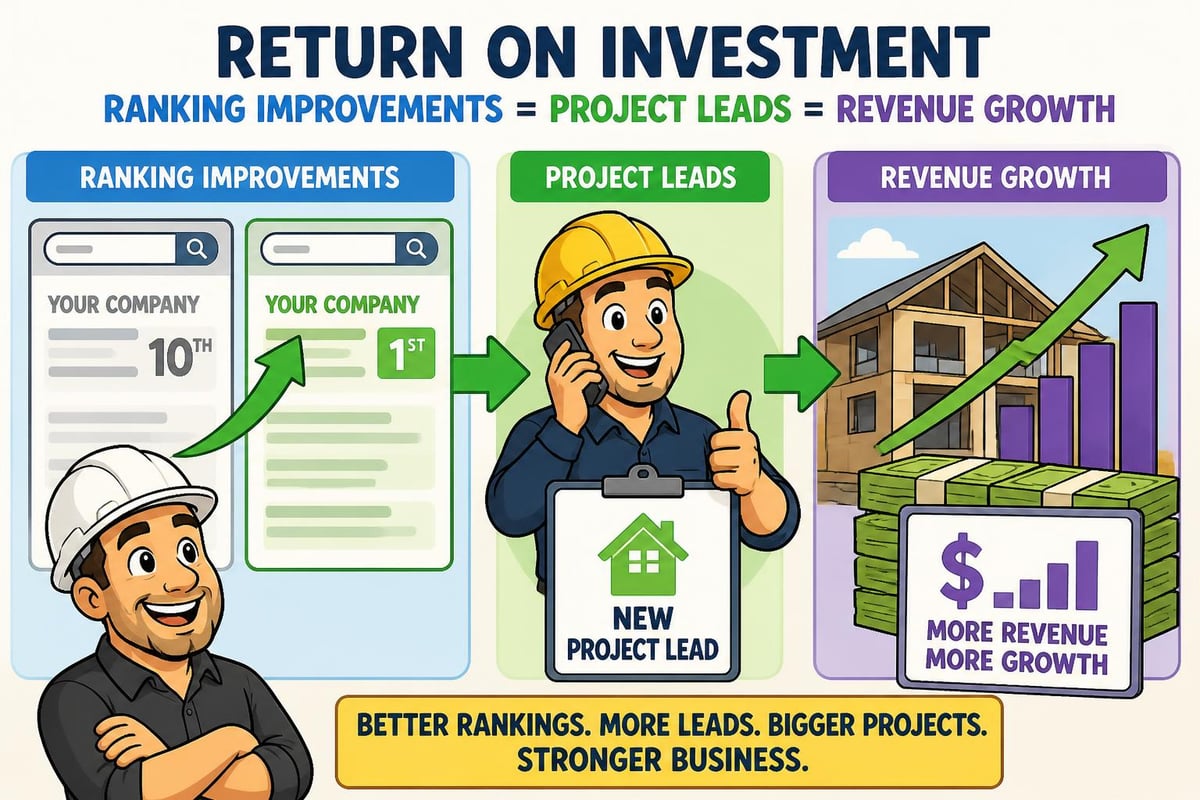
Let's talk numbers. The average home remodeling project ranges from $10,000 to $100,000 or more. Even landing one additional project per month from organic search can add hundreds of thousands of dollars to your annual revenue. Unlike paid advertising, which stops delivering results the moment you stop paying, SEO continues to generate leads long after you've done the work.
Consider this breakdown of potential return on investment:
| Monthly Organic Leads | Average Project Value | Annual Revenue Increase |
|---|---|---|
| 2-3 projects | $25,000 | $600,000-$900,000 |
| 4-6 projects | $25,000 | $1,200,000-$1,800,000 |
| 7-10 projects | $25,000 | $2,100,000-$3,000,000 |
These aren't hypothetical numbers. We've seen general contractors achieve these results by implementing comprehensive SEO strategies for home services.
Understanding How Homeowners Search for Contractors
Before diving into tactics, you need to understand search intent. When someone types a construction-related query into Google, they're at different stages of the decision-making process. Some are just researching ideas, while others are ready to hire tomorrow.
High-intent keywords indicate someone is ready to hire:
- "General contractor near me"
- "Kitchen remodeling company [city name]"
- "Bathroom renovation contractor"
- "Home addition builder [zip code]"
Research-phase keywords show earlier-stage interest:
- "How much does a kitchen remodel cost"
- "Should I add a second story or build out"
- "Permits needed for home addition"
Your SEO strategy should target both types. Research-phase content builds trust and positions you as an expert, while high-intent optimization captures people ready to hire.
Local Search Dominance
For general contractors, local SEO is everything. A homeowner in Philadelphia doesn't care about the best contractor in Seattle. They want someone nearby who can visit their property, understand local building codes, and complete the work efficiently.
Local SEO strategies focus on three key elements:
- Google Business Profile optimization to appear in the Map Pack
- Location-specific content targeting neighborhoods and cities you serve
- Local citations ensuring your business information is consistent across directories
Optimizing Your Contractor Website for Search Engines
Your website is the foundation of your SEO for general contractors strategy. Without proper technical optimization, even the best content won't rank. Let's break down the essential elements.
Website Structure and Navigation
Google needs to understand what your business does and where you operate. A clear site structure helps both search engines and potential clients navigate your services.
Essential pages every contractor website needs:
- Homepage with clear service overview and service areas
- Individual service pages (kitchen remodeling, bathroom renovation, home additions, etc.)
- Location pages for each city or region you serve
- Portfolio or project gallery
- About page establishing credibility
- Contact page with multiple contact methods
Each service page should target specific keywords naturally. For example, your kitchen remodeling page should include variations like "kitchen renovation," "kitchen redesign," and "kitchen contractor" throughout the content.
Technical SEO Fundamentals
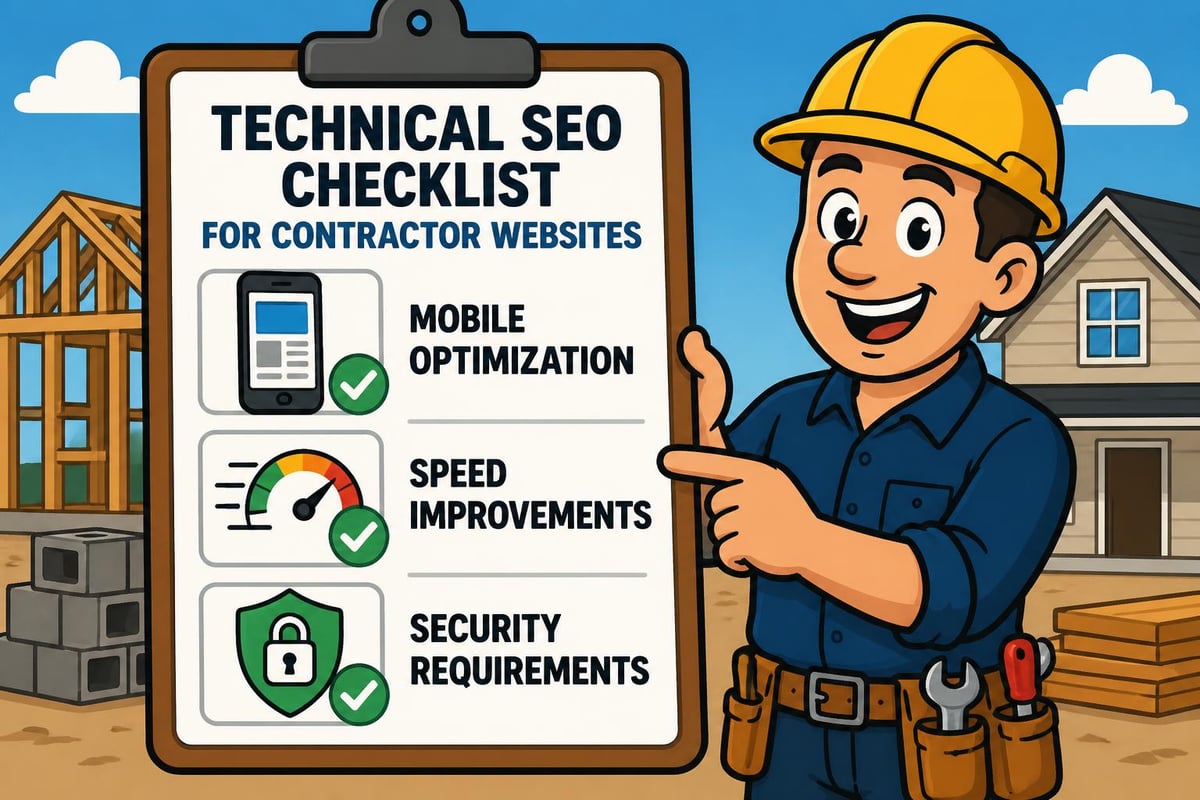
Technical issues can tank your rankings before you even start. Here's what to check:
| Technical Element | Why It Matters | Quick Fix |
|---|---|---|
| Mobile responsiveness | 60%+ of searches happen on mobile | Use responsive design framework |
| Page load speed | Slow sites have higher bounce rates | Compress images, minimize code |
| SSL certificate | Google prioritizes secure sites | Install HTTPS certificate |
| XML sitemap | Helps Google find all your pages | Generate and submit to Search Console |
If you're experiencing technical challenges, a comprehensive technical SEO audit can identify and prioritize fixes that will have the biggest impact on your rankings.
Creating Content That Attracts Your Ideal Clients
Content marketing is where many general contractors struggle. You're builders, not writers. But content is how you demonstrate expertise and capture search traffic for hundreds of valuable keywords.
The good news? You don't need to become a professional blogger. You need strategic, targeted content that answers the questions your prospects are asking.
High-Value Content Topics
Focus on content that serves your business goals. Content strategy for contractors should prioritize topics that attract qualified leads in your service areas.
Project guides:
- "Complete Guide to Kitchen Remodeling in [Your City]"
- "What to Expect During a Whole-House Renovation"
- "Timeline and Costs for Home Additions"
FAQ content:
- "Do I Need a Permit for My Renovation Project?"
- "How to Choose Between Remodeling and Moving"
- "What Questions to Ask Before Hiring a General Contractor"
Local expertise:
- "Navigating [City Name] Building Codes for Home Renovations"
- "Best Materials for [Your Climate] Home Construction"
- "Historic Home Renovation in [Neighborhood]"
Each piece should naturally incorporate your target keywords while providing genuine value. The goal isn't to trick Google but to become the most helpful resource for people searching for construction services.
Showcasing Your Work
Your completed projects are powerful content assets. Create detailed case studies that include:
- Before and after photos
- Project challenges and solutions
- Timeline and budget (ranges are fine)
- Client testimonials
- Specific services provided
This content serves multiple purposes: it demonstrates your capabilities, targets relevant keywords, and provides social proof that converts visitors into leads.
Mastering Local SEO and Google Business Profile
Your Google Business Profile (formerly Google My Business) is arguably your most important SEO asset. When someone searches for a general contractor in your area, the Map Pack appears above organic results. Claiming those spots means immediate visibility to high-intent prospects.
Optimizing Your Google Business Profile
Complete every section of your profile thoroughly:
- Business name, address, phone (must match your website exactly)
- Categories (primary: General Contractor; secondary: Kitchen Remodeler, Bathroom Remodeler, etc.)
- Service areas (list specific cities and neighborhoods)
- Business hours (keep updated, especially during holidays)
- Attributes (veteran-owned, free estimates, etc.)
- Business description (keywords naturally included)
Regular updates matter. Post weekly updates about completed projects, special offers, or helpful tips. Google favors active profiles over abandoned ones.
Reviews: Your Local SEO Superpower
Reviews impact both rankings and conversion rates. According to local SEO research, review quantity, velocity, and diversity are significant ranking factors for local contractor searches.
Implement a systematic review collection process:
- Ask every satisfied client to leave a review
- Send follow-up emails with direct links to your Google Business Profile
- Respond to every review (positive and negative)
- Address concerns in negative reviews professionally
Don't buy fake reviews. Google is sophisticated at detecting them, and the penalty can devastate your local rankings.
Building Authority Through Links and Citations
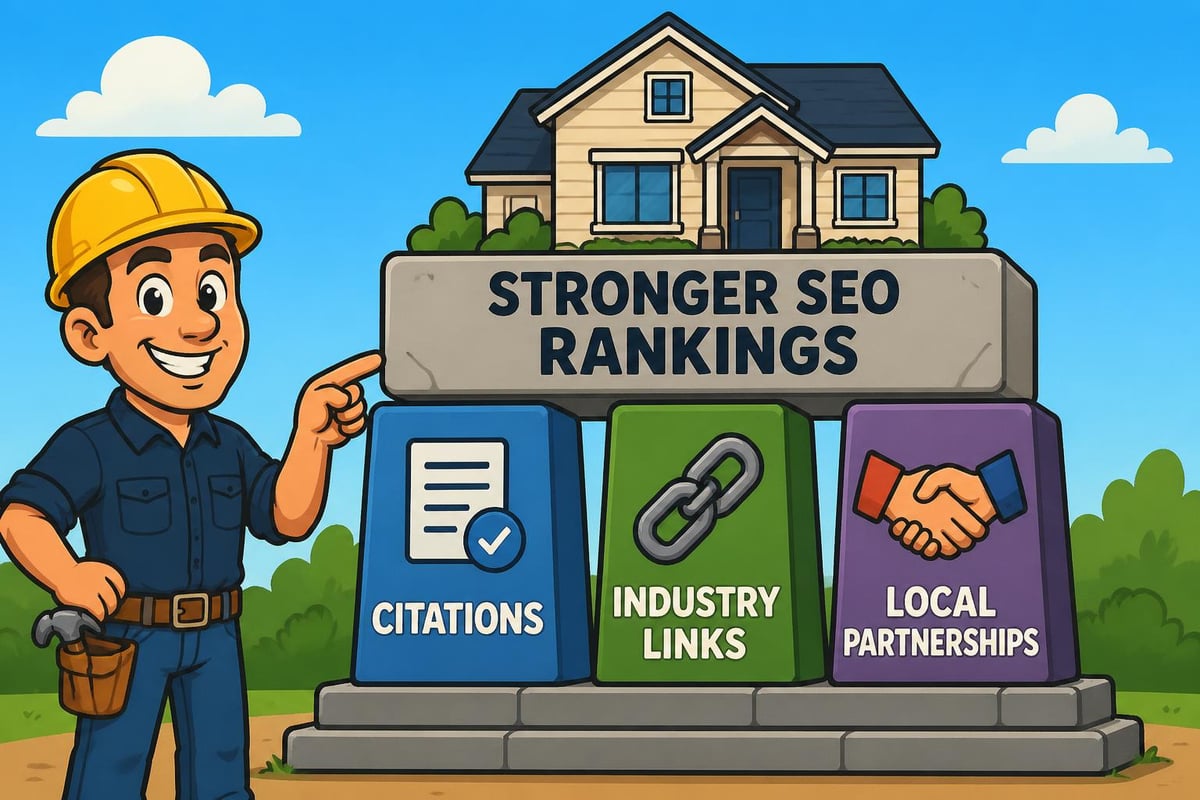
SEO for general contractors requires building authority in Google's eyes. This happens through backlinks (other websites linking to yours) and citations (mentions of your business name, address, and phone number).
Strategic Link Building for Contractors
Focus on quality over quantity. One link from your local building department or chamber of commerce is worth more than dozens from random directories.
High-value link opportunities:
- Local business directories (Better Business Bureau, Chamber of Commerce)
- Industry associations (National Association of Home Builders, local contractor associations)
- Manufacturer partnerships (if you're a certified installer)
- Local news coverage of notable projects
- Guest posts on home improvement blogs
- Sponsorships of local events or charities
The Authority + AI Visibility Blueprint service can help identify which link opportunities will have the greatest impact on your specific market and how to secure them systematically. This roadmap shows you exactly where to invest your link building efforts for maximum return.

Citation Consistency
Your business information must be identical across all online platforms. Inconsistent NAP (Name, Address, Phone) data confuses Google and weakens your local rankings.
Priority citation sources:
- Yelp, Angi, HomeAdvisor, Houzz
- Yellow Pages, Manta, MapQuest
- Facebook, LinkedIn business pages
- Industry-specific directories
Use a spreadsheet to track where you're listed and ensure everything matches exactly.
Keyword Research for Maximum Impact
Not all keywords are created equal. Choosing the right SEO keywords for contractors means balancing search volume, competition, and business value.
Service-Specific Keywords
Target keywords that align with your highest-margin services:
| Service | Primary Keyword | Secondary Keywords |
|---|---|---|
| Kitchen Remodeling | "kitchen remodeling [city]" | "kitchen renovation," "kitchen contractor," "custom kitchen design" |
| Bathroom Renovation | "bathroom remodeling [city]" | "bathroom contractor," "shower renovation," "bath remodel" |
| Home Additions | "home addition contractor [city]" | "second story addition," "room addition," "house expansion" |
| Whole House Renovation | "general contractor [city]" | "home renovation," "house remodel," "construction contractor" |
Use keyword research tools to identify variations and related terms, but prioritize keywords that match your actual services and target market.
Long-Tail Opportunity Keywords
Long-tail keywords have lower search volume but higher conversion rates. Someone searching "affordable kitchen remodeling contractor in Doylestown PA" is far more likely to hire than someone searching just "kitchen."
These specific queries are easier to rank for and attract highly qualified leads. Create dedicated pages or blog posts targeting these phrases.
Tracking and Measuring SEO Success
You can't improve what you don't measure. Implementing analytics from day one helps you understand what's working and where to focus your efforts.
Essential Metrics to Monitor
Rankings: Track your position for target keywords monthly. Don't obsess over daily fluctuations, but watch for trends.
Organic traffic: Monitor visitors from Google search in Google Analytics. Look for growth patterns and traffic sources.
Conversions: The ultimate metric. How many leads come from organic search? Set up goal tracking for:
- Contact form submissions
- Phone calls from website
- Quote requests
- Project consultations booked
Return on investment: Calculate the revenue from SEO-generated leads compared to your investment in optimization.
Many contractors find that working with specialized SEO services provides better ROI than managing everything in-house, especially when you need to focus on running projects and serving clients.
Common SEO Mistakes Contractors Make
Learning from others' mistakes saves time and money. Here are pitfalls to avoid:
Neglecting mobile optimization. Most homeowners research contractors on their phones. If your site doesn't work well on mobile, you're losing leads.
Ignoring local intent. Trying to rank nationally as a general contractor is pointless. Focus on the specific areas you serve.
Creating thin content. A 200-word service page won't outrank competitors with comprehensive guides. Provide depth and value.
Inconsistent effort. SEO isn't a one-time project. Rankings require ongoing optimization, content creation, and technical maintenance.
Skipping the fundamentals. You can't skip basic on-page optimization and succeed with advanced tactics. Master the foundations first.
Integrating SEO with Other Marketing Channels
SEO for general contractors works best as part of an integrated marketing strategy. Your SEO efforts should complement and enhance other channels.
SEO and Paid Advertising
While you build organic rankings, paid ads (Google Ads, Facebook) provide immediate visibility. Use paid campaigns to:
- Test which keywords convert best before investing in SEO
- Dominate search results for high-value terms (appearing in both ads and organic results)
- Maintain visibility while SEO efforts gain traction
Data from paid campaigns informs your SEO keyword strategy. If certain search terms consistently generate leads through ads, prioritize ranking organically for those terms.
SEO and Social Media
Social media signals don't directly impact rankings, but social platforms drive traffic, build brand awareness, and create link opportunities. Share your blog content, project photos, and client testimonials across Facebook, Instagram, and LinkedIn.
Email Marketing and SEO
Your email list is valuable for SEO in unexpected ways:
- Send new blog posts to subscribers, increasing early engagement signals
- Ask satisfied clients in your email list for Google reviews
- Promote content that attracts backlinks to industry contacts
Staying Current with Algorithm Changes
Google updates its search algorithm constantly. Major updates can shift rankings overnight. For example, recent search engine optimization research shows Google increasingly prioritizes user experience signals and content quality over technical manipulation.
Stay informed without obsessing over every minor change:
- Follow reputable SEO news sources
- Monitor your analytics for sudden traffic changes
- Focus on fundamentals (quality content, good user experience, legitimate links)
- Avoid black-hat tactics that provide short-term gains but long-term penalties
The contractors who succeed long-term build sustainable SEO practices rather than chasing algorithm loopholes.
Advanced SEO Strategies for Competitive Markets
Once you've mastered the basics, these advanced tactics can help you dominate even competitive markets:
Schema markup: Add structured data to help Google understand your services, reviews, and business details. This can earn rich snippets in search results.
Topic clusters: Create comprehensive content hubs around major services, with pillar pages linking to detailed subtopic articles.
Video content: Create project walkthroughs, time-lapses, and how-to videos. Video content ranks in both Google search and YouTube (the second-largest search engine).
AI search optimization: As ChatGPT and other AI tools answer user questions, ensure your content appears in these responses. This emerging channel is becoming increasingly important for visibility in AI search results.
Competitor gap analysis: Identify keywords your competitors rank for that you don't, then create superior content targeting those terms.
Implementing a comprehensive SEO strategy requires expertise, consistency, and patience, but the results transform how general contractors attract clients. By focusing on local optimization, creating valuable content, and building authority in your market, you'll generate a steady stream of qualified leads without relying solely on paid advertising or referrals. Shawn the SEO Geek specializes in developing customized SEO strategies for home services businesses throughout Bucks County and beyond, with over two decades of experience helping contractors dominate their local markets. If you're ready to grow your contracting business through search engine visibility, let's build a roadmap to get you there.