
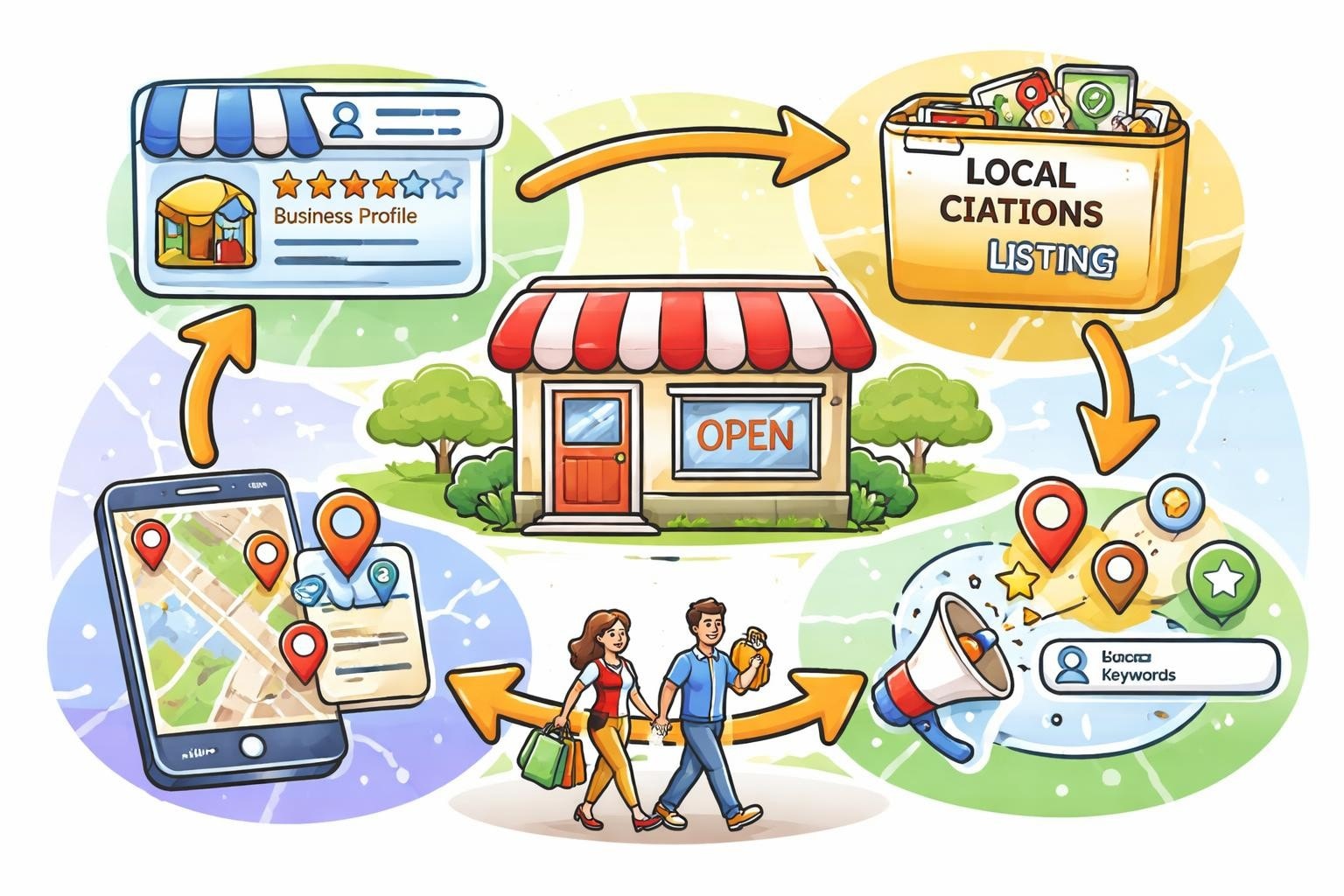
When potential customers search for services in their area, you want your business to be the first thing they see. Local SEO optimization has become the cornerstone of success for businesses serving specific geographic markets, whether you're a law firm in Philadelphia, a plumbing company in Doylestown, or a B2B service provider in Bucks County. Unlike traditional SEO that casts a wide net, local SEO optimization focuses on connecting you with customers right in your neighborhood who are ready to buy. With over 46% of all Google searches having local intent, mastering these strategies isn't just helpful-it's essential for survival and growth in 2026.
Understanding the Foundation of Local SEO Optimization
Local SEO optimization works differently than traditional search engine optimization because it prioritizes geographic relevance alongside traditional ranking factors. When someone searches for "personal injury lawyer near me" or "emergency plumber Bucks County," Google evaluates hundreds of signals to determine which businesses deserve those coveted top spots.
The foundation rests on three critical pillars: relevance, distance, and prominence. Relevance measures how well your business matches what the searcher wants. Distance considers how close you are to the searcher or the location mentioned in their query. Prominence evaluates how well-known and authoritative your business is both online and offline.
Understanding local search engine optimization requires recognizing that Google treats local queries with unique algorithms designed specifically for geographic intent. The local pack-those three businesses that appear with map pins above organic results-represents prime real estate that can transform your lead generation.
The Changing Landscape of Local Search
Local search has evolved dramatically over the past few years. Voice search, mobile-first indexing, and AI-powered results have changed how people find local businesses. In 2026, we're seeing even more sophisticated personalization based on search history, real-time location data, and individual user preferences.
Google's local algorithm updates continue to refine which businesses appear for specific queries. The proximity factor has become more nuanced, with Google considering not just raw distance but also service area boundaries, business categories, and historical performance data.
Optimizing Your Google Business Profile
Your Google Business Profile (formerly Google My Business) serves as the centerpiece of any local SEO optimization strategy. Think of it as your business's front door in the digital world-it's often the first impression potential customers receive.
Complete every single section of your profile, including:
- Business name, address, and phone number (NAP)
- Primary and secondary business categories
- Service areas and hours of operation
- Business description with relevant keywords
- High-quality photos of your location, team, and services
- Products or services you offer
- Attributes specific to your industry
Consistency matters tremendously here. Your business information must match exactly across every online platform. Even minor discrepancies like "Street" versus "St." can confuse Google's algorithms and dilute your local search power.

Engaging With Customer Reviews
Reviews have become one of the most influential ranking factors for local SEO optimization. They serve dual purposes-they influence Google's algorithm and convince potential customers to choose you over competitors.
Develop a systematic approach to gathering reviews:
- Ask satisfied customers immediately after completing a service
- Send follow-up emails with direct links to your review profiles
- Make the process as simple as possible (one-click when feasible)
- Respond to every review, positive or negative, within 24-48 hours
- Use review feedback to improve your services genuinely
Negative reviews aren't disasters-they're opportunities. A professional, empathetic response to a complaint shows potential customers that you care about satisfaction and accountability. We've seen businesses improve their conversion rates simply by improving review response quality.
Building Local Citations and Directory Listings
Citations are mentions of your business name, address, and phone number across the web. They function like votes of confidence, telling Google that your business legitimately exists and serves a particular area.
The quality and consistency of your citations directly impact your local rankings. Top citation sources vary by industry, but certain platforms universally matter for local SEO optimization.
| Citation Type | Examples | Authority Impact |
|---|---|---|
| General Directories | Yelp, Yellow Pages, BBB | High |
| Industry-Specific | Avvo (lawyers), Houzz (contractors) | Very High |
| Local Chambers | Bucks County Chamber of Commerce | Medium-High |
| Data Aggregators | Data Axle, Neustar Localeze | Critical |
Data aggregators deserve special attention because they feed information to hundreds of other directories simultaneously. Getting listed correctly with these services creates a ripple effect across the citation ecosystem.
Managing Citation Consistency
Inconsistent citations create confusion and weaken your local SEO optimization efforts. Conduct regular audits to identify and correct discrepancies. If you've moved locations or changed phone numbers, systematically update every citation-a tedious but necessary process.
For businesses with multiple locations, create unique citations for each address. Never use a P.O. Box as your primary business address, and ensure each location has its own dedicated Google Business Profile and landing page.
Creating Location-Specific Content
Content remains king, but for local SEO optimization, location-relevant content wears the crown. Generic blog posts about industry trends won't move the needle for local rankings. Instead, create content that demonstrates deep connections to your community.
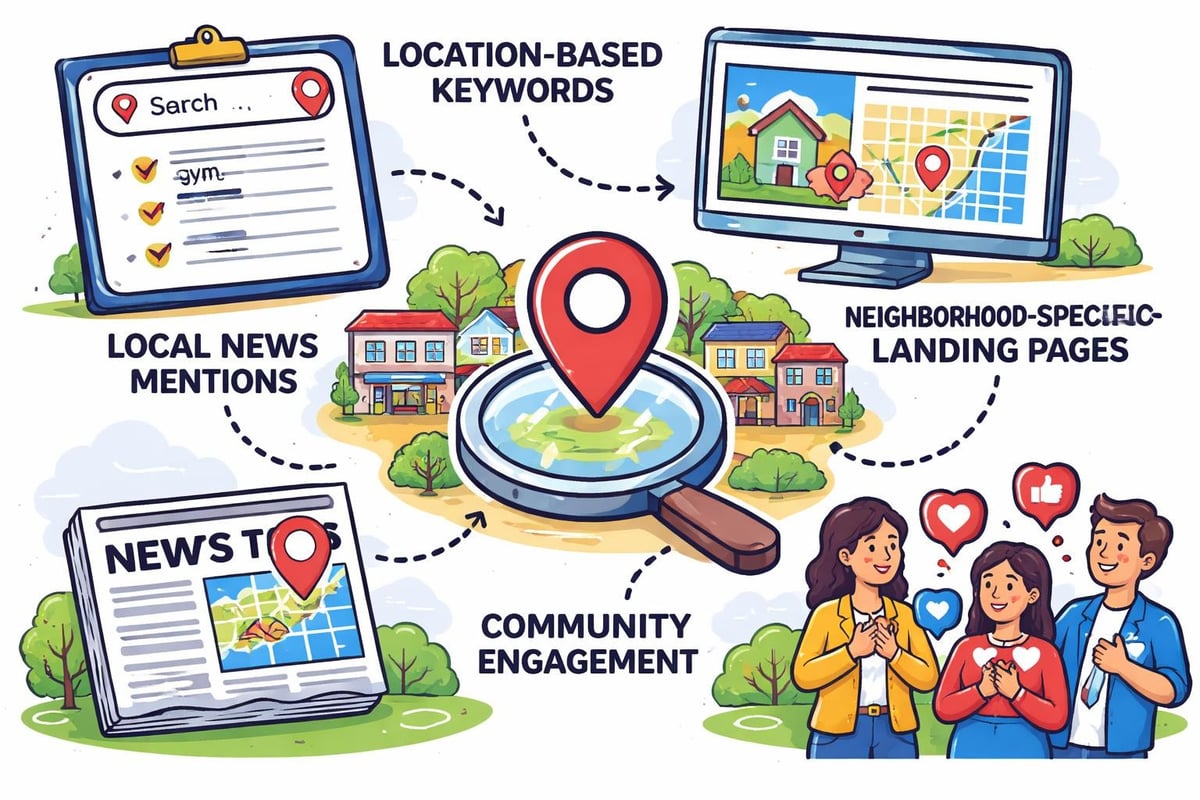
Develop location pages for each area you serve. If you're providing SEO services for contractors across Bucks County, create dedicated pages for Doylestown, Newtown, Quakertown, and other municipalities. Each page should include:
- Unique, original content about serving that specific area
- Location-specific keywords naturally integrated
- Embedded Google Maps showing your business and the service area
- Local testimonials from customers in that area
- Photos relevant to that location
Blog about local events, news, and community involvement. Sponsor a little league team? Write about it. Participate in a local charity drive? Document it. These authentic local connections signal relevance to search engines while building genuine community relationships.
Schema Markup for Local Businesses
Schema markup provides structured data that helps search engines understand your content context. For local businesses, LocalBusiness schema tells Google exactly what you do, where you're located, and how customers can contact you.
Implement schema markup that includes your business type, address, phone number, hours, price range, and accepted payment methods. Use the most specific schema type available-if you're a law firm, use "Attorney" or "LegalService" rather than generic "LocalBusiness" schema.
Tools like Google's Structured Data Testing Tool help verify your markup is correctly implemented. Many content management systems and plugins can add schema automatically, but always verify the output matches your actual business details.
Building Local Backlinks
Backlinks from reputable local sources carry tremendous weight for local SEO optimization. A link from the Bucks County Courier Times or a local chamber of commerce website tells Google your business is genuinely embedded in the community.
Local SEO link-building techniques focus on quality over quantity. One link from a respected local news outlet outweighs dozens of low-quality directory listings.
Effective local link-building strategies include:
- Sponsoring local events and organizations
- Contributing expert quotes to local journalists
- Creating newsworthy stories about your business
- Partnering with complementary local businesses
- Participating in local business associations
- Guest posting on local blogs and news sites
Building powerful local SEO backlinks requires relationship building. Attend chamber of commerce meetings, network at local events, and genuinely engage with your community. The connections you make often lead to natural link opportunities.
Press Releases and Local Media
Local media outlets constantly need content, creating opportunities for businesses willing to share newsworthy stories. Opening a new location, hiring milestone employees, launching innovative services, or achieving significant business milestones all warrant press releases.
Build relationships with local journalists covering your industry. Offer yourself as an expert resource when they need quotes or insights. When SEO for home services trends emerge, position yourself as the go-to expert who can provide valuable commentary.
Technical Optimization for Local Search
Technical SEO forms the invisible foundation supporting your local SEO optimization efforts. While customers never see it, search engines rely heavily on technical factors when determining rankings.
Mobile optimization isn't optional-it's mandatory. With most local searches happening on smartphones, Google prioritizes mobile-friendly websites in local results. Your site must load quickly, display properly on all screen sizes, and provide easy navigation with touch-friendly buttons.
Page speed directly impacts rankings and user experience. Compress images, minimize code, leverage browser caching, and use content delivery networks to ensure your site loads in under three seconds. Every second of delay costs you potential customers who abandon slow-loading sites.
Ensure your contact information appears consistently in your website's header or footer on every page. Make phone numbers clickable (click-to-call functionality) for mobile users. Include an embedded Google Map on your contact page and location pages.
Local Structured Data Implementation
Beyond basic schema markup, implement enhanced structured data for specific content types. Service pages should include Service schema, blog posts should use Article schema, and product pages need Product schema with local availability information.
For businesses with physical locations, include opening hours schema that updates automatically for holidays and special closures. This prevents customer frustration when your schema promises you're open but your doors are actually locked.
Leveraging Online Reviews and Reputation Management
Your online reputation directly influences both search rankings and conversion rates. According to recent studies, 88% of consumers trust online reviews as much as personal recommendations, making reputation management a critical component of local SEO optimization.
Diversify your review platforms beyond Google. While Google reviews carry the most weight for local rankings, reviews on industry-specific platforms (like Avvo for SEO for lawyers or Houzz for contractors) also influence both rankings and customer decisions.
| Review Platform | Importance for Rankings | Importance for Conversions |
|---|---|---|
| Google Business Profile | Critical | Critical |
| Medium | High | |
| Industry-Specific Sites | High | Very High |
| Yelp | Medium-High | High |
| Better Business Bureau | Medium | High |
Create a review generation system that operates automatically. After completing a service, trigger an automated email thanking the customer and requesting feedback. Make the review process require minimal effort-include direct links to your preferred review platforms.
Responding to Reviews Strategically
Every review response is a micro-marketing opportunity. Thank positive reviewers specifically, mentioning details about their experience to show you genuinely care. For negative reviews, acknowledge concerns, apologize when appropriate, and offer to resolve issues offline.
Never argue with reviewers publicly, even when they're factually wrong. Maintain professionalism and offer solutions. Potential customers reading reviews pay attention to how you handle criticism-grace under pressure builds trust.
Optimizing for Voice Search and Mobile
Voice search has fundamentally changed how people phrase local queries. Instead of typing "plumber Doylestown PA," users ask "where's the best plumber near me?" This conversational tone requires adjustments to your local SEO optimization strategy.
Optimize for question-based queries by creating FAQ pages addressing common customer questions. Use natural language that matches how people actually speak. Focus on long-tail keywords that sound conversational rather than robotic.
Featured snippets and position zero results often come from content that directly answers questions. Structure your content with clear questions as headings followed by concise, direct answers. This format serves both voice search and traditional search effectively.

Mobile user experience extends beyond responsive design. Consider the mobile user's context-they're often on-the-go, needing quick information like directions, hours, or phone numbers. Make these elements immediately accessible without scrolling or navigation.
Tracking and Measuring Local SEO Success
You can't improve what you don't measure. Implementing comprehensive tracking helps you understand which local SEO optimization tactics deliver results and which need adjustment.
Essential metrics to monitor include:
- Local pack rankings for target keywords
- Google Business Profile insights (views, clicks, calls, direction requests)
- Organic traffic from local search terms
- Citation accuracy across directories
- Review quantity, quality, and velocity
- Website conversions from local traffic
- Phone calls and form submissions
Google Analytics 4 provides detailed insights into user behavior, traffic sources, and conversion paths. Set up goals tracking specific actions like phone clicks, form submissions, and direction requests from your Google Business Profile.
Monthly SEO website audit services help identify technical issues, citation inconsistencies, and optimization opportunities before they significantly impact rankings. Regular monitoring catches problems early when they're easiest to fix.
Competitor Analysis for Local Search
Understanding your competitive landscape reveals opportunities and threats. Analyze which businesses rank in the local pack for your target keywords. Examine their Google Business Profiles, citation profiles, review strategies, and content approaches.
Identify gaps in competitor strategies that you can exploit. If competitors neglect certain neighborhoods or service categories, those represent opportunities for you to dominate. Use tools to track competitor rankings, new backlinks, and review acquisition rates.
Advanced Local SEO Optimization Strategies
Once you've mastered fundamentals, advanced tactics can provide competitive advantages. Geo-targeted paid advertising combined with organic local SEO optimization creates a powerful one-two punch, dominating both paid and organic results simultaneously.
Implement local business schema for events, products, and services. This enhanced markup helps Google understand the full scope of what you offer, potentially earning rich results that stand out in search results.
For local SEO for home services businesses operating across multiple service areas, create service area pages that target each municipality individually. These location-specific pages, combined with localized content, capture searches from customers in surrounding communities.
Understanding local SEO ranking factors helps prioritize efforts toward activities with the highest impact. Focus on factors you can control directly, like citation consistency and review generation, before worrying about factors requiring third-party cooperation.
Seasonal Local SEO Tactics
Adjust your local SEO optimization approach based on seasonal demand patterns. If you're an HVAC company, emphasize air conditioning services in spring and heating services in fall. Update your Google Business Profile with seasonal offerings and create timely content addressing seasonal customer needs.
Plan content calendars around local events, holidays, and seasonal service needs. Publishing relevant content before peak seasons positions you for maximum visibility when demand surges.
Creating a Sustainable Local SEO Strategy
Local SEO optimization isn't a one-time project-it's an ongoing process requiring consistent effort and adaptation. Search algorithms evolve, competitors adjust strategies, and customer behavior shifts. Staying ahead requires systematic approaches and regular optimization.
Follow local SEO best practices while remaining flexible enough to adapt as platforms and algorithms change. What works today might need refinement tomorrow, making continuous learning essential.
Develop standard operating procedures for routine local SEO tasks. Create checklists for new location launches, citation updates, review responses, and content publication. Systematizing routine tasks ensures consistency and frees time for strategic initiatives.
Invest in relationships within your community. Genuine community involvement creates natural opportunities for citations, backlinks, press coverage, and word-of-mouth referrals that amplify your local SEO optimization efforts.
Local SEO optimization combines technical expertise with genuine community engagement, creating sustainable visibility that drives qualified customers to your business. The strategies outlined here work across industries, whether you're optimizing for law firms, contractors, or service businesses, but they require consistent implementation and adaptation to your specific market. If you're ready to dominate local search results and transform your online presence into a reliable lead generation engine, Shawn the SEO Geek brings over two decades of proven expertise helping Bucks County businesses achieve measurable growth through customized local SEO strategies that deliver real results.