
Finding the right partner to boost your online visibility can feel overwhelming. Search engine marketing companies offer specialized expertise in both paid advertising and organic search strategies, helping businesses connect with customers actively searching for their products or services. Whether you're a law firm looking to attract more clients, a home services company trying to dominate your local market, or a B2B business seeking qualified leads, understanding what these agencies do and how they can help is essential for making an informed decision that drives real results.
What Search Engine Marketing Companies Actually Do
Search engine marketing companies specialize in increasing your visibility across search engines through two primary channels: paid search advertising and organic search optimization. These agencies combine technical expertise, strategic thinking, and data analysis to help businesses appear prominently when potential customers search for relevant products or services.
The scope of services typically includes pay-per-click (PPC) campaign management, keyword research and strategy, ad copywriting and optimization, landing page development, and comprehensive analytics reporting. Many search engine marketing companies also offer organic SEO services, creating a holistic approach that maximizes your presence across both paid and unpaid search results.
The Dual Approach to Search Visibility
What sets professional agencies apart is their ability to coordinate both immediate and long-term visibility strategies. Paid search campaigns deliver instant traffic and can be adjusted in real-time based on performance data, while organic search optimization builds sustainable visibility that compounds over time.
Here's how these strategies complement each other:
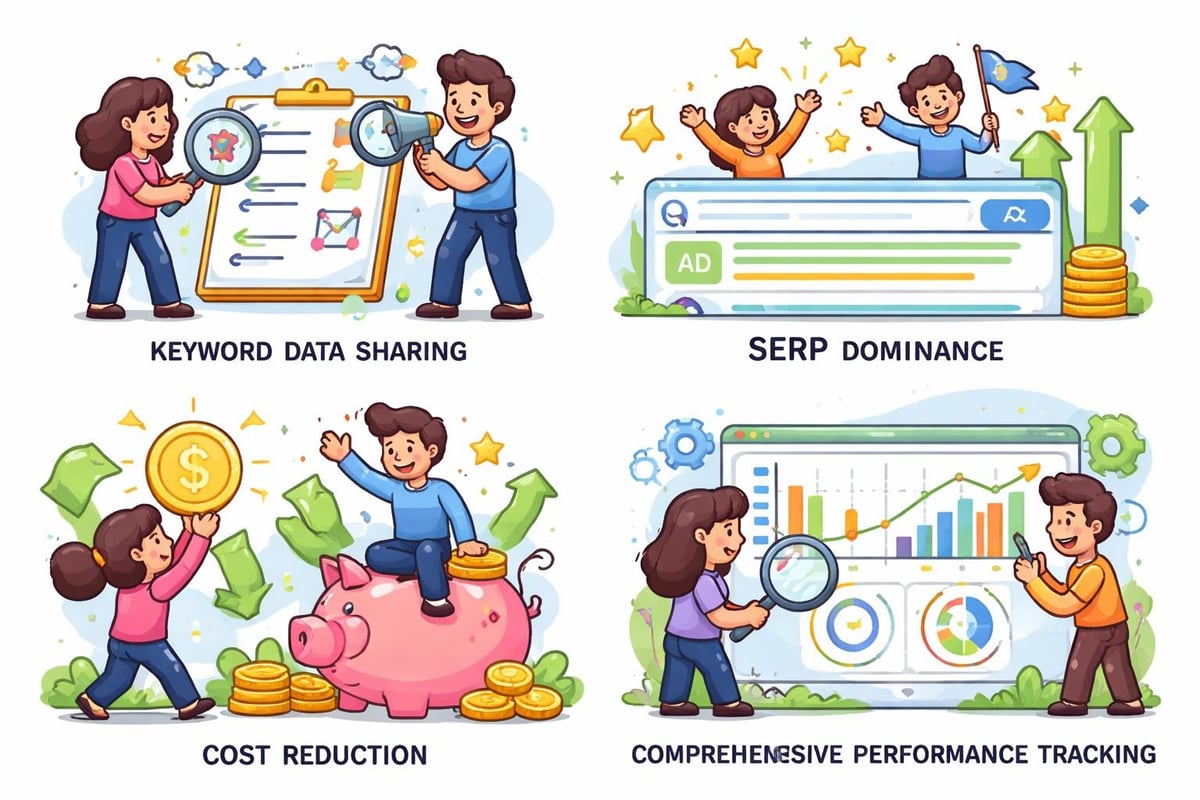
- Paid campaigns provide immediate data about which keywords convert best
- Organic efforts build authority and trust with search engines
- Combined strategies dominate search results pages with multiple listings
- Integrated reporting shows the complete picture of search performance
This dual approach creates a powerful synergy where insights from paid campaigns inform organic strategy, and organic success reduces the overall cost per acquisition from paid advertising. According to Search Engine Journal, businesses that integrate both paid and organic search strategies see significantly higher conversion rates than those relying on a single channel.
Core Services Offered by Top Agencies
Professional search engine marketing companies provide a comprehensive suite of services designed to maximize your return on investment. Understanding what each service entails helps you evaluate potential partners and ensure they align with your business goals.
Pay-Per-Click Campaign Management
PPC management forms the backbone of most search marketing engagements. Agencies handle everything from initial campaign setup through ongoing optimization and performance reporting.
Campaign setup includes:
- Comprehensive keyword research using tools like Semrush
- Account structure development for optimal performance tracking
- Ad copy creation and A/B testing frameworks
- Conversion tracking implementation and goal setup
- Budget allocation across campaigns and ad groups
Once campaigns launch, continuous optimization becomes critical. Top agencies monitor performance daily, adjusting bids, pausing underperforming keywords, testing new ad variations, and reallocating budgets to maximize results.
Organic Search Engine Optimization
While many search engine marketing companies focus heavily on paid advertising, the best agencies understand that organic SEO services create lasting value. This includes technical website optimization, content strategy development, link building, and local SEO for businesses serving specific geographic areas.
| Service Type | Timeline to Results | Primary Benefit | Best For |
|---|---|---|---|
| PPC Management | Immediate | Fast traffic and testing | Product launches, seasonal promotions |
| Technical SEO | 2-4 months | Foundation for growth | New websites, site migrations |
| Content Marketing | 3-6 months | Authority building | Competitive industries |
| Local SEO | 1-3 months | Geographic visibility | Service area businesses |
How to Evaluate Search Engine Marketing Companies
Choosing the right agency requires careful evaluation beyond flashy presentations and bold promises. The search marketing landscape is filled with companies making unrealistic guarantees, so knowing what questions to ask and what warning signs to watch for protects your investment.
Essential Questions to Ask Potential Partners
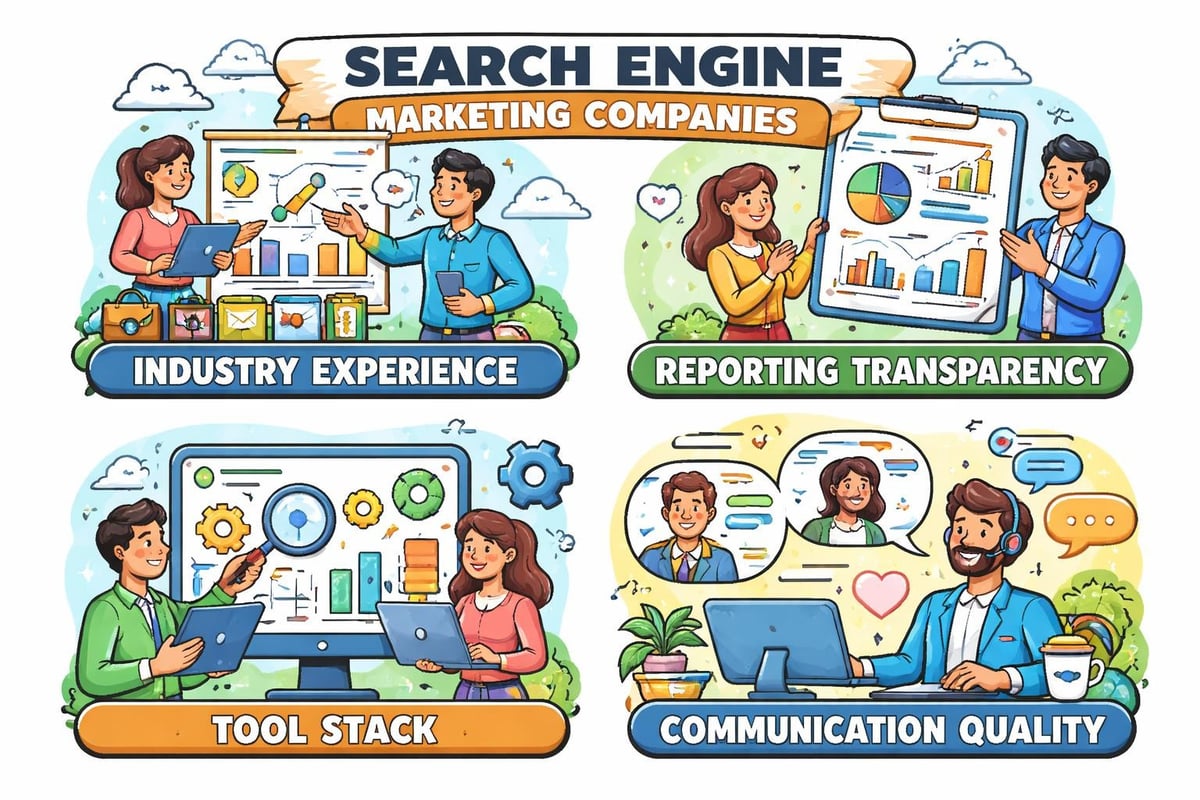
What is your experience in my industry? Industry-specific knowledge matters tremendously. An agency that has worked with law firms understands the competitive landscape and compliance requirements differently than one specializing in e-commerce. At Shawn the SEO Geek, we've completed over 500 campaigns across industries ranging from home services to professional services, giving us deep insights into what works in different markets.
How do you measure and report success? Transparency in reporting separates professional agencies from those hiding poor performance. Look for companies that provide detailed analytics, explain what metrics matter most for your business, and show how their work directly impacts your bottom line.
- Weekly or bi-weekly performance updates
- Clear ROI calculations tied to business goals
- Access to campaign dashboards and raw data
- Regular strategy calls to discuss results and adjustments
What tools and platforms do you use? The technology stack an agency uses reveals their sophistication and commitment to data-driven decision making. Professional search engine marketing companies invest in premium tools for keyword research, competitor analysis, rank tracking, and conversion optimization.
Red Flags to Avoid
Not all search engine marketing companies operate with your best interests in mind. Watch out for agencies that guarantee first-page rankings (impossible to promise ethically), use vague or confusing contracts, refuse to provide client references, or lack transparent pricing structures.
Communication style matters too. Agencies that use excessive jargon without explaining concepts clearly, pressure you into long-term contracts before proving value, or don't ask detailed questions about your business probably aren't the right fit. The best partnerships involve collaborative strategy development and regular, honest dialogue about what's working and what needs adjustment.
Pricing Models and Budget Expectations
Understanding how search engine marketing companies structure their fees helps you budget appropriately and evaluate proposals on equal footing. Pricing varies widely based on service scope, industry competitiveness, and agency expertise level.
Common Pricing Structures
Most agencies use one of three primary pricing models, each with distinct advantages depending on your situation and goals.
Monthly retainer pricing represents the most common approach, where you pay a fixed fee each month for an agreed-upon scope of services. This model provides budget predictability and allows agencies to develop long-term strategies without constantly renegotiating terms.
Percentage of ad spend is popular for PPC-focused engagements, where the agency charges a percentage (typically 10-20%) of your monthly advertising budget. This aligns agency incentives with your spending level but can become expensive as budgets scale.
Performance-based pricing ties agency compensation directly to results, such as leads generated or revenue driven. While this seems attractive, it often requires higher base fees and works best when you have clear conversion tracking and established baseline metrics.
Realistic Budget Guidelines for 2026
For small to medium-sized businesses, expect to invest between $2,500 and $10,000 monthly for comprehensive search engine marketing services. This typically includes both agency fees and advertising spend.
Here's a practical breakdown:
- Starter programs ($2,500-$4,000/month): Basic PPC management or foundational SEO work
- Growth programs ($4,000-$7,500/month): Integrated paid and organic strategies with regular optimization
- Enterprise programs ($7,500+/month): Comprehensive campaigns across multiple channels with dedicated account management
According to WordStream, businesses should allocate at least 20-30% of their marketing budget to search marketing activities to remain competitive in 2026. The specific amount depends on your industry's competitiveness, profit margins, and growth goals.
Industry-Specific Considerations
Different industries face unique challenges in search marketing, and the best search engine marketing companies tailor their approaches accordingly. What works for an e-commerce store selling products nationwide differs dramatically from what a local home services company needs.
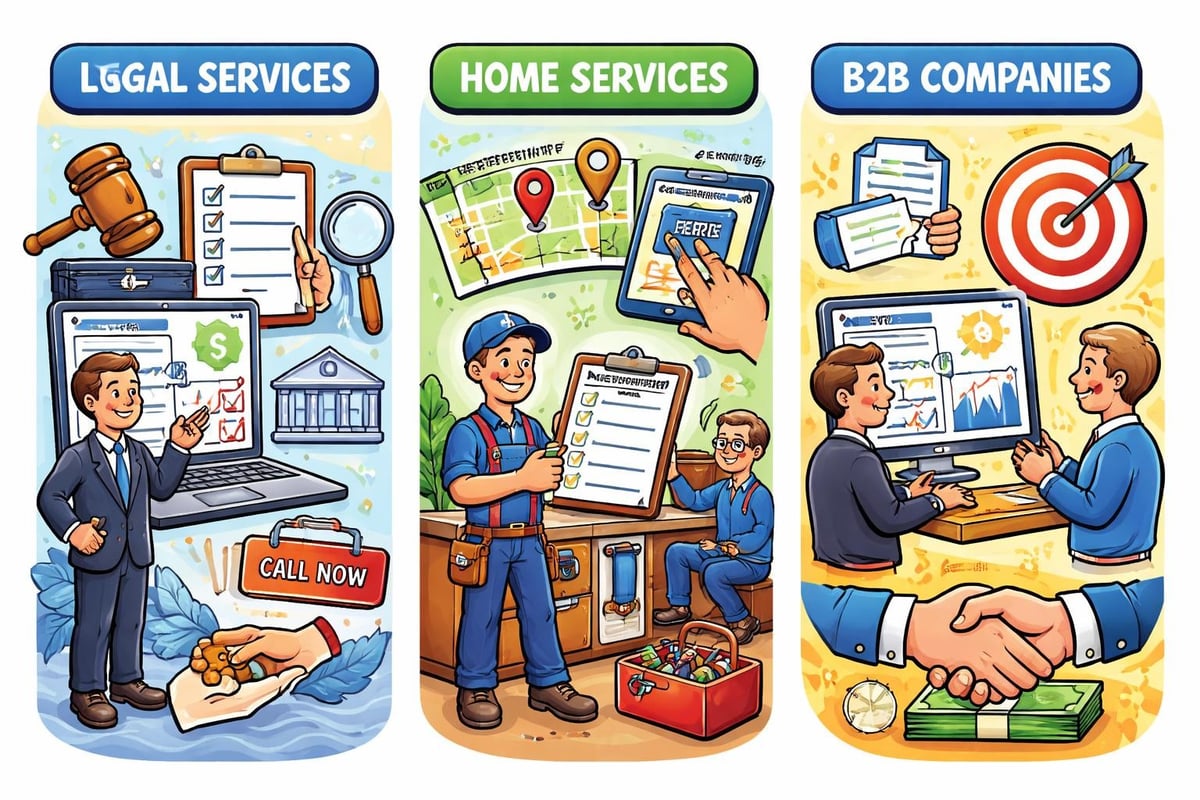
Legal and Professional Services
Law firms and professional service providers operate in highly competitive search environments where cost-per-click can exceed $100 for premium keywords. These businesses benefit from search engine marketing companies that understand compliance requirements, can create sophisticated audience targeting, and develop content that demonstrates expertise without making inappropriate guarantees.
Successful campaigns focus on:
- Long-tail keyword targeting to reduce costs
- Geographic refinement to reach ideal clients
- Reputation management integration
- Call tracking and lead qualification systems
Our case study showing how a personal injury law firm increased lead flow by 11x demonstrates the impact of properly executed search marketing in the legal sector.
Home Services and Local Businesses
Home services companies like plumbers, electricians, and cleaning services need search engine marketing companies that excel at local SEO and understand the importance of mobile optimization. Most customers search for these services on smartphones during moments of immediate need.
| Priority Area | Why It Matters | Implementation Focus |
|---|---|---|
| Google Business Profile | Appears in map pack results | Regular updates, review generation |
| Mobile Experience | 70%+ of searches on mobile | Fast loading, click-to-call functionality |
| Service Area Targeting | Matches service capabilities | Geographic bid adjustments, location pages |
| Review Management | Trust signal for local buyers | Systematic review request process |
A local carpet cleaning company gaining daily leads through targeted local search optimization shows the power of properly executed local search strategies.
B2B and E-commerce Businesses
B2B companies and online retailers need search engine marketing companies comfortable with longer sales cycles, complex attribution models, and sophisticated remarketing strategies. These businesses benefit from agencies that can integrate search marketing with broader digital marketing initiatives and understand multi-touch conversion paths.
The right agency helps you track assisted conversions, develop account-based marketing integration, create product feed optimization for shopping campaigns, and implement sophisticated audience segmentation.
The Technology Behind Modern Search Marketing
Professional search engine marketing companies leverage sophisticated technology stacks that go far beyond basic Google Ads management. Understanding the tools and platforms agencies use helps you appreciate the complexity of modern search marketing and evaluate their capabilities.
Essential Platforms and Tools
The foundation starts with native advertising platforms: Google Ads for search, display, shopping, and YouTube campaigns, Microsoft Advertising for Bing and partner network reach, and specialized platforms for social search advertising on Facebook and LinkedIn.
Beyond the advertising platforms themselves, top agencies use comprehensive tools for research, optimization, and reporting. Semrush and SpyFu provide competitive intelligence and keyword research capabilities that inform both paid and organic strategies. These platforms reveal what competitors are bidding on, what keywords drive their traffic, and where opportunities exist in the market.
Advanced agencies also employ:
- Conversion rate optimization platforms for landing page testing
- Call tracking systems to connect phone leads to specific campaigns
- Marketing automation for lead nurturing and attribution
- Business intelligence tools for cross-channel performance analysis
Artificial Intelligence and Automation
Search marketing in 2026 increasingly relies on AI-powered optimization and automation. Smart bidding strategies use machine learning to adjust bids in real-time based on likelihood of conversion, while automated ad creation generates and tests multiple variations simultaneously.
However, experienced search engine marketing companies know that automation requires strategic oversight. The best results come from combining machine efficiency with human strategic thinking, particularly in areas like audience development, creative strategy, and offer testing.
Working Effectively with Your Agency Partner
Selecting a search engine marketing company represents just the beginning. The quality of your working relationship significantly impacts campaign performance and your overall satisfaction with the partnership.
Setting Up for Success
Clear communication starts with well-defined goals and success metrics. Before campaigns launch, establish specific, measurable objectives that align with your broader business goals. Rather than vague aims like "more traffic," focus on concrete targets: "generate 50 qualified leads per month at a $150 cost per lead" or "achieve $100,000 in e-commerce revenue with a 4:1 ROAS."
Successful partnerships include:
- Regular strategy meetings (typically bi-weekly or monthly)
- Documented processes for approvals and communication
- Shared access to analytics platforms and campaign dashboards
- Quarterly business reviews to assess strategy and adjust goals
Your agency needs certain information and assets to perform effectively. Provide access to your website backend for tracking implementation, historical performance data to establish baselines, details about your target customers and competitive landscape, and examples of successful marketing materials.
Maximizing Your Investment
Search engine marketing companies perform best when treated as strategic partners rather than order-taking vendors. Share business context about promotions, seasonal patterns, and operational constraints that might affect campaign performance. If you're running a special offer, having capacity constraints, or changing service areas, your agency needs to know to adjust campaigns accordingly.
Stay engaged without micromanaging. Review performance reports carefully and ask questions about anything unclear, but trust your agency's expertise on tactical decisions like bid adjustments and ad scheduling. As noted by marketing experts at HubSpot, the most successful client-agency relationships balance oversight with professional autonomy.
Emerging Trends in Search Engine Marketing
The search marketing landscape continues evolving rapidly. Search engine marketing companies that stay ahead of trends deliver better results than those relying on outdated tactics.
Privacy and Tracking Changes
Cookie deprecation and privacy regulations fundamentally change how we track and target audiences in 2026. Professional agencies adapt by implementing first-party data strategies, server-side tracking, and privacy-compliant measurement frameworks. This shift actually benefits businesses willing to invest in owned channels and direct customer relationships.
Key adaptations include:
- Enhanced conversion tracking through Google Analytics 4
- Customer data platform integration for audience building
- Consent management for compliant data collection
- Predictive modeling to supplement limited tracking data
Voice Search and AI-Driven Results
Voice search continues growing, with smart speakers and voice assistants changing how people interact with search engines. Search engine marketing companies now optimize for conversational queries, featured snippets, and position zero results that voice assistants read aloud. This requires a different approach to keyword research and content development focused on natural language and question-based queries.
AI-generated search results and enhanced SERP features mean traditional organic listings face more competition for clicks. Agencies must develop sophisticated strategies for capturing visibility across multiple SERP elements including featured snippets, people also ask boxes, local packs, and knowledge panels.
Video and Visual Search Integration
Search increasingly incorporates visual elements, with YouTube serving as the second-largest search engine and Google Lens enabling visual search queries. Forward-thinking search engine marketing companies integrate video advertising and optimization into comprehensive strategies, recognizing that customers use multiple search modalities throughout their buyer journey.
For businesses ranging from dental practices to roofing companies, video content creates opportunities to demonstrate expertise and build trust before customers ever contact you. Smart agencies help develop video content strategies that support both paid promotion and organic discovery.
Building Internal Capabilities
While search engine marketing companies provide specialized expertise, businesses benefit from developing basic internal understanding of search marketing principles. This knowledge helps you evaluate agency performance, contribute meaningfully to strategy discussions, and make informed decisions about budget allocation.
What to Learn In-House
You don't need to become a search marketing expert, but understanding fundamental concepts improves your ability to work effectively with agencies. Familiarize yourself with basic terminology like impressions, clicks, conversions, and quality score. Learn how to read analytics reports and understand what different metrics indicate about campaign health.
Valuable internal knowledge areas:
- How search algorithms determine ad position and organic rankings
- The relationship between landing page quality and advertising costs
- Basic keyword research methodology and competitive analysis
- Fundamental conversion rate optimization principles
Resources like Search Engine Watch and MarketingProfs provide accessible education for business owners and marketing managers who want to understand search marketing without becoming practitioners.
When to Consider In-House vs. Agency
Some businesses eventually build internal search marketing capabilities, while others maintain long-term agency relationships. The right choice depends on your budget, hiring ability, need for specialized expertise, and strategic priorities.
In-house teams make sense when you have sufficient budget to hire experienced specialists (typically $75,000+ annually per role), manage search marketing as a core competency central to your business model, and need instant communication and cultural alignment. However, agencies provide advantages including access to diverse expertise across multiple team members, established processes and technology stacks, and scalable resources that flex with your needs.
Many businesses find that hybrid models work best, maintaining basic internal capabilities while partnering with search engine marketing companies for specialized expertise and execution bandwidth. For instance, a search engine marketing consultant might provide strategic direction while your team handles content creation and technical implementation.
Measuring Long-Term Success
Evaluating search engine marketing companies shouldn't focus solely on immediate metrics. While short-term performance indicators matter, sustainable success requires measuring progress toward broader business objectives over meaningful time horizons.
Key Performance Indicators That Actually Matter
Different businesses should track different metrics based on their goals and business models. E-commerce companies focus heavily on revenue, return on ad spend, and customer lifetime value. Lead generation businesses track cost per lead, lead quality scores, and lead-to-customer conversion rates. Brand awareness campaigns measure impression share, branded search volume growth, and engagement metrics.
Universal metrics everyone should monitor:
| Metric Category | What to Track | Why It Matters |
|---|---|---|
| Efficiency | Cost per acquisition, ROAS | Shows profitability of campaigns |
| Volume | Leads/sales, qualified traffic | Indicates campaign reach and scale |
| Quality | Conversion rate, engagement | Reveals audience relevance |
| Competitive | Impression share, rank positions | Measures market presence |
Beyond these campaign-specific metrics, track business outcomes like overall revenue growth attributed to search marketing, customer acquisition cost trends across all channels, and market share changes in your competitive landscape. The best search engine marketing companies help you connect marketing metrics to business results.
Realistic Timeline Expectations
One common frustration in search marketing stems from unrealistic timeline expectations. Paid search campaigns can generate traffic immediately, but optimization to achieve efficient performance typically requires 60-90 days of testing and refinement. Organic search results take longer, with meaningful rankings often appearing after 4-6 months of consistent effort.
Don't judge your search engine marketing company based on week-one results. Instead, evaluate based on whether performance trends in the right direction, communication remains transparent and proactive, testing and optimization happen systematically, and quarterly reviews show meaningful progress toward annual goals.
According to insights from Conductor, successful search marketing programs demonstrate compounding returns over time, with year-two performance typically doubling year-one results as optimization insights accumulate and organic visibility compounds.
Search engine marketing companies serve as valuable partners for businesses seeking to expand their online visibility and drive qualified customer traffic. The key lies in selecting an agency that understands your industry, communicates transparently, and focuses relentlessly on business outcomes rather than vanity metrics. With over two decades of experience and more than 500 successful campaigns, Shawn the SEO Geek specializes in creating customized search marketing strategies that deliver measurable results for law firms, home service providers, and B2B companies throughout Bucks County and beyond. If you're ready to transform your online presence and drive sustainable growth through search marketing, reach out today to discuss how we can help achieve your business goals.