
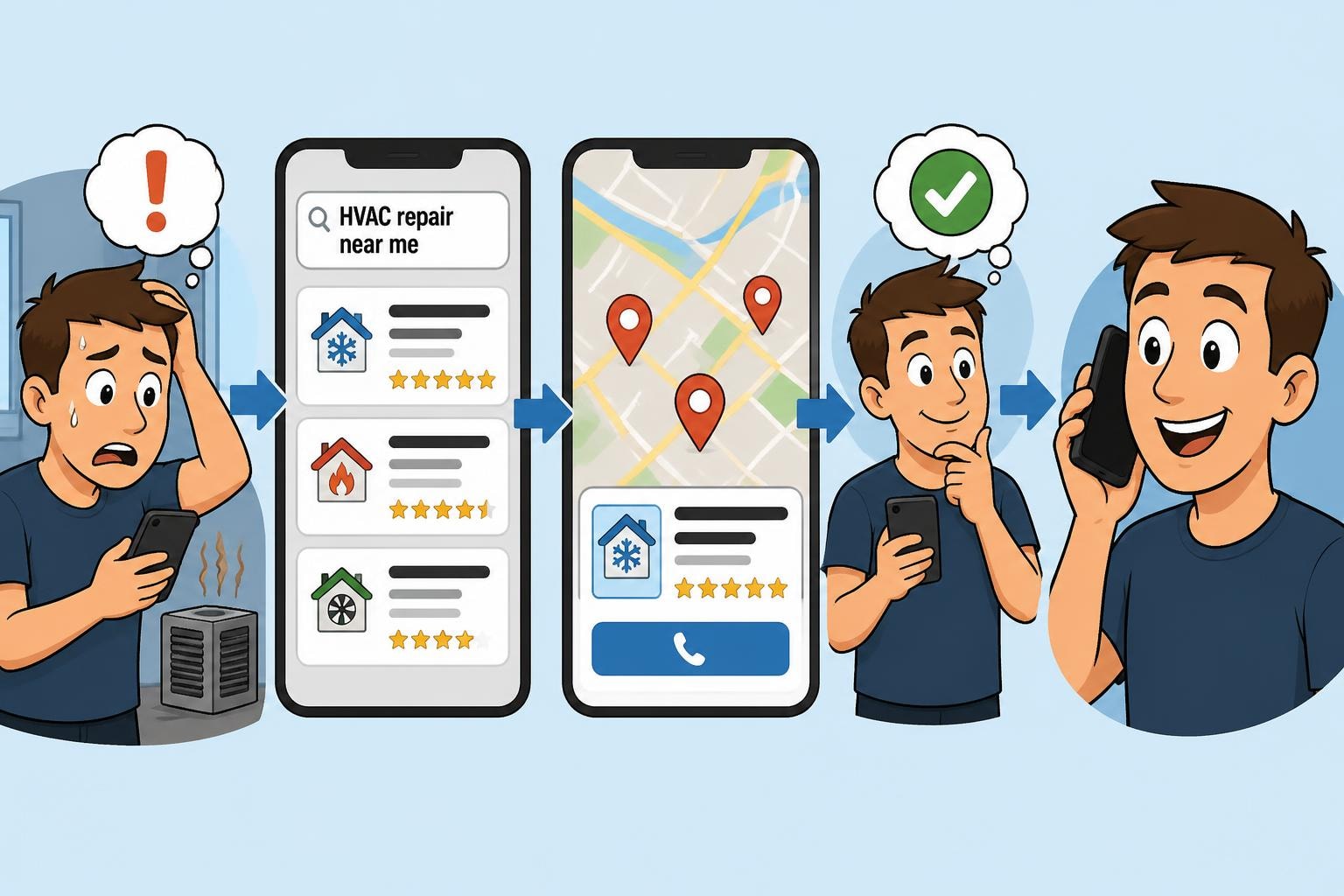
When your furnace breaks at midnight or the AC dies during a July heatwave, most homeowners grab their phone and search for help immediately. If your HVAC business isn't showing up in those critical moments, you're losing customers to competitors who've invested in their online visibility. SEO for HVAC contractors isn't just about having a website anymore – it's about being the first name customers see when they're ready to hire. With the right optimization strategy, you can transform your online presence into a lead-generating machine that works around the clock.
Why HVAC Contractors Need SEO in 2026
The heating and cooling industry has changed dramatically over the past few years. Yellow pages are long gone, and today's customers make buying decisions based entirely on what they find online. Search engine optimization has become the difference between thriving HVAC businesses and those struggling to fill their schedules.
Consider these realities: over 90% of consumers search online before hiring a local service provider, and most never scroll past the first page of results. If your business isn't ranking in those top spots, you're essentially invisible to the majority of potential customers in your service area.
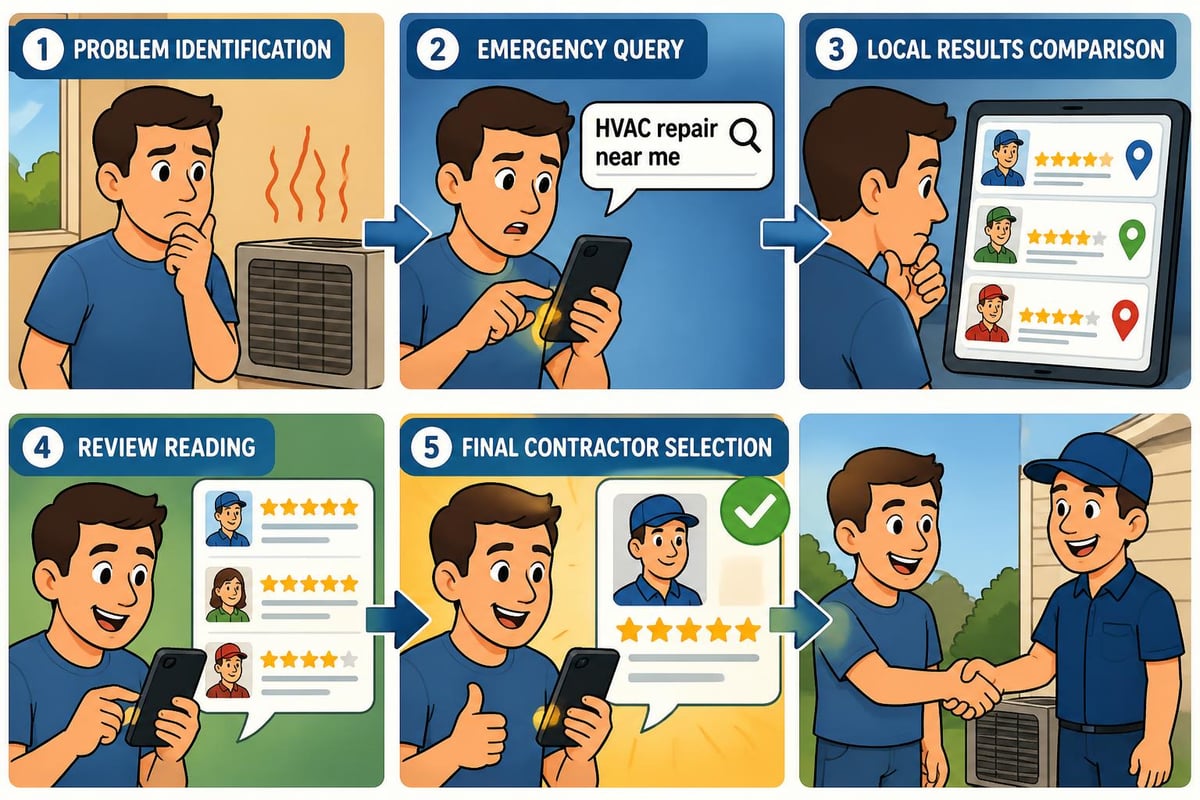
The Competition Is Already Optimizing
Your competitors aren't waiting around. Many HVAC contractors have recognized that investing in SEO delivers better ROI than traditional advertising methods like radio spots or newspaper ads. When you optimize your website properly, you're building an asset that continues delivering leads month after month.
Key benefits of SEO for HVAC contractors include:
- 24/7 lead generation without ongoing ad spend
- Higher-quality leads from people actively searching for services
- Increased brand credibility and trust in your local market
- Better profit margins compared to pay-per-click advertising
- Long-term competitive advantages that compound over time
The contractors who start optimizing today will dominate local search results for years. Those who delay will find themselves fighting for scraps while competitors collect the majority of emergency calls and scheduled maintenance contracts.
Understanding Local SEO Fundamentals for HVAC
Local search optimization forms the foundation of any successful HVAC marketing strategy. Unlike national brands, your business serves a specific geographic area – which means your SEO strategy should focus intensely on local visibility.
Google Business Profile Optimization
Your Google Business Profile (formerly Google My Business) is arguably your most valuable digital asset. When someone searches for "emergency furnace repair" or "AC installation near me," Google prioritizes businesses with complete, optimized profiles.
| Element | Optimization Tips | Impact Level |
|---|---|---|
| Business Name | Use exact business name (no keyword stuffing) | Critical |
| Category | Select "HVAC contractor" as primary | Critical |
| Service Areas | List all cities/neighborhoods you serve | High |
| Business Hours | Include emergency hours if applicable | High |
| Photos | Add 10+ high-quality images monthly | Medium |
| Posts | Weekly updates about services/offers | Medium |
Respond to every review – both positive and negative – within 24 hours. This signals to Google that you're an active, engaged business while building trust with potential customers reading those reviews. Studies show that businesses responding to reviews rank higher in local search results.
NAP Consistency Across the Web
NAP stands for Name, Address, and Phone number. Search engines verify your business legitimacy by checking whether your information matches across hundreds of directories, citations, and platforms.
Even small inconsistencies can hurt your rankings. If your website lists "123 Main St." but your Google profile shows "123 Main Street," search engines may question which version is correct. Audit your NAP information quarterly and fix any discrepancies immediately.
Keyword Research Strategy for HVAC Services
Effective SEO for HVAC contractors starts with understanding exactly what your customers are searching for. The keywords you target will determine whether you attract tire-kickers or serious buyers ready to book appointments.
Emergency vs. Planned Service Keywords
Different search terms indicate different customer intentions and urgency levels. Emergency keywords like "furnace not working" or "AC repair near me" signal immediate need and high conversion potential. These searchers are ready to hire someone today.
Planned service keywords like "best HVAC system for 2000 sq ft home" or "annual furnace maintenance cost" indicate research-phase customers. They're valuable for building your pipeline, but conversions take longer.
High-intent HVAC keywords to target:
- [Your City] emergency HVAC repair
- AC installation cost [Your City]
- Furnace replacement [Your City]
- 24-hour heating repair near me
- Same-day AC repair [Your City]
- HVAC maintenance plans [Your City]
Use tools like Google's Keyword Planner or more advanced platforms to identify which terms have sufficient search volume in your area. Some contractors make the mistake of targeting keywords that sound good but have zero actual search volume locally.
Long-Tail Keywords That Convert
Don't overlook longer, more specific phrases. While "HVAC contractor" might get thousands of searches, "residential heat pump installation Bucks County" might only get twenty – but those twenty are exactly your target customers.
These long-tail keywords face less competition and attract highly qualified leads. Someone searching for "how to choose between gas and electric furnace" is earlier in their journey than someone searching for "gas furnace installation quote Philadelphia."
On-Page SEO Elements for HVAC Websites
Your website's structure and content directly impact how search engines understand and rank your pages. Many HVAC contractors have websites that look professional but fail basic SEO principles.
Service Pages That Rank
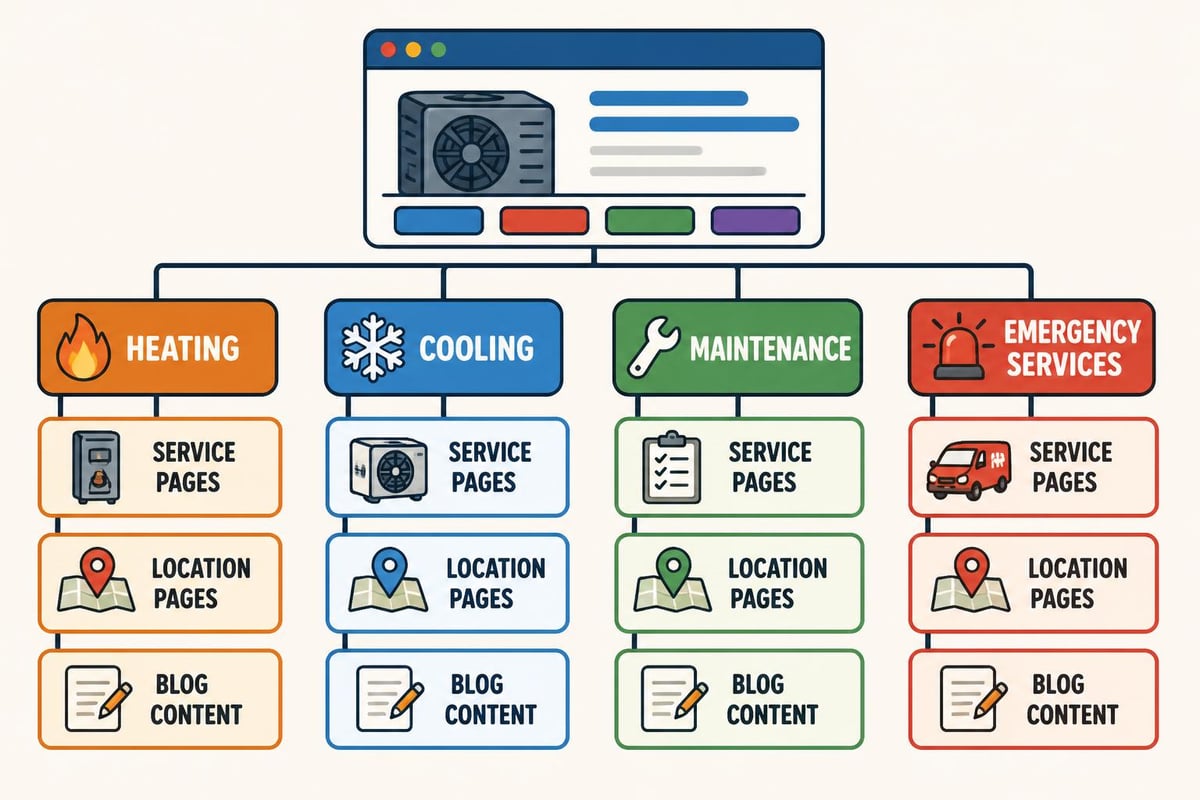
Create dedicated pages for each service you offer and each location you serve. A single "Services" page listing everything won't rank well because it lacks focus. Instead, build individual pages like:
- Air Conditioning Installation in [City]
- Emergency Furnace Repair [City]
- Heat Pump Replacement [City]
- HVAC Maintenance Plans [City]
Each page should include at least 800-1000 words of useful content. Describe the service thoroughly, explain the process, address common customer questions, and include local references. Generic content copied from manufacturer websites won't help your rankings.
Title Tags and Meta Descriptions
These HTML elements appear in search results and significantly impact click-through rates. Your title tag should include your primary keyword and location within 60 characters.
Example title tags:
- Emergency AC Repair Philadelphia | 24/7 Service | [Your Business]
- Heat Pump Installation Bucks County | Energy-Efficient Systems
- Furnace Replacement Cost Guide | [City] HVAC Experts
Meta descriptions don't directly impact rankings but influence whether searchers click your result. Write compelling copy within 150-155 characters that includes a clear benefit and call-to-action.
Header Tag Hierarchy
Use header tags (H2, H3) to organize your content logically. Search engines use these to understand your page structure. Each service page might follow this pattern:
Main Service (H1 – generated by page title)
- What to Expect (H2)
- Initial Assessment (H3)
- Installation Process (H3)
- Pricing Information (H2)
- Why Choose Us (H2)
- Service Area Coverage (H2)
This structure helps both search engines and human readers navigate your content easily.
Technical SEO Considerations for HVAC Sites
Technical optimization ensures search engines can properly crawl, index, and understand your website. Many comprehensive SEO strategies for contractors emphasize technical foundations because even great content won't rank if technical issues exist.
Mobile Responsiveness Is Non-Negotiable
Over 65% of HVAC searches happen on mobile devices, often during emergencies. If your website doesn't load quickly and display properly on smartphones, you're losing customers before they even see your services.
Test your site using Google's Mobile-Friendly Test tool. Common mobile issues include text too small to read, buttons too close together, and slow-loading images that frustrate users.
Page Speed Optimization
Every second your website takes to load costs you conversions. Customers searching for emergency HVAC service won't wait around for a slow site – they'll hit the back button and call your competitor instead.
Core speed optimization tactics:
- Compress and resize all images before uploading
- Enable browser caching through your hosting provider
- Minimize CSS and JavaScript files
- Use a content delivery network (CDN) for faster loading
- Choose quality hosting (cheap shared hosting kills speed)
Aim for page load times under three seconds on mobile devices. Tools like Google PageSpeed Insights identify specific issues slowing down your site.
SSL Certificates and Security
Google confirmed that HTTPS is a ranking signal. Beyond SEO, customers won't trust a site that shows "Not Secure" in their browser. SSL certificates are inexpensive and essential for any modern website.
Additionally, ensure your contact forms use proper security measures to protect customer information. This builds trust while meeting basic security standards.
Content Marketing for HVAC Contractors
Creating valuable content attracts potential customers at every stage of their buying journey. Your website shouldn't just list services – it should answer questions, solve problems, and demonstrate expertise.
Blog Topics That Attract Customers
Regular blog content helps you rank for informational keywords while building authority in your field. Focus on topics your customers actually search for, not what you want to write about.
High-performing HVAC blog topics:
- How to reduce heating costs this winter
- Signs your air conditioner needs replacement vs. repair
- Choosing the right size HVAC system for your home
- Understanding SEER ratings and energy efficiency
- Furnace maintenance checklist for homeowners
- What to do when your AC stops working in summer
Each blog post should target specific keywords and provide genuinely helpful information. Aim for 1,500+ words on comprehensive guides. Platforms like RankPill can help automate content creation while maintaining quality, allowing you to publish consistently without overwhelming your schedule.
Video Content for Service Explanations
Video increasingly dominates search results, especially for how-to queries. Create short videos explaining common HVAC issues, showing your team at work, or walking customers through maintenance tasks.
Upload videos to YouTube with keyword-optimized titles and descriptions, then embed them on relevant website pages. This dual-platform approach maximizes visibility while keeping visitors engaged on your site longer.
Seasonal Content Strategy
HVAC demand follows predictable seasonal patterns. Create and update content aligned with these cycles:
| Season | Content Focus | Publication Timing |
|---|---|---|
| Spring | AC tune-ups, cooling system prep | February-March |
| Summer | Emergency AC repair, efficiency tips | May-June |
| Fall | Furnace maintenance, heating prep | August-September |
| Winter | Emergency heating, system winterization | November-December |
Publish seasonal content 6-8 weeks before peak demand hits. This gives Google time to index and rank your pages before customers start searching.
Link Building Strategies for Local HVAC Companies
Backlinks – other websites linking to yours – remain one of Google's most important ranking factors. However, effective link building strategies have evolved significantly beyond simple directory submissions.
Local Business Partnerships
Connect with complementary local businesses for natural link opportunities. Partner with real estate agents, home inspectors, property managers, and general contractors who might refer customers to you.
Offer to write guest posts for their websites about HVAC topics relevant to their audience. For example, a piece on "Essential HVAC Upgrades Before Selling Your Home" fits perfectly on a real estate blog while earning you a valuable local backlink.
Industry Association Memberships
Join legitimate HVAC industry associations and local business organizations. Most provide member directory listings with backlinks to your website. Look for:
- Air Conditioning Contractors of America (ACCA)
- Local chamber of commerce
- Better Business Bureau
- Manufacturer partner programs (Carrier, Trane, Lennox, etc.)
- State licensing boards and trade organizations
These authoritative links signal trustworthiness to search engines while connecting you with referral networks.
Strategic Citation Building
Beyond basic directories, focus on industry-specific citations that carry more weight. Sites like HomeAdvisor, Angi (formerly Angie's List), and Yelp matter more for HVAC contractors than generic business directories.
Ensure complete, accurate profiles on all major platforms. The effort invested in thorough citation building pays dividends through improved local rankings and additional lead sources.
Reviews and Reputation Management
Online reviews directly impact both search rankings and customer decisions. Google incorporates review signals into local search algorithms, while 88% of consumers trust online reviews as much as personal recommendations.
Systematic Review Generation
Don't leave reviews to chance. Implement a system that requests feedback from every satisfied customer. Send follow-up emails 2-3 days after service completion with direct links to your Google Business Profile review page.
Effective review request template:
"Hi [Name], thanks for choosing [Business] for your [service]. We'd love to hear about your experience! Would you mind taking 60 seconds to share a quick review? [Link]"
Keep it simple and personal. The easier you make the process, the more reviews you'll collect.
Responding to Negative Reviews
Negative reviews happen to every business. How you respond matters more than the complaint itself. Address issues professionally, acknowledge concerns, and offer to make things right.
Never argue publicly or make excuses. A thoughtful response to criticism demonstrates character to prospective customers reading your reviews. Many people specifically look for negative reviews to see how businesses handle problems.
Tracking SEO Performance and ROI
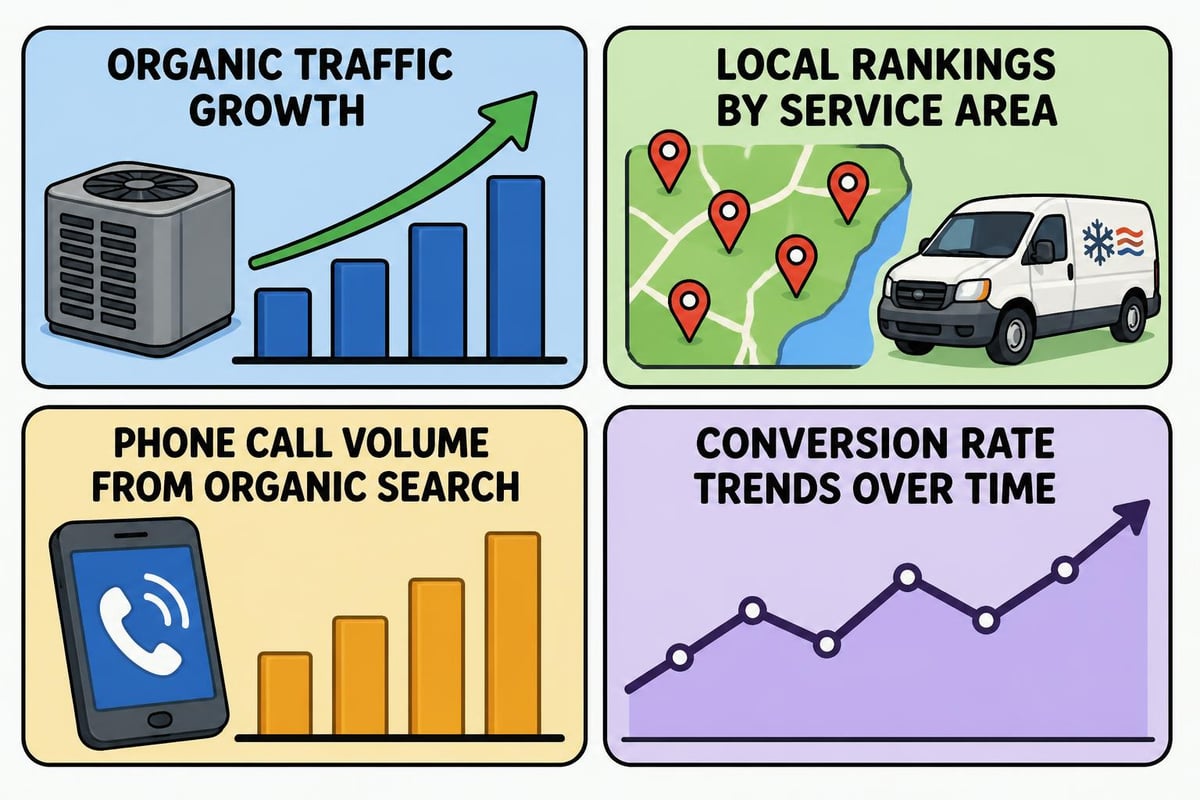
Measuring results ensures your SEO efforts deliver actual business growth, not just vanity metrics. Track the metrics that directly impact revenue and customer acquisition.
Essential Metrics to Monitor
Google Analytics and Google Search Console provide free data about your website performance. Focus on metrics that matter:
Core tracking metrics:
- Organic search traffic volume and trends
- Keyword rankings for target terms
- Phone calls from organic search
- Contact form submissions
- Service area coverage in local results
- Click-through rates from search results
- Time on site and bounce rates by page
Set up monthly reporting to identify trends and optimization opportunities. Small improvements compound over time into significant competitive advantages.
Conversion Tracking Setup
Traffic means nothing without conversions. Implement call tracking so you know which keywords and pages generate actual phone calls. Use Google Analytics goals to monitor form submissions, quote requests, and other valuable actions.
Understanding your SEO for HVAC contractors should start with knowing whether your investment is generating leads and revenue. Starting with a clear roadmap can accelerate your results significantly. The Authority + AI Visibility Blueprint provides exactly that – a comprehensive audit of your current search presence plus a customized plan for ranking on Google and emerging AI platforms like ChatGPT for the keywords that generate leads in your market.

Competitor Monitoring
Track where your top three local competitors rank for target keywords. Tools like SEMrush or Ahrefs reveal which keywords drive traffic to competitor sites, helping you identify opportunities they're missing.
Monitor competitor content strategies, backlink acquisition, and review generation efforts. You don't need to copy them, but understanding their approach helps you stay competitive.
Advanced Optimization Techniques
Once you've mastered fundamentals, advanced tactics can provide additional competitive edges in your local market.
Schema Markup for Rich Results
Schema markup is code that helps search engines understand your content better. HVAC contractors should implement LocalBusiness schema, Service schema, and Review schema at minimum.
This structured data can trigger rich results in search, including star ratings, pricing information, and service areas directly in search listings. Rich results increase click-through rates significantly compared to standard listings.
Voice Search Optimization
Voice search queries differ from typed searches. People ask complete questions: "What's the best HVAC contractor near me?" instead of typing "HVAC contractor near me."
Optimize for conversational, question-based keywords. Create FAQ pages addressing common customer questions in natural language. Featured snippets often pull from well-structured FAQ content.
Building Topic Authority
Rather than creating isolated pages, develop comprehensive topic clusters around core HVAC services. Create a pillar page covering "Complete Guide to Home Heating Systems," then link to detailed pages about furnaces, heat pumps, boilers, and radiant heating.
This internal linking structure signals topical authority to search engines while providing exceptional user experience. Professional SEO approaches emphasize this clustering strategy for maximum impact.
Common HVAC SEO Mistakes to Avoid
Even well-intentioned contractors make optimization errors that sabotage their results. Avoiding these pitfalls keeps your strategy on track.
Keyword Stuffing and Over-Optimization
Repeating "best HVAC contractor [city]" fifty times on a page doesn't help rankings – it triggers spam filters. Write naturally for human readers first, incorporating keywords where they fit organically.
Google's algorithms have become incredibly sophisticated at detecting manipulation. Focus on comprehensive, helpful content rather than keyword density formulas.
Neglecting Mobile Experience
Some contractors build beautiful desktop websites while ignoring how they function on mobile devices. Test every page, form, and feature on smartphones before launch.
Click-to-call buttons should be prominent and functional. Forms should be simple and easy to complete on small screens. Navigation needs to work perfectly with touch interfaces.
Ignoring Local Search Factors
Your website might rank nationally, but if you're not visible in local results, you're missing your target audience. Maintain consistent NAP information, actively manage your Google Business Profile, and create location-specific content.
Many contractors make the mistake of targeting broad keywords instead of geo-modified terms that attract local customers actually within their service area.
Building a Sustainable SEO Strategy
SEO for HVAC contractors isn't a one-time project – it's an ongoing process that delivers compounding results over time. Success requires consistent effort, patience, and strategic focus.
Monthly Optimization Checklist
Establish regular maintenance routines to keep your SEO strong:
- Publish 2-4 new blog posts with targeted keywords
- Update existing service pages with fresh content
- Add 10+ new photos to Google Business Profile
- Request reviews from recent satisfied customers
- Monitor and respond to all new reviews within 24 hours
- Check rankings for priority keywords
- Review analytics for traffic and conversion trends
- Build 3-5 new quality backlinks through outreach
- Update seasonal content for upcoming demand periods
- Fix any technical issues identified in Search Console
Consistency matters more than perfection. Contractors who publish regularly and maintain their profiles outperform those who launch aggressive campaigns then disappear for months.
Adapting to Algorithm Updates
Search engines constantly refine their algorithms. Major updates can shift rankings overnight. Stay informed about industry SEO trends and changes through reputable sources.
Focus on sustainable, white-hat tactics that prioritize user experience. Sites built on shortcuts and manipulation always suffer eventually. Those built on quality content and genuine value withstand algorithm changes better.
When to Hire Professional Help
Many HVAC contractors successfully manage their own SEO, especially in smaller markets. However, competitive areas or scaling businesses often benefit from professional expertise.
Consider partnering with experienced SEO professionals when you lack time to implement strategies consistently, face intense local competition, or want to accelerate results beyond what's possible with DIY efforts. Expert guidance helps avoid costly mistakes while maximizing ROI from your optimization investments.
The right agency provides customized strategies specific to your market, transparent reporting on results, and hands-on implementation that frees you to focus on running service calls and managing your team.
SEO for HVAC contractors has evolved into a sophisticated discipline that combines technical optimization, content strategy, and local visibility tactics. The contractors who invest in building strong search presence now will dominate their markets for years while competitors struggle to catch up. If you're ready to transform your online visibility into a consistent lead generation system, Shawn the SEO Geek brings over two decades of expertise specifically helping home service businesses rank higher, attract more qualified leads, and grow revenue through customized SEO strategies that deliver measurable results.