
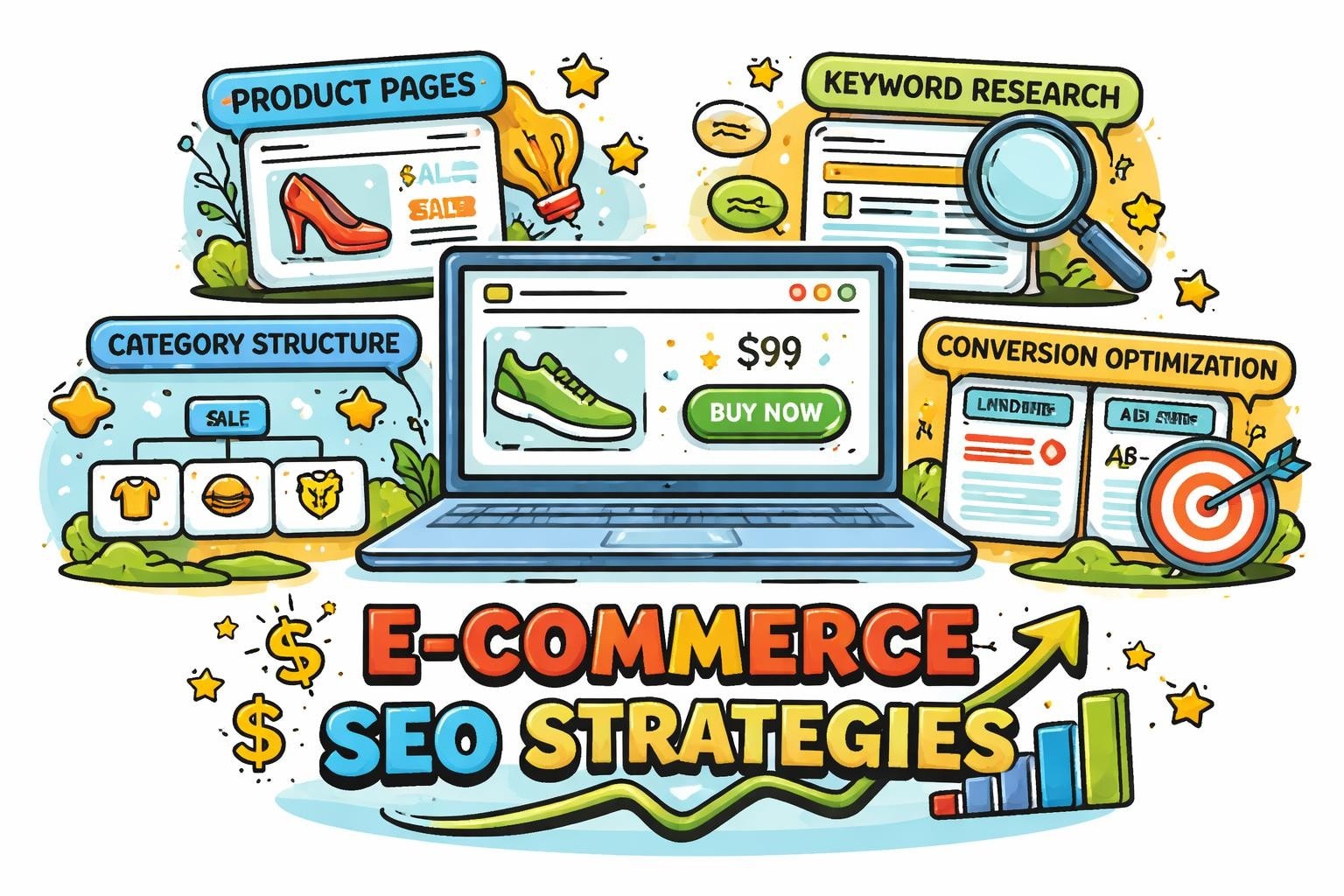
Running an online store in 2026 means competing with millions of other ecommerce sites for the same customers. The difference between thriving and barely surviving often comes down to one thing: visibility. Smart ecommerce seo strategies can transform your online store from a hidden gem into a sales powerhouse that consistently attracts qualified buyers ready to purchase. Whether you're selling handmade jewelry, electronics, or business software, mastering SEO for your ecommerce platform isn't optional anymore – it's essential for sustainable growth and profitability.
Understanding the Ecommerce SEO Landscape
Ecommerce SEO differs significantly from traditional website optimization. You're not just ranking a handful of service pages – you're managing hundreds or thousands of product pages, category pages, and filtering options. Each page represents an opportunity to capture search traffic from potential customers at different stages of their buying journey.
The complexity increases when you consider that ecommerce sites face unique challenges. Duplicate content from manufacturer descriptions, thin content on product pages, and constantly changing inventory can all hurt your rankings. Meanwhile, your competitors are investing heavily in advanced ecommerce SEO strategies to capture market share.
The Foundation: Site Architecture That Search Engines Love
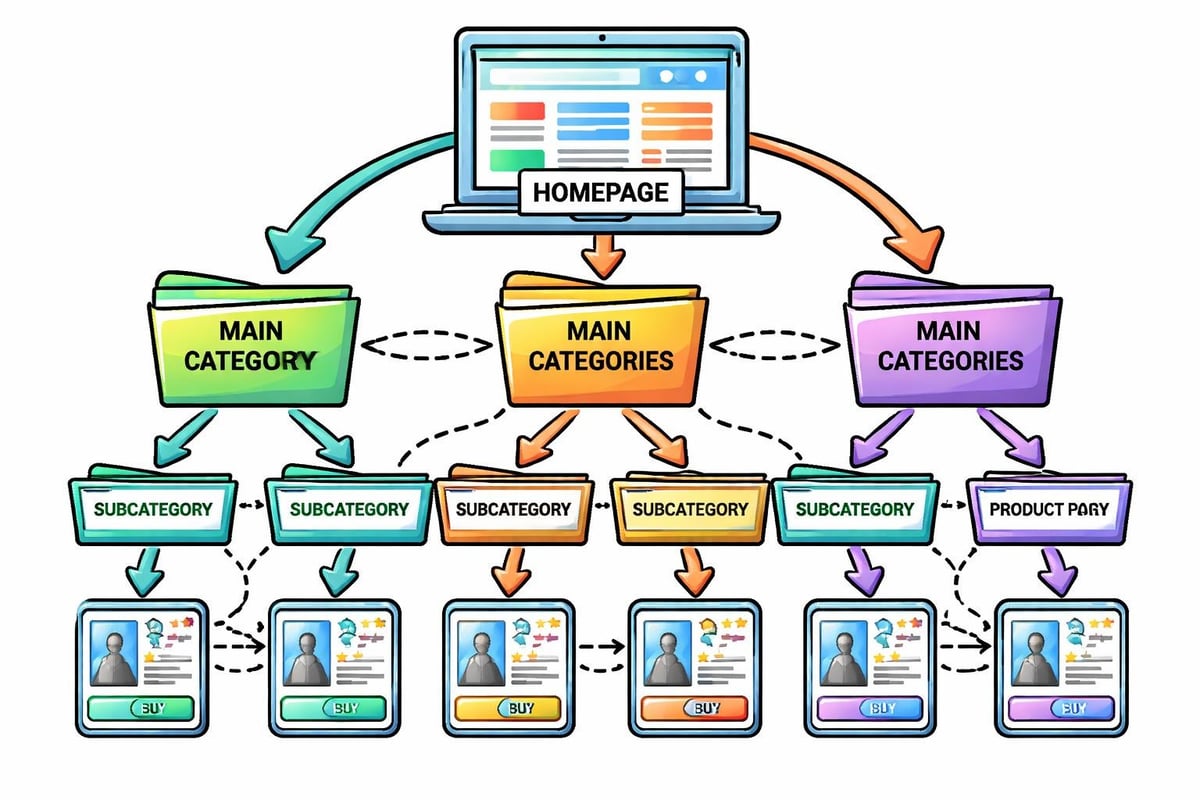
Your site structure forms the backbone of successful ecommerce seo strategies. Think of it as the blueprint that helps both customers and search engines navigate your inventory efficiently.
Key architectural elements include:
- Shallow site depth (customers should reach any product in 3-4 clicks)
- Clear category hierarchies that reflect search intent
- Intuitive navigation that matches how people think about your products
- Strategic internal linking between related products and categories
A well-organized ecommerce site structure prevents orphaned pages and ensures link equity flows throughout your entire catalog. For instance, if you sell outdoor gear, your architecture might flow from "Camping Equipment" to "Tents" to "4-Season Tents" to individual product pages.
Keyword Research for Maximum Conversion Potential
Generic keyword research won't cut it for ecommerce. You need to identify terms that signal buying intent, not just browsing behavior. Someone searching "best running shoes for marathon training" is closer to purchasing than someone typing "running shoes history."
Start by categorizing keywords into three buckets:
- Product keywords – specific items ("Nike Air Zoom Pegasus 40")
- Category keywords – broader searches ("women's running shoes")
- Information keywords – research queries ("how to choose running shoes")
| Keyword Type | Search Intent | Conversion Rate | Priority |
|---|---|---|---|
| Product | High | 8-12% | Highest |
| Category | Medium | 4-7% | High |
| Informational | Low | 1-3% | Medium |
Your SEO consulting strategy should focus heavily on product and category keywords, while using informational content to build authority and capture early-stage shoppers. Tools like Google Keyword Planner, Ahrefs, and SEMrush reveal search volume and competition levels, but pay special attention to commercial intent indicators.
Long-Tail Keywords: Your Secret Weapon
Long-tail keywords might have lower search volume, but they convert like crazy. "Waterproof hiking boots women size 8 wide" tells you exactly what the searcher needs. When you optimize for these specific queries, you're answering precise questions and capturing ready-to-buy customers.
Create product pages and category filters that naturally target these long-tail variations. Your filtering system (size, color, brand, features) becomes an SEO asset when implemented correctly.
Product Page Optimization That Converts
Your product pages need to satisfy two audiences: search engines and human shoppers. Finding the perfect balance is where effective ecommerce seo strategies shine.
Essential product page elements:
- Unique, compelling product descriptions (never use manufacturer copy)
- Strategic keyword placement in titles, headers, and descriptions
- High-quality images with descriptive alt text
- Customer reviews (fresh user-generated content)
- Schema markup for rich snippets
- Clear calls-to-action
Writing unique descriptions for hundreds of products feels overwhelming, but it's non-negotiable. Even 150-200 words of original content discussing benefits, use cases, and specific features dramatically outperforms duplicate manufacturer descriptions. Focus on answering questions your customers actually ask.
According to comprehensive ecommerce SEO guides, products with unique descriptions and reviews rank significantly higher than those relying on generic copy. The investment in quality content pays dividends through better rankings and higher conversion rates.
Technical SEO: The Engine Under the Hood
Beautiful product pages mean nothing if technical issues prevent search engines from crawling and indexing your site properly. Technical SEO forms the foundation that supports all your other efforts.
Site Speed and Core Web Vitals
Page speed directly impacts both rankings and conversions. Research shows that a one-second delay in load time can reduce conversions by 7%. In ecommerce, that's real money walking out the door.
Optimization priorities:
- Compress and optimize images (WebP format)
- Implement lazy loading for below-the-fold content
- Minimize JavaScript and CSS
- Use a content delivery network (CDN)
- Enable browser caching
Google's Core Web Vitals – Largest Contentful Paint (LCP), First Input Delay (FID), and Cumulative Layout Shift (CLS) – now factor heavily into rankings. Your pages need to load fast, respond quickly to user interactions, and maintain visual stability.

Mobile Optimization: Non-Negotiable in 2026
Mobile commerce accounts for over 70% of ecommerce traffic in 2026. Your site must deliver flawless mobile experiences, not just "work" on phones. This means touch-friendly navigation, fast load times, simplified checkout processes, and easy-to-read product information.
Google's mobile-first indexing means the search engine primarily uses your mobile site for ranking purposes. If your mobile experience lags behind your desktop version, your rankings suffer across all devices.
Category Pages: Your High-Value SEO Assets
Category pages often get overlooked in ecommerce seo strategies, but they're goldmines for capturing high-volume, commercial-intent keywords. While product pages target specific items, category pages can rank for broader terms that drive significant traffic.
Transform category pages from simple product lists into valuable resources:
- Add 300-500 words of unique content above the product grid
- Explain what makes this category special and who it's for
- Include relevant keywords naturally in headers and descriptions
- Showcase featured products or bestsellers
- Add filtering options that create SEO-friendly URLs
For example, a "Organic Baby Food" category page shouldn't just list products. Include content about nutrition benefits, ingredient sourcing, age-appropriate options, and buying guides. This approach targets proven SEO strategies for ecommerce websites while helping customers make informed decisions.
Content Marketing for Ecommerce Success
Beyond product and category pages, content marketing amplifies your ecommerce seo strategies by capturing early-stage researchers and building topical authority. Blog posts, buying guides, comparison articles, and how-to content bring in traffic from people who aren't ready to buy yet – but will remember your brand when they are.
High-performing content types:
- Product comparison articles ("Best Standing Desks for Small Spaces")
- How-to guides related to your products
- Industry news and trend analysis
- Customer success stories and case studies
- Video tutorials and product demonstrations
This content also earns backlinks naturally, which remains one of the most important ranking factors. When industry publications and bloggers link to your comprehensive guides, you build domain authority that lifts all your pages in search results.
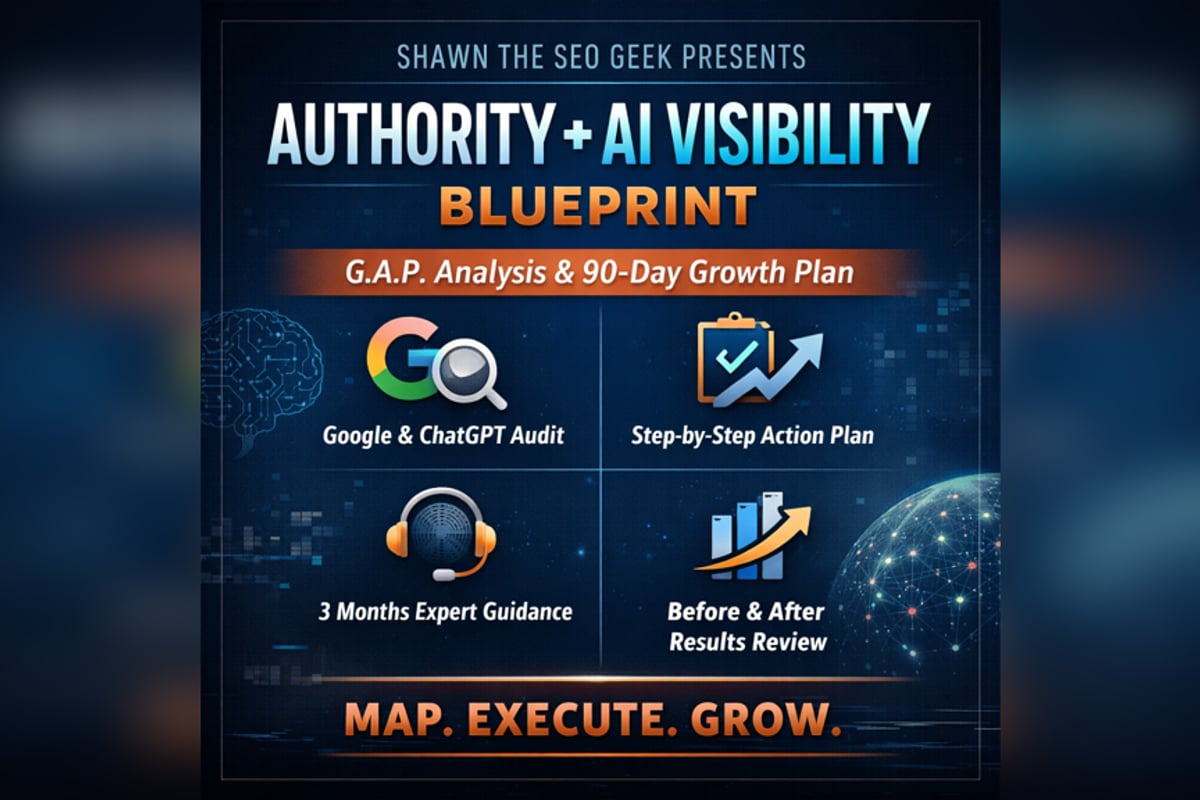
Understanding your current visibility and creating a roadmap for improvement is crucial. Many businesses benefit from starting with an audit that examines both traditional search and emerging AI search platforms to identify quick wins and long-term opportunities.
Link Building Strategies That Work for Ecommerce
Backlinks signal trust and authority to search engines. For ecommerce sites, building a strong internal linking structure matters just as much as external links.
Internal Linking Best Practices
Your internal linking strategy should flow authority from high-value pages to products that need ranking boosts. Link from category pages to featured products, from blog posts to relevant products, and between related products.
Strategic internal linking approaches:
- Use descriptive anchor text that includes target keywords
- Link from high-authority pages to newer products
- Create logical pathways through your catalog
- Implement breadcrumb navigation
- Add related product sections on every page
External link building for ecommerce requires creativity. Instead of just pursuing directory listings, focus on earning links through valuable content, partnerships with complementary brands, influencer collaborations, and digital PR campaigns.
Managing Duplicate Content and Canonicalization
Ecommerce sites naturally generate duplicate content through product variations (sizes, colors), filtering systems, and pagination. Without proper management, these duplicate pages compete against each other and dilute your ranking potential.
| Duplicate Content Source | Solution |
|---|---|
| Product variations | Use canonical tags pointing to main product |
| Filter combinations | Noindex filter pages or use canonical tags |
| Pagination | Implement rel="next" and rel="prev" tags |
| Manufacturer descriptions | Rewrite with unique content |
| Multiple category paths | Choose primary category with canonical tag |
Canonical tags tell search engines which version of a page is the "master" copy. When your red t-shirt in size medium and red t-shirt in size large contain identical content except for size selection, canonicalize both to the main product URL.
Schema Markup and Rich Snippets
Schema markup is code that helps search engines understand your content better and display rich snippets in search results. For ecommerce sites, this means showing product ratings, prices, availability, and other details directly in search results.
Essential schema types for ecommerce:
- Product schema (name, image, price, availability)
- Review/rating schema (aggregate ratings)
- Breadcrumb schema (navigation path)
- Organization schema (company information)
- FAQ schema (common questions)
Products with rich snippets in search results enjoy higher click-through rates, even when not in the top position. Seeing star ratings and pricing information before clicking builds trust and attracts more qualified traffic. The implementation requires adding structured data to your pages, which most modern ecommerce platforms support through plugins or built-in features.
User Experience and Conversion Rate Optimization
The best ecommerce seo strategies drive traffic AND convert visitors into customers. Search engines increasingly reward sites that deliver excellent user experiences, making UX optimization a dual-purpose investment.
Focus on these UX elements that impact both SEO and conversions:
- Clear product categorization and filtering
- High-quality product images and videos
- Detailed size guides and specifications
- Prominent customer reviews and ratings
- Streamlined checkout process
- Trust signals (security badges, return policies, guarantees)
- Live chat or easy contact options
Google tracks engagement metrics like bounce rate, time on site, and pages per session. When visitors quickly leave your site or don't explore further, it signals poor relevance or quality. By improving user experience, you naturally improve these engagement signals while increasing sales.
Following ecommerce SEO best practices means constantly testing and refining your pages. A/B test different layouts, calls-to-action, and content presentations to discover what resonates with your audience.
Local SEO for Ecommerce with Physical Locations
If you operate both online and physical stores, local SEO adds another dimension to your strategy. Even pure-play online retailers can benefit from local optimization if targeting specific geographic markets.
Local ecommerce tactics:
- Claim and optimize Google Business Profile listings for each location
- Include location-specific pages with unique content
- Encourage and respond to customer reviews
- Build local citations (NAP consistency)
- Create location-targeted content and landing pages
For businesses serving specific regions, geographic modifiers in product and category pages can capture local search traffic. A bakery supply store might optimize pages for "commercial baking equipment Philadelphia" alongside broader product keywords.
Measuring Success: Analytics and KPIs
You can't improve what you don't measure. Tracking the right metrics helps you understand which ecommerce seo strategies deliver results and where to invest more resources.
Key performance indicators to monitor:
- Organic search traffic (overall and by page type)
- Keyword rankings for target terms
- Conversion rate from organic traffic
- Revenue attributed to organic search
- Page load speed and Core Web Vitals
- Crawl errors and indexation status
- Backlink profile growth
Set up Google Analytics 4 and Google Search Console to track these metrics. Create custom dashboards that highlight your most important KPIs, making it easy to spot trends and opportunities. Compare performance month-over-month and year-over-year to understand seasonal patterns and growth trajectories.
Many businesses find value in working with experienced Google SEO services that provide detailed reporting and ongoing optimization based on performance data. Regular audits catch issues before they impact rankings and identify new opportunities as your market evolves.
Staying Ahead: Algorithm Updates and Emerging Trends
Search algorithms constantly evolve, and ecommerce seo strategies must adapt. What worked perfectly in 2024 might underperform in 2026 as Google refines its approach to understanding user intent and evaluating content quality.
Current trends shaping ecommerce SEO:
- AI-powered search and voice shopping integration
- Visual search optimization (image recognition)
- Video content importance (product demos, unboxings)
- Sustainability and ethical sourcing as ranking factors
- First-party data and privacy-first tracking
- Search generative experience (SGE) optimization
Understanding SEO for AI platforms becomes increasingly important as users turn to ChatGPT, Bard, and other AI tools for product recommendations. Ensuring your brand appears in AI-generated results requires different optimization approaches than traditional search.
Voice search optimization matters too. When someone asks Alexa or Siri for product recommendations, conversational keywords and question-based content help capture that traffic. Structure content to answer specific questions clearly and concisely.
Platform-Specific Optimization Strategies
Different ecommerce platforms present unique SEO challenges and opportunities. Shopify, WooCommerce, Magento, and BigCommerce each have distinct technical considerations.
Shopify SEO Considerations
Shopify's simplicity makes it popular, but also creates SEO limitations. The platform generates automatic URL structures that aren't always ideal, limits customization of certain on-page elements, and creates potential duplicate content through collection pages.
Shopify optimization focus areas:
- Customize URL handles for products and collections
- Optimize theme for speed (minimize apps)
- Use Shopify's built-in blog for content marketing
- Implement proper canonical tags
- Optimize image alt text throughout
For Shopify stores specifically, working with specialists who understand Shopify SEO services can unlock platform-specific optimizations that generic SEO approaches miss.
WooCommerce and WordPress Benefits
WooCommerce, built on WordPress, offers more SEO flexibility through extensive plugin ecosystems and customization options. You control URL structures, have granular control over technical elements, and can implement advanced schema markup easily.
The tradeoff is complexity – with great power comes great responsibility. Properly configured WooCommerce sites can outperform competitors, but poorly optimized implementations suffer from speed issues and technical problems.
Competitive Analysis: Learning from Others
Your competitors offer valuable insights into what works in your niche. Analyzing their strategies reveals keyword opportunities, content gaps, and technical approaches worth emulating.
Competitive research process:
- Identify your top 5-10 organic search competitors
- Analyze their highest-ranking pages and keywords
- Examine their backlink profiles for link opportunities
- Study their content strategy and topics covered
- Review their site structure and internal linking
- Check their technical SEO implementation
Tools like Ahrefs, SEMrush, and Moz provide competitive intelligence that guides your strategy. Look for keywords they rank for that you don't, quality sites linking to them but not you, and content topics generating traffic that you haven't covered.
The goal isn't copying competitors – it's understanding the competitive landscape and finding opportunities they've missed. Maybe they dominate product keywords but ignore informational content. Perhaps their category pages lack depth. These gaps become your opportunities.
Seasonal SEO Planning for Ecommerce
Online retail follows predictable seasonal patterns, and smart ecommerce seo strategies account for these fluctuations. Starting optimization months before peak seasons ensures you're ready when search volume spikes.
| Season | Start Optimization | Focus Areas |
|---|---|---|
| Holiday Shopping | August | Gift guides, specific product keywords |
| Back to School | May | Student-focused products, bundles |
| Summer | February | Seasonal products, outdoor items |
| Tax Season | December | Business supplies, organization tools |
Create seasonal content hubs that attract early researchers. A "2026 Holiday Gift Guide for Tech Lovers" published in October captures traffic from people starting their shopping early. Update and republish these guides annually, building authority and backlinks over time.
Seasonal keywords often have lower competition during off-peak months. Optimizing for "best winter jackets" in summer positions you perfectly when search volume explodes in fall.
Implementing comprehensive ecommerce seo strategies requires ongoing commitment, technical expertise, and strategic thinking. The difference between mediocre results and explosive growth often comes down to having an experienced partner who understands both the art and science of ecommerce optimization. With over two decades of expertise and 500+ successful campaigns, Shawn the SEO Geek delivers tailored, results-driven SEO solutions that boost rankings, increase traffic, and optimize conversions for businesses ready to dominate their markets. Let's talk about transforming your online store into a traffic-generating, revenue-producing powerhouse that consistently outranks competitors and captures more qualified buyers.