

Running an online store in 2026 means competing in an increasingly crowded digital marketplace. Your products might be amazing, your prices competitive, and your customer service exceptional, but none of that matters if potential customers can't find you. That's where e commerce seo services become your secret weapon. These specialized strategies help your online store climb search rankings, attract qualified traffic, and convert browsers into buyers. Whether you're selling handcrafted jewelry or industrial equipment, understanding how to optimize your e-commerce platform can transform your business trajectory.
Why E Commerce SEO Services Differ from Traditional SEO
E-commerce platforms face unique challenges that standard websites don't encounter. You're not just optimizing a handful of service pages; you're managing hundreds or thousands of product listings, category pages, and filtering options.
The Scale Challenge
Traditional business websites might have 20-50 pages to optimize. E-commerce sites? We're talking thousands of URLs that need attention. Each product page, category, subcategory, and filter combination creates a new URL that search engines must crawl, index, and rank.
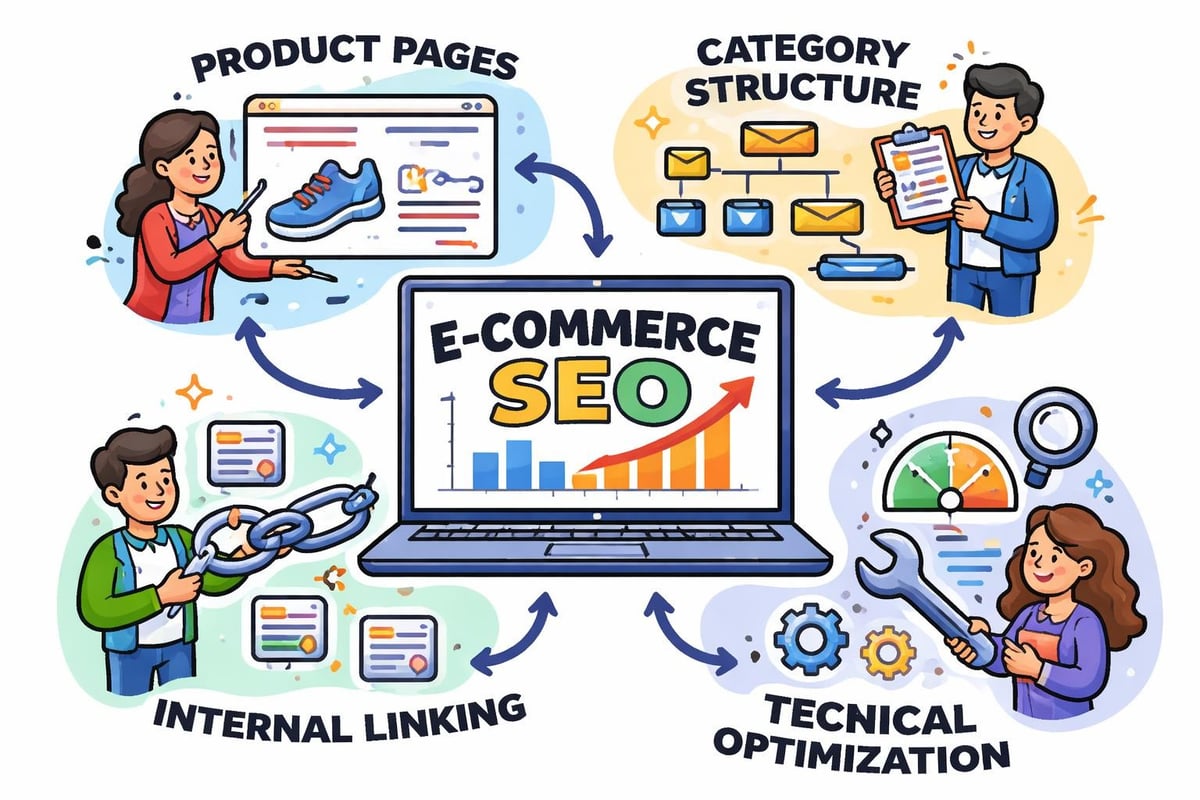
Key differences include:
- Managing product inventory that changes frequently
- Handling seasonal fluctuations in search demand
- Optimizing for transactional keywords with purchase intent
- Dealing with duplicate content across similar products
- Maintaining site speed despite heavy image loads
The complexity multiplies when you consider that e commerce seo services must account for user experience, conversion optimization, and technical performance simultaneously. A product page that ranks well but doesn't convert wastes your traffic potential.
Intent-Driven Optimization
People searching for e-commerce products exhibit different behaviors than those researching services. They use specific product names, compare features, check prices, and read reviews before purchasing. Your SEO strategy needs to capture users at every stage of this journey.
Someone searching "best waterproof hiking boots" sits at a different funnel stage than someone typing "Merrell Moab 2 size 10 buy online." E commerce seo services address both informational and transactional queries, building content ecosystems that guide shoppers from research to purchase.
Essential Components of Professional E Commerce SEO Services
Effective e-commerce optimization requires a multi-layered approach. Let's break down the critical elements that separate successful stores from those languishing on page five of search results.
Technical Foundation That Supports Growth
Your site architecture determines how easily search engines can discover and index your products. Poor structure creates crawl budget issues, orphaned pages, and ranking difficulties.
| Technical Element | Impact on SEO | Implementation Priority |
|---|---|---|
| Site Speed | Affects rankings and conversions | Critical |
| Mobile Responsiveness | Required for mobile-first indexing | Critical |
| Structured Data | Enhanced search appearance | High |
| XML Sitemaps | Efficient crawling | High |
| HTTPS Security | Ranking signal and trust factor | Critical |
| Canonical Tags | Prevents duplicate content issues | High |
Many e-commerce platforms generate duplicate content automatically through sorting options, filters, and pagination. Professional e commerce seo services implement canonical tags, noindex directives, and parameter handling to guide search engines toward your priority pages.
Page speed deserves special attention. Every second of load time costs you conversions. Compress images, leverage browser caching, minimize JavaScript, and consider a content delivery network (CDN) to serve assets faster globally. Real-world e-commerce SEO case studies demonstrate how technical improvements alone can drive substantial traffic increases.
Product Page Optimization That Converts
Each product page represents an opportunity to rank for specific search queries. Yet most online stores use manufacturer descriptions verbatim, creating duplicate content across the web.
Winning product pages include:
- Unique, detailed product descriptions (minimum 300 words for competitive products)
- High-quality images with descriptive alt text
- Customer reviews and ratings (user-generated content)
- Clear pricing and availability information
- Related product recommendations
- FAQ sections addressing common questions
- Schema markup for products, reviews, and pricing
Your product titles need strategic keyword inclusion without sacrificing readability. "Women's Waterproof Running Shoes – Lightweight Trail Runners" beats "Model XR-2000" every time for discoverability.
Consider the search intent behind product queries. Someone searching your exact product name needs different information than someone researching product categories. Layer your content to satisfy both audiences.
Category and Collection Architecture
Category pages often represent your biggest SEO opportunity. They target broader, higher-volume keywords while showcasing multiple products.
Think of categories as mini-hubs for specific topics. A "Men's Running Shoes" category page should include:
- Optimized heading structure with target keywords
- Compelling introduction explaining benefits and use cases
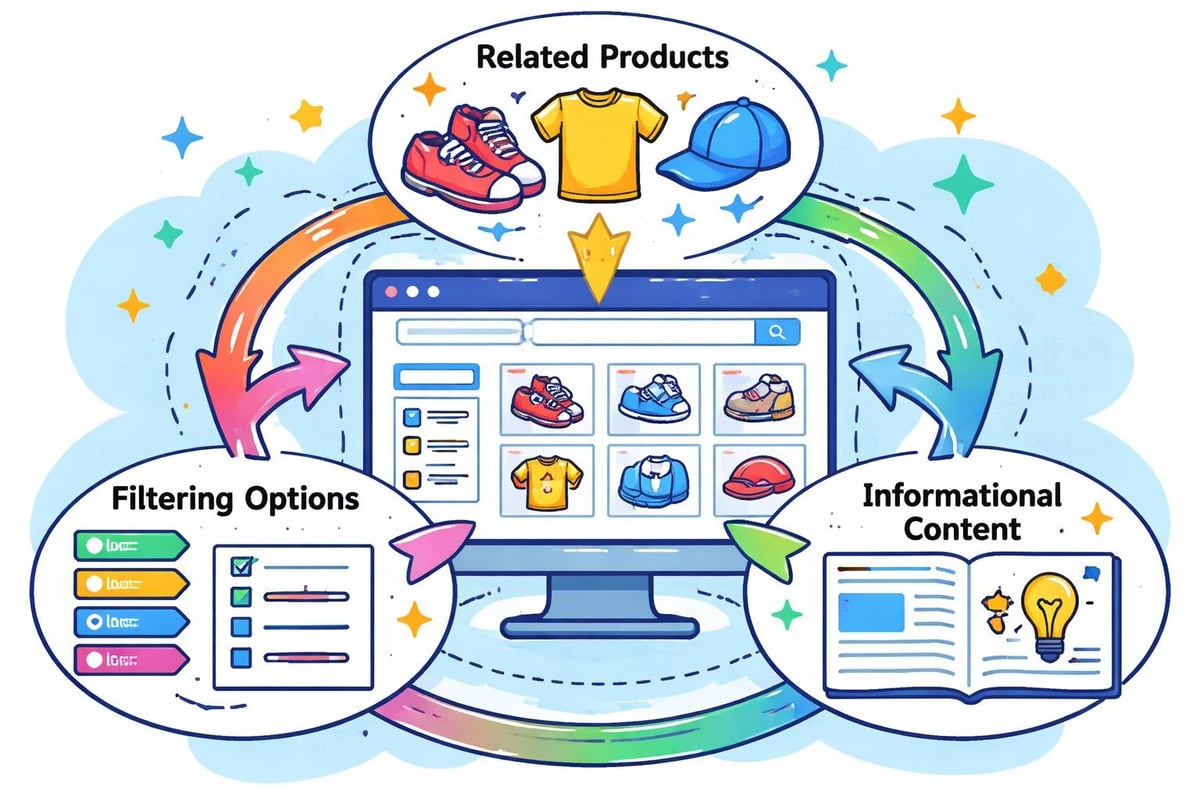
- Filtering options for size, color, brand, price
- Clear product grid with consistent imagery
- Pagination or infinite scroll handled correctly
- FAQ content addressing category-specific questions
Deep category structures bury products where search engines struggle to reach them. Aim for a flat architecture where any product sits three clicks or fewer from your homepage. Internal linking between related categories and products strengthens topical relevance signals.
Content Strategy Beyond Product Listings
E commerce seo services extend far beyond optimizing what you sell. Content marketing positions your store as an authority, captures informational queries, and builds backlink opportunities.
Building Authority Through Helpful Resources
Your blog or resource center should answer questions your customers ask before, during, and after purchase. This content strategy serves multiple purposes simultaneously.
Someone researching "how to choose running shoes for flat feet" might not buy today, but you've introduced your brand. When they're ready to purchase, guess who they remember? The store that provided helpful, actionable guidance.
High-value content types include:
- Buying guides for product categories
- Comparison articles between products or brands
- How-to tutorials featuring your products
- Industry trend analysis and forecasts
- Customer success stories and use cases
This approach aligns with proven e-commerce SEO best practices that emphasize comprehensive content ecosystems. Each article should target specific keywords, include internal links to relevant products and categories, and encourage email subscriptions to nurture relationships.
User-Generated Content as an SEO Asset
Customer reviews, questions, and photos create fresh, unique content that search engines love. Reviews also improve conversion rates by providing social proof and addressing objections.
Implement review systems that encourage detailed feedback. Ask specific questions: "How does this product fit?" "What did you use this for?" Detailed reviews naturally incorporate long-tail keywords you'd never think to target yourself.
Photo and video reviews add another dimension. They increase time on page, provide visual social proof, and can appear in image search results when properly optimized.
Advanced Tactics That Separate Winners from Competitors
Once your foundation solidifies, advanced strategies unlock additional growth potential.
Leveraging Structured Data for Rich Results
Schema markup transforms how your products appear in search results. Product schema enables price displays, availability indicators, review stars, and other rich snippets that increase click-through rates.
Google's evolving search features include product carousels, comparison tools, and shopping graph integrations. Structured data makes your products eligible for these enhanced placements. Implementing this markup correctly requires technical expertise, which is where professional e-commerce SEO agencies provide significant value.
International and Multi-Regional Optimization
Selling globally introduces complexity around currency, language, and regional search behavior. Hreflang tags tell search engines which version to show users based on their location and language preferences.
| Challenge | Solution | SEO Benefit |
|---|---|---|
| Duplicate content across regions | Hreflang implementation | Proper geographical targeting |
| Currency display | Dynamic pricing with structured data | Relevant local results |
| Shipping information | Region-specific content | Better user experience signals |
| Language variations | Translated, not just copied content | Local keyword ranking |
Don't simply translate content word-for-word. Cultural nuances, local search behaviors, and regional terminology require adapted content that resonates with each market.
Voice Search and AI Optimization
Voice searches typically use conversational, question-based queries. "Where can I buy waterproof hiking boots near me?" differs dramatically from typed searches.
Optimize for voice by:
- Creating FAQ content answering common questions
- Using natural language in headings and content
- Claiming and optimizing Google Business Profile
- Implementing local business schema
- Focusing on featured snippet opportunities
The shift toward Answer Engine Optimization reflects how AI systems like ChatGPT and Google's SGE (Search Generative Experience) reshape search behavior. Your content needs to directly answer questions in clear, concise formats that AI can extract and present.
Measuring Success: KPIs That Matter
E commerce seo services deliver value through measurable outcomes. Tracking the right metrics helps you understand what's working and where to focus efforts.
Organic Traffic and Revenue Attribution
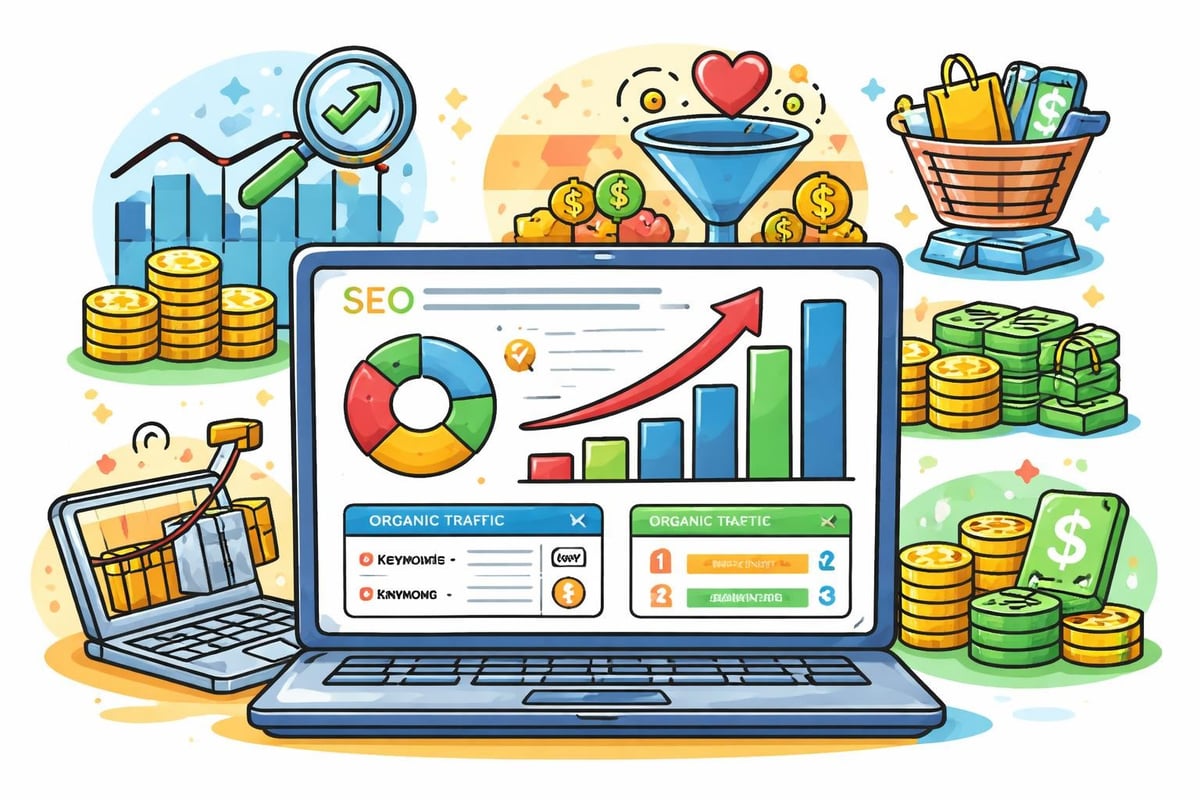
Total organic traffic matters less than qualified traffic that converts. Segment your analytics to understand:
- Which categories drive the most valuable traffic
- How organic visitors compare to paid in conversion rate
- Which landing pages generate the highest revenue
- Seasonal patterns in organic performance
Revenue attribution connects SEO efforts to bottom-line results. Track assisted conversions where organic search played a role in the customer journey, even if the final conversion came through another channel.
Keyword Rankings and Visibility
Monitor rankings for your priority keywords across product categories. Focus on:
Priority tracking areas:
- Brand keywords (you should dominate these)
- Product category terms (competitive but high-value)
- Long-tail product-specific queries (easier wins)
- Informational keywords (top-of-funnel awareness)
Don't obsess over individual keyword positions. Search results vary by location, personalization, and device. Focus instead on overall visibility trends and share of voice within your niche.
Technical Health Metrics
Regular technical audits prevent issues that quietly erode your rankings. Monitor crawl errors, broken links, page speed degradation, and mobile usability problems.
Set up automated alerts for critical issues like sudden indexation drops, core web vitals failures, or security problems. Many top SEO tools offer monitoring features that catch problems before they significantly impact traffic.
Choosing the Right E Commerce SEO Partner
Not all e commerce seo services deliver equal results. Selecting the right partner can accelerate your growth while the wrong choice wastes time and money.
What to Look for in an Agency
Experience with e-commerce platforms matters enormously. An agency that primarily works with local service businesses won't understand the nuances of product feeds, inventory management, or shopping campaigns integration.
Ask potential partners:
- Which e-commerce platforms do you specialize in?
- Can you share case studies from similar businesses?
- How do you handle technical SEO at scale?
- What's your approach to content creation?
- How do you measure and report results?
- What level of communication should I expect?
Transparency separates professional agencies from those making unrealistic promises. No legitimate SEO partner guarantees #1 rankings or overnight results. Effective optimization takes time, testing, and continuous refinement.
In-House vs. Agency Support
Larger e-commerce operations might build internal SEO teams. This approach offers deep product knowledge and immediate availability but requires significant investment in salaries, tools, and training.
Agencies bring diverse experience from working across multiple clients and industries. They've encountered and solved problems you haven't faced yet. The knowledge transfer alone justifies the investment for many businesses.
Hybrid approaches work well too. An internal person manages day-to-day optimization while an agency provides strategic direction, technical expertise, and executes complex projects. This model appears frequently in successful e-commerce companies.
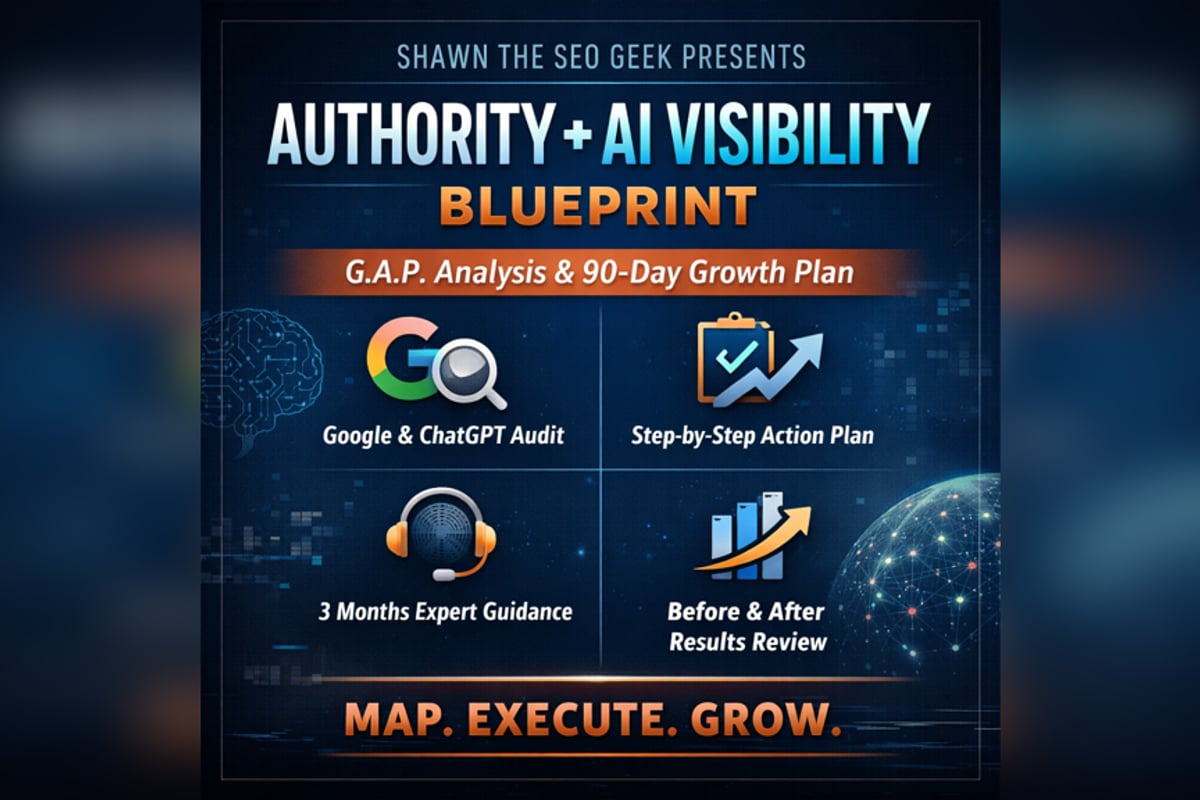
Getting started with the right foundation makes everything easier. Understanding where you currently stand helps prioritize improvements that deliver the biggest impact. The Authority + AI Visibility Blueprint provides exactly this clarity through comprehensive audits of both traditional search presence and emerging AI platforms like ChatGPT. You'll receive a customized roadmap showing which keywords and optimization strategies will generate leads for your specific business.
Platform-Specific Considerations
Different e-commerce platforms present unique optimization challenges and opportunities. Your chosen platform significantly impacts how you implement SEO strategies.
Shopify SEO Optimization
Shopify dominates the e-commerce landscape with user-friendly interfaces and extensive app ecosystems. However, its simplified approach creates SEO limitations.
Shopify automatically generates collection pages, handles canonical URLs, and creates sitemaps. That's helpful for beginners but frustrating when you need granular control. URL structures include "/collections/" and "/products/" prefixes you can't remove without complex workarounds.
Working with a Shopify SEO expert helps navigate these constraints while maximizing the platform's strengths. Experts know which apps enhance SEO, how to customize themes for performance, and techniques for overcoming built-in limitations.
WooCommerce and WordPress Flexibility
WooCommerce offers unlimited customization potential since it's built on WordPress. You control every aspect of your site structure, URLs, and technical implementation.
This flexibility requires more technical knowledge. You're responsible for choosing hosting, security, caching, and optimization plugins. The learning curve steeper but the ceiling for optimization higher.
Custom and Headless Solutions
Enterprise e-commerce often uses custom platforms or headless architectures separating the front-end from the back-end. These approaches enable ultimate performance and customization but require dedicated development resources.
Headless commerce using API-driven architecture can create SEO challenges if not implemented thoughtfully. Ensure server-side rendering or pre-rendering so search engines see your content. Many implementations initially launch with JavaScript-dependent content invisible to crawlers.
Common E Commerce SEO Mistakes to Avoid
Learning from others' mistakes saves time and protects your investment. Here are pitfalls we see repeatedly when businesses attempt DIY SEO or work with inexperienced providers.
Thin Product Descriptions
Copying manufacturer descriptions creates duplicate content across thousands of websites. Google has no reason to rank your page over established retailers using identical copy.
Invest in unique descriptions even if you stock thousands of SKUs. Prioritize your bestsellers and highest-margin products first. Detailed, benefit-focused copy that addresses customer questions outperforms generic specifications.
Ignoring Out-of-Stock Pages
When products go out of stock, many stores delete the page or show a 404 error. This wastes any SEO equity that page earned and creates poor user experience.
Better approaches include:
- Keeping the page live with "temporarily out of stock" messaging
- Recommending similar available products
- Offering email notifications when restocked
- Using 301 redirects only for permanently discontinued items
Neglecting Mobile Experience
Over 60% of e-commerce traffic comes from mobile devices in 2026. If your mobile experience frustrates users, they'll buy elsewhere regardless of your rankings.
Mobile optimization extends beyond responsive design. Consider touch-friendly buttons, simplified checkout processes, mobile page speed, and how product images display on smaller screens. Test your entire purchase funnel on actual devices, not just desktop browser simulations.
Overlooking Internal Linking Strategy
Your existing pages help new pages rank faster through strategic internal linking. Yet most e-commerce sites rely solely on automatic navigation and related product widgets.
Manually add contextual links from blog posts to relevant products and categories. Link from high-performing pages to those needing a boost. Create topic clusters where pillar content links to supporting articles and product pages.
The most effective e-commerce SEO implementations treat internal linking as deliberately as they treat external link building. Your own pages represent your most controllable ranking factor.
The Future of E Commerce SEO
Staying ahead requires understanding where the industry is moving. Several trends will reshape e commerce seo services over the coming years.
Visual and Video Search Growth
Google Lens and similar technologies let users search with images instead of text. Someone can photograph a product they like and find where to buy it online.
Optimize for visual search by:
- Using high-quality, properly sized images
- Including detailed alt text with relevant keywords
- Creating image sitemaps
- Adding contextual text near images
- Implementing product schema markup
Video content increasingly appears in search results for product queries. Demo videos, unboxing content, and tutorial videos engage users while providing ranking opportunities. Optimize video titles, descriptions, and transcripts for relevant keywords.
Personalization and AI-Driven Search
Search results become more personalized based on browsing history, purchase behavior, and demographic signals. This makes aggregate ranking tracking less meaningful while emphasizing the importance of appearing for your target audience specifically.
AI-generated search summaries pull information from multiple sources to answer questions directly. Appearing in these summaries requires authoritative, clearly structured content that directly answers common questions. Following comprehensive e-commerce SEO guides positions your content for both traditional and AI-driven search features.
Sustainability and Ethical Shopping Signals
Consumers increasingly consider environmental impact and ethical practices when shopping. Search queries including terms like "sustainable," "eco-friendly," "fair trade," and "ethical" continue rising.
If your products align with these values, highlight them prominently. Create content around sustainable practices, ethical sourcing, and environmental initiatives. These differentiators provide content opportunities while appealing to growing market segments.
Integration With Broader Marketing Strategies
E commerce seo services deliver maximum value when integrated with your complete marketing ecosystem rather than operating in isolation.
SEO and Paid Search Synergy
Organic and paid search teams should share data continuously. Paid campaigns reveal which keywords convert best, informing your SEO priorities. SEO keyword research uncovers opportunities for paid campaigns at lower costs.
Use paid search to test messaging and offers before investing in content creation. If certain product descriptions or value propositions drive higher conversion rates in ads, incorporate those elements into organic content.
Email Marketing and Content Distribution
Your email list represents owned media you control completely. Use it to amplify new content, promote seasonal products, and re-engage past customers.
SEO-optimized content provides valuable email newsletter material. Share buying guides, product comparisons, and industry insights that reinforce your authority. Include internal links driving subscribers back to optimized landing pages.
Social Proof and Reputation Management
Online reviews influence both conversion rates and SEO performance. Google considers review quantity, quality, and recency as ranking factors, particularly for local searches.
Actively request reviews from satisfied customers through post-purchase email sequences. Respond to all reviews, positive and negative, demonstrating customer service commitment. Negative reviews handled professionally can actually increase trust.
Managing your broader online reputation extends beyond product reviews to brand mentions, social media presence, and industry recognition. These signals contribute to the authority and trustworthiness search engines use to evaluate your site.
Taking Action on Your E Commerce SEO Journey
Understanding e commerce seo services is valuable, but implementation drives results. Start with a comprehensive audit identifying your biggest opportunities and most critical issues.
Prioritize technical fixes first since they often deliver quick wins. Site speed improvements, mobile optimization, and structured data implementation typically show measurable results within weeks.
Next, tackle your highest-value pages, starting with bestselling products and top-traffic categories. Perfect ten pages thoroughly rather than superficially optimizing one hundred.
Build content systematically around keyword research and customer questions. Create editorial calendars ensuring consistent publishing while maintaining quality standards.
Monitor progress through the metrics that matter for your business goals. Adjust strategies based on performance data rather than assumptions or industry trends that might not apply to your specific situation.
Remember that SEO is a marathon, not a sprint. Sustainable growth compounds over time as you build authority, earn links, and expand your indexed content. The beginner-friendly practices that establish your foundation remain important even as you implement advanced tactics.
E-commerce success in 2026 demands strategic SEO that addresses technical foundations, compelling content, and exceptional user experience simultaneously. The strategies outlined here provide your roadmap, but execution separates those who grow from those who stagnate. If you're ready to transform your online store's visibility and revenue, Shawn the SEO Geek brings over two decades of expertise and 500+ successful campaigns to help businesses like yours dominate search rankings. Our tailored, results-driven approach focuses on the strategies that move the needle for your specific situation. Let's build your search presence together.