
If you're a general contractor trying to get more customers from your local area, you've probably noticed that the competition is fierce. Homeowners searching for "general contractor near me" or "home remodeling contractor in [city]" have dozens of options, and if your business isn't showing up prominently in those search results, you're missing out on valuable leads. Local SEO for general contractors has become essential in 2026, as more consumers rely on Google to find trusted professionals for their home improvement projects. This comprehensive guide will walk you through the strategies that actually work to boost your visibility, attract qualified leads, and build a sustainable online presence that keeps your project pipeline full.
Understanding Why Local SEO Matters for Your Contracting Business
The home services industry has undergone a massive digital transformation over the past few years. Gone are the days when most contractors relied solely on word-of-mouth referrals and yard signs to generate business.
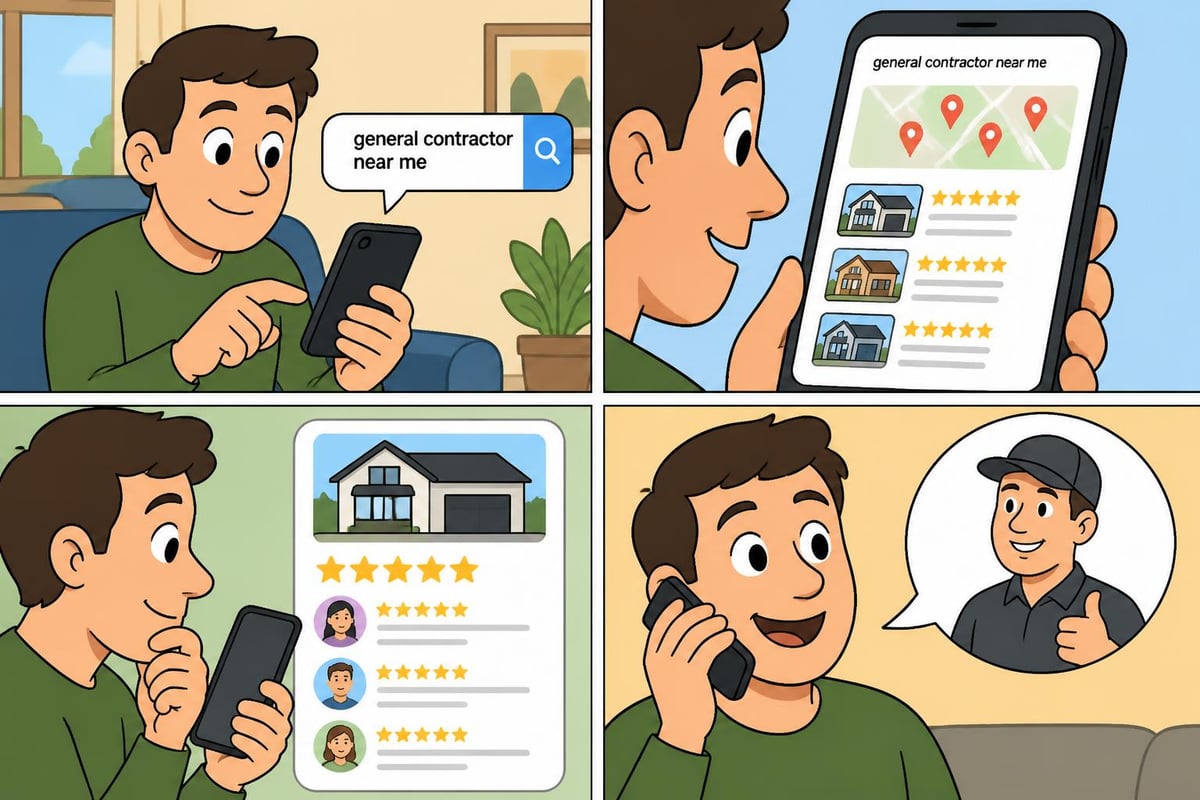
Today's homeowners start their search online, and 97% of people learn more about a local company online than anywhere else. When someone needs a general contractor, they typically search on their smartphone while standing in their outdated kitchen or damaged basement, looking for immediate solutions.
Local SEO for general contractors ensures your business appears exactly when and where potential customers are searching. This means showing up in the Google Map Pack (those three businesses displayed with map pins), local organic results, and even in voice search results when someone asks their smart speaker for contractor recommendations.
The financial impact is substantial. Contractors who invest in local SEO consistently report:
- Higher quality leads who are ready to start projects
- Lower customer acquisition costs compared to paid advertising
- Increased brand recognition in their service areas
- Better profit margins from reduced reliance on lead generation services
Claiming and Optimizing Your Google Business Profile
Your Google Business Profile (formerly Google My Business) is the foundation of your local SEO strategy. This free tool controls how your business appears in Google Maps and local search results.
Setting Up Your Profile Completely
Start by claiming your profile if you haven't already. Many contractors overlook critical fields that directly impact rankings:
- Business name: Use your actual business name without keyword stuffing
- Categories: Select "General Contractor" as your primary category, then add relevant secondary categories like "Home Remodeler" or "Renovation Contractor"
- Service areas: Define the specific cities and zip codes you serve
- Business hours: Keep these accurate and update them for holidays
- Attributes: Select relevant options like "Veteran-owned" or "Family-owned"
The more complete your profile, the better. Google Business Profile optimization directly correlates with higher rankings in the Map Pack, which is where most homeowners click first.
Photos That Convert Browsers Into Buyers
Upload high-quality photos regularly. Your Google Business Profile should showcase:
- Before and after project photos (labeled clearly)
- Your team in action on job sites
- Completed projects from different angles
- Any certifications or awards
- Your company vehicles with branding
Businesses with photos receive 42% more requests for directions and 35% more click-throughs to their websites than those without images.
| Photo Type | Recommended Quantity | Update Frequency |
|---|---|---|
| Project Before/After | 20-30 | Weekly |
| Team Photos | 5-10 | Quarterly |
| Equipment/Tools | 5-8 | As needed |
| Exterior Shots | 3-5 | Annually |
Building Local Citations and NAP Consistency
Citations are online mentions of your business name, address, and phone number (NAP). These mentions appear on business directories, review sites, and local websites.
Consistency is absolutely critical. If your business is listed as "Smith Construction" on one site and "Smith Construction LLC" on another, search engines get confused about which is the authoritative information.
Essential Citation Sources for Contractors
Start with these high-priority directories:
- Yelp
- Angi (formerly Angie's List)
- HomeAdvisor
- Houzz
- Better Business Bureau
- Yellow Pages
- Apple Maps
Then expand to industry-specific directories and local business associations. Many contractors find success with local citation building strategies that focus on quality over quantity.
Check your existing citations for inconsistencies. Use the exact same format for your business name, address, and phone number everywhere. Even small variations like "St." versus "Street" can dilute your local SEO signals.
Creating Service-Area Pages That Rank
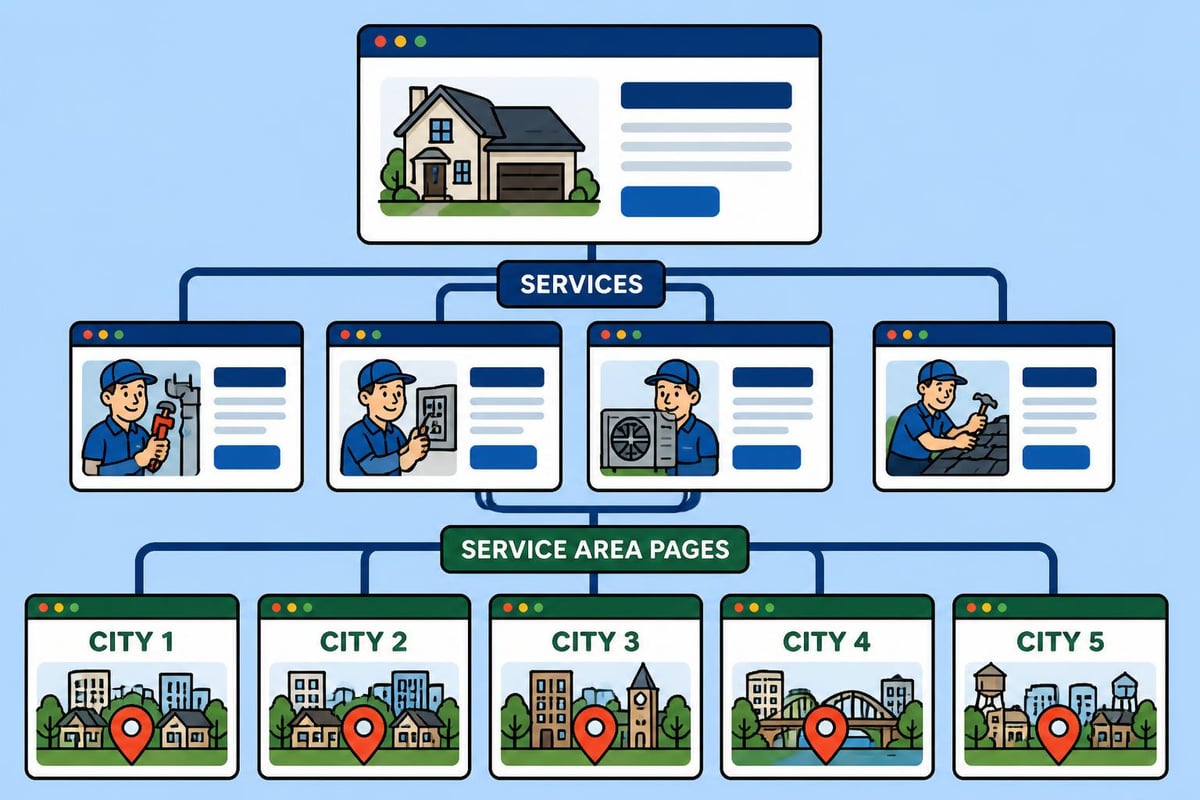
One of the most powerful local SEO for general contractors strategies is building dedicated pages for each city or region you serve.
These aren't just duplicate pages with city names swapped out. Each service-area page should provide genuine value with:
- Specific information about serving that community
- Local project examples and case studies
- Testimonials from customers in that area
- Neighborhood-specific details and insights
- Unique content about local building codes or climate considerations
Structuring Your Service Pages Effectively
Your website architecture should make sense to both users and search engines. Consider this structure:
Homepage
├── Services
│   ├── Kitchen Remodeling
│   ├── Bathroom Renovation
│   ├── Home Additions
│   └── Basement Finishing
└── Service Areas
    ├── [City 1] General Contractor
    ├── [City 2] General Contractor
    └── [City 3] General Contractor
Each service-area page should target phrases like "general contractor in [City]" or "home remodeling contractor [City]." These pages often rank faster than trying to rank your homepage for multiple locations.
Similar strategies work across other home service industries, as demonstrated by our success with SEO for contractors in various trades.
Generating and Managing Customer Reviews
Reviews are the lifeblood of local SEO for general contractors. They influence both your rankings and whether potential customers choose to contact you.
The Review Generation System
Don't leave reviews to chance. Build a systematic approach:
- Perfect timing: Ask for reviews immediately after project completion when satisfaction is highest
- Make it easy: Send direct links to your Google Business Profile review page
- Personalize requests: Reference specific project details in your ask
- Follow up: Send a gentle reminder if you don't receive a review within a week
Create a simple process where every completed project triggers a review request. Use email, text message, or printed cards with QR codes that link directly to your review page.
Responding to Every Review
Reply to all reviews, positive and negative. Thank customers who leave positive feedback and mention specific details from their review. This shows you're engaged and appreciative.
For negative reviews, respond professionally and offer to resolve the issue offline. Future customers are watching how you handle criticism, and a thoughtful response can actually improve trust.
| Review Star Rating | Impact on Conversions | Response Strategy |
|---|---|---|
| 5 Stars | High conversion rate | Thank and highlight specific praise |
| 4 Stars | Good conversion rate | Thank and acknowledge any concerns |
| 3 Stars or Below | Significantly lower | Apologize, offer resolution, take offline |
Local Link Building for Contractors
Backlinks from local websites signal to Google that your business is a legitimate, trusted part of the community. The key is earning links from relevant, authoritative local sources.
Link Opportunities in Your Community
General contractors have natural link-building advantages:
- Local supplier partnerships: Ask building supply companies to link to preferred contractors
- Chamber of Commerce: Membership often includes a profile with a link
- Local news coverage: Pitch stories about unique projects or community involvement
- Sponsorships: Sponsor local sports teams, school events, or charity fundraisers
- Guest blogging: Write for local real estate blogs or home improvement sites
One effective strategy is creating valuable resources that other local websites want to link to. Consider developing a "Homeowner's Guide to [Your City] Building Permits" or "Seasonal Home Maintenance Checklist for [Your Region]."
The comprehensive local link building approach detailed by industry experts shows how contractors can systematically build authority in their markets.
Optimizing Your Website for Local Search
Your website needs to clearly communicate who you are, what you do, and where you serve. Many contractor websites fail at this basic level.
Essential On-Page Elements
Every page on your site should include:
- Local keywords naturally woven into content: Use phrases like "general contractor in Bucks County" or "Philadelphia home remodeling" where they make sense
- Schema markup: Add LocalBusiness schema to help search engines understand your location and services
- Mobile optimization: Over 60% of local searches happen on mobile devices
- Fast loading speeds: Slow sites frustrate users and hurt rankings
- Click-to-call buttons: Make it incredibly easy for mobile users to contact you
Your homepage should immediately answer three questions: What do you do? Where do you serve? Why should I choose you?
Content That Attracts Local Traffic
Create blog content that addresses common questions from your local market:
- "How Much Does a Kitchen Remodel Cost in [Your City]?"
- "Top 5 Home Addition Mistakes [Your City] Homeowners Make"
- "Navigating [Your City] Building Permits: A Contractor's Guide"
This type of content attracts homeowners in the research phase and positions you as a local expert. Many of these searchers will eventually need a contractor, and you'll be top-of-mind.
Understanding your current online presence is the first step toward improvement. The Authority + AI Visibility Blueprint service audits where you appear in both traditional Google search and emerging AI platforms like ChatGPT, then provides a clear roadmap for getting found by more qualified leads.

Keyword Research for Local Contractor SEO
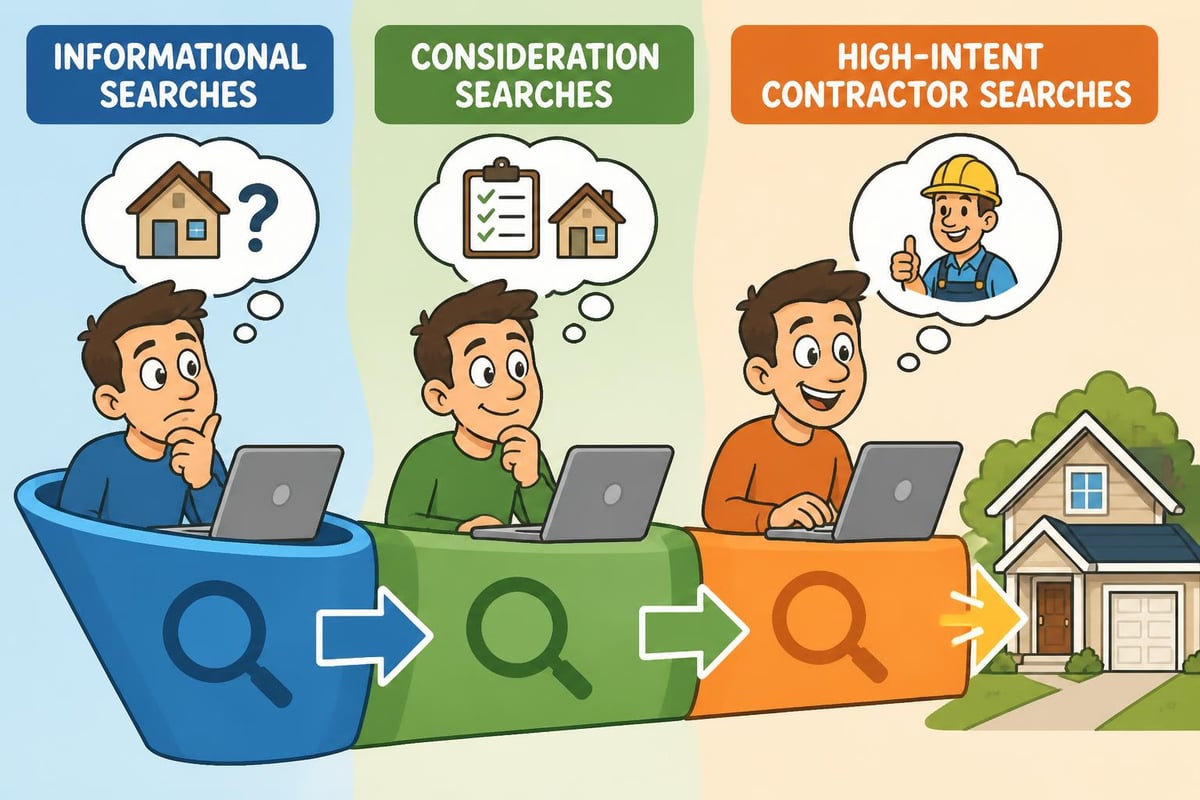
Not all keywords are created equal. The goal isn't just traffic, it's qualified leads who are ready to hire.
Focus on keywords with clear commercial intent:
High-Intent Keywords:
- "general contractor near me"
- "hire general contractor [city]"
- "kitchen remodeling contractor [city]"
- "home addition contractor [city]"
Medium-Intent Keywords:
- "best general contractor [city]"
- "general contractor reviews [city]"
- "how to choose a general contractor"
Informational Keywords:
- "general contractor license requirements"
- "cost of home addition"
- "kitchen remodel timeline"
Target high-intent keywords on your service pages and location pages. Use medium and informational keywords for blog content that builds authority and attracts early-stage researchers.
Track which keywords drive actual phone calls and contact form submissions, not just traffic. Tools like call tracking can reveal which keywords convert best, allowing you to double down on what works.
Mobile Optimization and Voice Search
The way people search for contractors has fundamentally changed. Voice search through smartphones and smart speakers now accounts for a significant portion of local queries.
When someone says "Hey Google, find me a general contractor near me," the results prioritize businesses with:
- Complete Google Business Profiles
- Strong review signals
- Mobile-friendly websites
- Fast loading times
- Clear NAP information
Your website must load quickly on mobile devices and provide an excellent user experience. Large buttons, readable text without zooming, and easy navigation are non-negotiable in 2026.
Voice search queries tend to be more conversational and question-based. Optimize for phrases like:
- "Who's the best general contractor near me?"
- "What does a general contractor do?"
- "How much does it cost to hire a general contractor?"
Create FAQ sections on your website that directly answer these questions in natural language.
Tracking and Measuring Your Local SEO Success
You can't improve what you don't measure. Set up tracking systems to monitor your local SEO for general contractors efforts.
Key Metrics to Monitor
Track these metrics monthly:
- Google Business Profile insights: Views, clicks, calls, direction requests
- Local keyword rankings: Where you rank for target phrases in each service area
- Organic traffic from local searches: Use Google Analytics with location filters
- Conversion rates: Percentage of website visitors who become leads
- Cost per lead: Total SEO investment divided by leads generated
| Metric | Monitoring Frequency | Target Benchmark |
|---|---|---|
| Map Pack Rankings | Weekly | Top 3 for primary keywords |
| Organic Traffic | Monthly | 10-15% growth month-over-month |
| Review Count | Weekly | 2-4 new reviews per month |
| Phone Calls from GBP | Weekly | 15+ per month (varies by market) |
Compare your performance to previous months and note seasonal trends. Construction and remodeling naturally fluctuate throughout the year, so track year-over-year comparisons as well.
Detailed analytics from services like Google Analytics consulting can reveal exactly which local SEO efforts drive the most valuable leads.
Common Local SEO Mistakes Contractors Make
Avoid these pitfalls that hold back many general contractors:
Inconsistent business information: Different addresses or phone numbers across platforms confuses Google and customers alike.
Neglecting negative reviews: Ignoring bad reviews or responding defensively damages your reputation more than the original complaint.
Keyword stuffing: Cramming "general contractor [city]" into every sentence makes content unreadable and triggers spam filters.
Duplicate content across service areas: Lazy location pages with only the city name changed provide no value and may be penalized.
Ignoring mobile users: A desktop-only mindset misses the majority of local searchers who use smartphones.
No tracking or measurement: Flying blind without data means you can't identify what works or justify your investment.
Buying fake reviews: This violation of Google's terms can result in profile suspension and destroyed credibility.
The contractors who succeed with local SEO take a step-by-step strategic approach rather than looking for quick fixes or shortcuts.
Advanced Local SEO Tactics for Competitive Markets
If you're in a highly competitive market, basic local SEO might not be enough. Consider these advanced strategies:
Video Content for Local Search
Create YouTube videos showcasing your projects, explaining common problems, or touring completed remodels. Videos often rank in local search results and build trust faster than text alone.
Optimize video titles and descriptions with local keywords: "Kitchen Remodeling Project in [City]" or "How to Choose a General Contractor in [Your Area]."
Local PR and Digital Outreach
Build relationships with local journalists, bloggers, and influencers. Pitch interesting project stories, especially those involving historic homes, unique challenges, or community impact.
Each piece of coverage potentially includes a backlink to your website and expands your local visibility beyond traditional search engines.
Strategic Content Partnerships
Partner with complementary local businesses like:
- Interior designers
- Architects
- Real estate agents
- Kitchen and bath showrooms
- Building material suppliers
Cross-promote content, share client referrals, and create joint resources that benefit both businesses while building your local authority.
These proven local SEO strategies help contractors stand out in crowded markets where basic optimization isn't enough.
The Role of Social Media in Local Contractor SEO
While social media signals don't directly impact search rankings, social platforms play an important supporting role in your local SEO strategy.
Facebook, Instagram, and even Pinterest help you:
- Share project photos that drive engagement
- Collect reviews and testimonials
- Engage with your local community
- Drive traffic to your website
- Build brand recognition
Keep your NAP information consistent across all social profiles. When people search for your business name after seeing a Facebook post, that consistent information reinforces your local SEO signals.
Post regularly about completed projects, ongoing work, team highlights, and home improvement tips. Tag your location on posts to increase local visibility within social platforms' own search features.
Building Long-Term Local SEO Authority
Local SEO for general contractors isn't a one-time project. It's an ongoing process of building authority, trust, and visibility in your community.
Think of it as compound interest for your online presence. Each review, citation, piece of content, and backlink adds to your authority. Over time, these signals accumulate and make it increasingly difficult for competitors to overtake your rankings.
Commit to consistent effort:
- Add fresh content monthly
- Request reviews from every satisfied customer
- Update your Google Business Profile weekly with posts or photos
- Monitor and respond to all online mentions
- Continue building relationships with local websites and organizations
The contractors who dominate local search in 2026 are those who started building their presence years ago and never stopped improving. The best time to start was yesterday, but the second-best time is right now.
Understanding comprehensive SEO strategies for contractors across different trades can provide insights you can apply to your general contracting business.
Local SEO for general contractors has become non-negotiable in 2026, transforming how homeowners find and hire construction professionals for their projects. By implementing these strategies consistently, you'll build a powerful online presence that generates qualified leads month after month. If you're ready to dominate local search results and fill your project pipeline with ideal customers, Shawn the SEO Geek brings over two decades of expertise specifically helping home services businesses grow through customized, results-driven SEO strategies. Let's build your visibility together.