
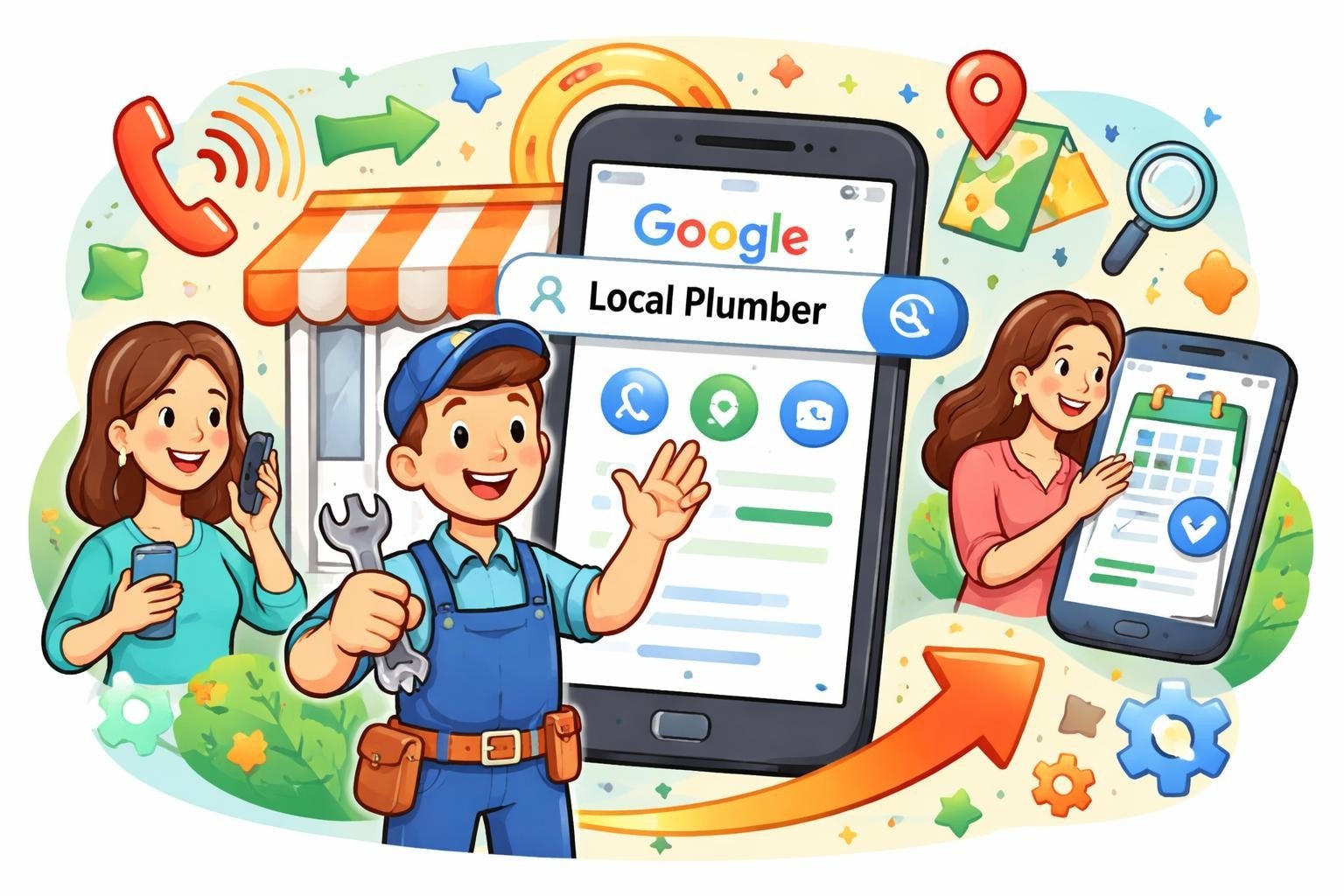
Running a service business means your customers need to find you exactly when they're searching for help. Whether you're a plumber handling emergency calls at 2 AM, a lawyer guiding clients through difficult situations, or a contractor transforming homes, your visibility online directly impacts your bottom line. The challenge? Standing out in local search results when potential clients are actively looking for your expertise. That's where seo for service businesses becomes your most powerful marketing asset, turning online searches into real-world appointments and revenue.
Why SEO Matters More for Service Businesses in 2026
Service businesses face unique challenges that make SEO absolutely critical. Unlike e-commerce stores shipping nationwide, you're targeting people in specific geographic areas who need immediate solutions. Your potential clients aren't browsing for fun. They're searching with intent, ready to hire someone today or this week.
The numbers tell a compelling story. Over 90% of consumers use search engines to find local services, and 76% of people who search for something nearby visit a business within 24 hours. When someone searches "emergency plumber near me" or "divorce lawyer in Bucks County," they're not comparison shopping across the country. They want someone local, trustworthy, and available now.
Key advantages of seo for service businesses include:
- Capturing high-intent customers at the exact moment they need help
- Building long-term visibility without ongoing advertising costs
- Establishing credibility and trust in your local market
- Competing effectively against larger national chains
Unlike paid advertising that stops delivering results the moment you pause spending, search engine optimization creates compounding returns over time. The visibility you build this month continues working for you next year.
Understanding Local SEO Fundamentals
Local SEO forms the foundation of effective seo for service businesses. While traditional SEO focuses on ranking nationally, local optimization ensures you appear when people in your service area are searching.
Google Business Profile Optimization
Your Google Business Profile serves as your digital storefront. It's often the first impression potential clients have of your business, appearing prominently in map results and local pack listings.
Start by claiming and completely filling out your profile. This means adding accurate business hours, service areas, phone numbers, and high-quality photos of your work, team, and location. Don't skip the business description. Use this space to clearly explain what you do and which areas you serve.
Categories matter enormously. Select your primary category carefully, as it determines which searches trigger your listing. A plumbing contractor should choose "Plumber" as primary, then add secondary categories like "Emergency plumbing service" or "Water heater repair service."
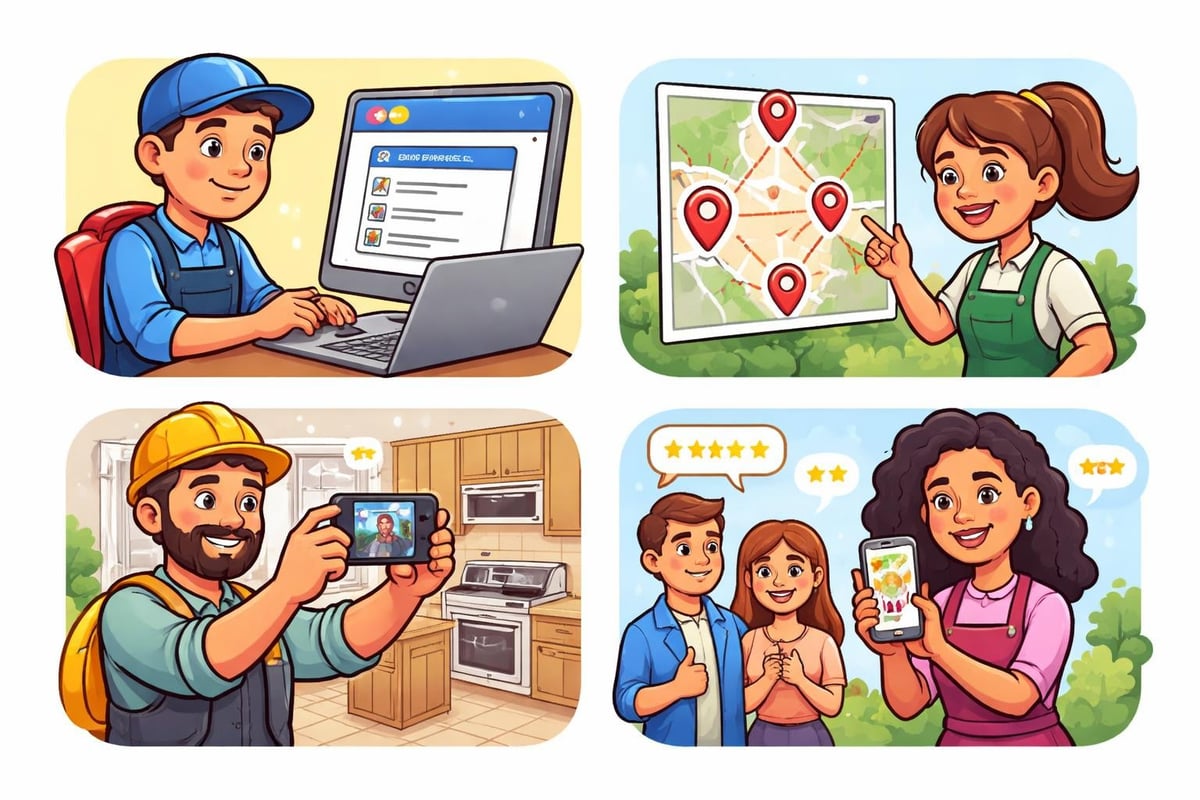
| Element | Impact on Rankings | Update Frequency |
|---|---|---|
| Business Name | Critical | Only when legally changed |
| Categories | Very High | Review quarterly |
| Service Areas | High | As you expand |
| Photos | Medium-High | Weekly additions |
| Posts | Medium | 2-3 times weekly |
| Reviews | Very High | Encourage continuously |
Citations and Local Directories
Citations are mentions of your business name, address, and phone number (NAP) across the web. Consistency across these listings signals to Google that your business is legitimate and trustworthy.
Start with major directories like Yelp, Yellow Pages, and industry-specific platforms. For contractors, that might include Angi or HomeAdvisor. Lawyers should focus on Avvo and Justia. The key is ensuring your NAP information matches exactly everywhere it appears.
Common mistakes service area businesses should avoid include listing multiple locations that don't exist, using inconsistent business names, or creating duplicate listings. These errors confuse search engines and dilute your ranking potential.
Keyword Research for Service-Based Success
Effective seo for service businesses starts with understanding exactly how your customers search. Unlike product-based businesses, service keywords often include location modifiers, emergency indicators, and problem-specific phrases.
Begin by brainstorming customer pain points. A homeowner doesn't search for "HVAC technician." They search for "air conditioner won't turn on" or "furnace repair near me." These longer, more specific phrases often convert better because they capture people actively experiencing problems.
High-converting service business keyword types:
- Emergency modifiers ("24-hour," "emergency," "same-day")
- Location-specific phrases ("in Bucks County," "near Doylestown")
- Service + location combinations ("roof repair Philadelphia")
- Problem-focused queries ("leaking pipe fix," "divorce attorney consultation")
- Comparison searches ("best plumber near me")
Tools like Google's Keyword Planner help identify search volumes, but don't ignore keywords with lower monthly searches. A term with 50 monthly searches that converts at 20% generates more value than a term with 5,000 searches converting at 0.5%.
Professional service firms can learn valuable SEO strategies tailored to their industry to improve their targeting approach.
Building a Service-Optimized Website Structure
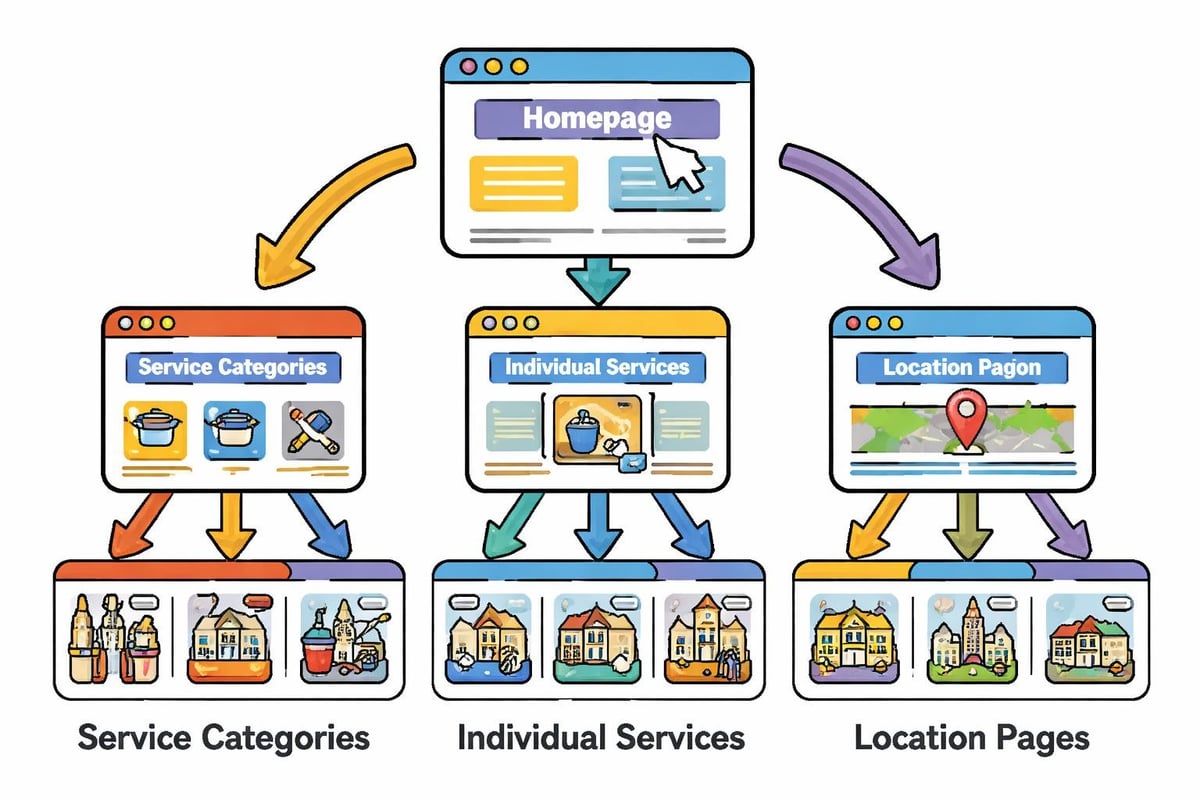
Your website architecture directly impacts both user experience and search rankings. Service businesses need a structure that makes it easy for both visitors and search engines to understand what you offer and where you offer it.
Creating Dedicated Service Pages
Every distinct service you offer deserves its own dedicated page. If you're a home services contractor offering plumbing, electrical work, and HVAC services, create separate pages for each. This approach allows you to target specific keywords and provide comprehensive information that answers customer questions.
Each service page should include detailed descriptions of what the service involves, why customers need it, pricing information (even if ranges), and clear calls-to-action. Include photos or videos of your team performing that specific service. This builds trust and helps potential clients visualize working with you.
Following practical tips for service-based businesses, create unique content for each page rather than duplicating descriptions with slight variations. Google penalizes duplicate content, and customers can tell when you've simply copied and pasted.
Location Pages That Convert
If you serve multiple areas, location-specific pages help you rank in each community. But here's where many businesses make critical mistakes. Simply creating a page that says "We serve Philadelphia" with no unique content won't work in 2026.
Effective location pages include:
- Specific information about serving that area (response times, local projects)
- Testimonials from customers in that location
- Unique photos from projects in that community
- Locally relevant content (neighborhood names, local landmarks)
- Clear contact methods for that specific area
A law firm serving both Philadelphia and Doylestown shouldn't create identical pages with only the city name changed. Share information about local court systems, reference specific neighborhoods, and demonstrate genuine knowledge of each community you serve.
Content Marketing That Builds Authority
Creating valuable content positions your service business as the trusted expert in your field. But content for service businesses looks different than content for SaaS companies or e-commerce stores.
Answer Customer Questions Comprehensively
Think about the questions customers ask during initial consultations. What do they want to know before hiring you? What concerns keep them from moving forward? Every question represents a content opportunity.
A roofing contractor might create content around "How long does a roof replacement take?" or "Should I repair or replace my roof?" These aren't promotional pieces. They're genuinely helpful resources that build trust before someone even contacts you.
Blog posts, FAQ pages, and detailed guides all serve this purpose. The goal isn't just ranking for keywords (though that happens). It's establishing yourself as someone who educates and helps, not just someone selling services.
Case Studies and Success Stories
Nothing builds confidence like proof. Detailed case studies showing how you've solved problems for previous clients provide social proof while targeting long-tail keywords naturally.
Structure case studies around the challenge, your approach, and the results. A personal injury lawyer might share "How we secured a $500K settlement for a car accident victim." Include enough detail that potential clients see themselves in the story, but maintain appropriate privacy protections.
For specific industry examples, check out resources for SEO for contractors or SEO for lawyers to see how different service sectors approach content creation.
Technical SEO Essentials for Service Sites
While technical SEO might sound intimidating, service businesses need to master several fundamental elements that directly impact rankings and conversions.
Mobile Optimization Is Non-Negotiable
Over 60% of service-related searches happen on mobile devices, often from someone experiencing an urgent problem. If your site doesn't load quickly and function perfectly on smartphones, you're losing customers and rankings simultaneously.
Test your site on actual mobile devices regularly. Can visitors easily tap your phone number to call? Do contact forms work smoothly on small screens? Does the site load in under three seconds on 4G connections?
Google's mobile-first indexing means the search engine primarily uses your mobile site for ranking decisions. Your desktop site could be perfect, but if mobile performance lags, your rankings suffer.
| Technical Element | Target Metric | Why It Matters |
|---|---|---|
| Page Load Speed | Under 3 seconds | Reduces bounce rate, improves rankings |
| Mobile Responsiveness | 100% functional | Google's mobile-first index |
| SSL Certificate | HTTPS enabled | Security signal, ranking factor |
| Schema Markup | Local business schema | Enhanced search appearance |
| XML Sitemap | Updated weekly | Helps Google find new content |
Schema Markup for Enhanced Visibility
Schema markup helps search engines understand your content better, often resulting in rich snippets that stand out in search results. For service businesses, local business schema is particularly valuable.
Implement schema that identifies your business type, service areas, hours, contact information, and customer reviews. When someone searches for services, your enhanced listing might display star ratings, phone numbers, and hours directly in search results, increasing click-through rates significantly.
Many service businesses also benefit from FAQ schema, which can make your answers appear in featured snippets for question-based searches.
Review Management and Reputation Building
Online reviews have become the digital equivalent of word-of-mouth recommendations. They influence both customer decisions and search rankings, making review management a critical component of seo for service businesses.
The Review Acquisition Process
You can't simply hope customers leave reviews. Successful service businesses systematically request feedback after completing jobs. This doesn't mean being pushy. It means making the review process easy and asking at the right moment.
Send review requests within 24-48 hours of completing a service, when the positive experience is fresh. Provide direct links to your preferred review platforms, starting with Google Business Profile. Many businesses also direct customers to industry-specific sites like Avvo for lawyers or Healthgrades for healthcare providers.
Effective review request strategies include:
- Automated email sequences after job completion
- Text messages with direct review links
- In-person requests during final walkthroughs
- Follow-up calls for major projects
- QR codes on invoices linking to review pages
Responding to All Reviews Professionally
Every review deserves a response, positive or negative. Responding to positive reviews shows appreciation and reinforces what you do well. Addressing negative reviews demonstrates professionalism and commitment to customer satisfaction.
When responding to negative feedback, stay calm and professional. Acknowledge the concern, explain any context if appropriate, and offer to resolve the issue offline. Future customers reading your responses evaluate not just what happened, but how you handled the situation.

Link Building for Local Service Businesses
Link building remains a crucial ranking factor, but service businesses approach it differently than national brands or e-commerce sites. Quality matters far more than quantity, and local relevance amplifies impact.
Local Partnership Opportunities
The best links for service businesses often come from genuine community connections. Partner with complementary businesses in your area. A plumber might connect with general contractors, electricians, or real estate agents. These relationships create natural linking opportunities that search engines value.
Local business associations, chambers of commerce, and community organizations typically link to member websites. These links signal local relevance while connecting you with potential referral sources.
Sponsoring local events, youth sports teams, or charitable causes often results in links from event websites, local news coverage, and community organization pages. The links benefit SEO, but the community connection brings value beyond rankings.
Content-Driven Link Acquisition
Creating genuinely valuable resources attracts links naturally. A comprehensive guide, original research, or detailed industry report gives other websites reasons to reference your content.
One effective approach involves creating local resource guides. A contractor might create "The Complete Home Maintenance Calendar for Pennsylvania Homeowners," including seasonal tasks specific to the region's climate. Local blogs, real estate sites, and community forums might link to this resource when discussing home maintenance.
Understanding local search engine optimization helps you identify the types of links that matter most for service businesses competing in specific geographic markets.
Measuring Success and Continuous Improvement
Effective seo for service businesses requires tracking the right metrics and continuously refining your approach based on data. Vanity metrics like total website visitors matter less than metrics directly tied to business growth.
Key Performance Indicators That Matter
Focus on metrics that connect to actual business outcomes:
- Phone call volume from organic search – Track calls separately from other channels using call tracking numbers
- Contact form submissions – Monitor form completions specifically from organic visitors
- Conversion rate by traffic source – Understand which search terms and pages drive actual customers
- Local pack rankings – Track your position in the map pack for key service terms
- Average position for money keywords – Monitor rankings for high-intent searches that drive revenue
Google Analytics 4 and Google Search Console provide most data you need. Set up goal tracking for key conversion actions like form submissions, phone clicks, and appointment bookings.
Regular Audits and Optimization
The search landscape constantly evolves. What worked brilliantly in 2025 might underperform in 2026. Schedule quarterly SEO audits examining technical health, content performance, and competitive positioning.
Look for pages with high traffic but low conversions. These represent opportunities to improve calls-to-action, clarify messaging, or enhance trust signals. Identify pages ranking positions 4-10 for valuable keywords. Small improvements often push these into the top three results, dramatically increasing click-through rates.
Regular SEO website audit services help identify technical issues, content gaps, and optimization opportunities before they significantly impact performance.
Common SEO Mistakes Service Businesses Make
Even with the best intentions, service businesses frequently make SEO mistakes that limit their growth potential. Recognizing and avoiding these pitfalls accelerates your success.
Neglecting Service-Specific Long-Tail Keywords
Many businesses focus exclusively on broad terms like "plumber" or "lawyer" while ignoring valuable long-tail phrases. Someone searching "emergency water heater replacement cost" shows much higher intent than someone simply searching "plumber."
Create content targeting specific services, problems, and questions. These longer phrases often have less competition and convert better, making them ideal targets for growing service businesses.
Inconsistent NAP Information
Your business name, address, and phone number must match exactly across all online mentions. Even small variations like "St." versus "Street" or including suite numbers inconsistently can confuse search engines and weaken your local rankings.
Audit your citations quarterly, correcting any inconsistencies. When you change phone numbers or move locations, update every listing promptly rather than letting outdated information linger.
Ignoring Service Area Boundaries
Service area businesses sometimes try gaming the system by listing service areas far beyond where they realistically work. Google increasingly penalizes this behavior, recognizing when a business claims to serve territories too large for their size or type.
Be honest about your service areas. It's better to rank excellently in three counties than poorly in an entire state. As your business grows, you can legitimately expand your service area coverage.
Failing to Optimize for Voice Search
Voice search continues growing, particularly for service-based queries. People use more conversational language when speaking than typing. Optimize for natural language questions like "Where can I find a good divorce lawyer near me?" rather than just "divorce lawyer."
Create FAQ content using question-based headings that mirror how people actually speak. This positions you well for voice search results while also improving your traditional search performance.
Advanced Strategies for Competitive Markets
In highly competitive service markets, basic SEO tactics might not suffice. Advanced strategies help you stand out when dozens of competitors are all optimizing effectively.
Hyperlocal Content Targeting
Rather than just targeting cities, create content around specific neighborhoods, zip codes, or even streets. A service business in Philadelphia might create separate content optimizing for Rittenhouse Square, University City, and Fishtown individually.
This hyperlocal approach helps you dominate very specific searches while building comprehensive coverage across your entire service area. Someone searching "plumber in Fishtown" sees you as the neighborhood specialist rather than just another citywide company.
Video Content for Enhanced Engagement
Video content increasingly dominates search results, particularly for how-to queries and local searches. Create videos demonstrating your expertise, explaining common problems, or showcasing completed projects.
Upload videos to YouTube (optimized with local keywords in titles and descriptions), then embed them on relevant service pages. This dual-platform approach captures visibility in both YouTube searches and regular Google searches.
Strategic Competitor Analysis
Regularly analyze what's working for successful competitors in your market. Which keywords are they ranking for that you're not? What types of content are they creating? How have they structured their sites?
Don't copy competitors, but let their success inform your strategy. If competitors consistently rank well for certain content types or keywords, that indicates opportunity rather than saturation.
Businesses focusing on local SEO for home services can adapt hyperlocal strategies to their specific markets and service areas.
Seasonal SEO Considerations
Many service businesses experience seasonal demand fluctuations. SEO strategy should anticipate and capitalize on these patterns rather than reacting after peak season arrives.
Planning Content Calendars Around Demand Cycles
HVAC companies know air conditioning searches spike in late spring before the summer heat. Roofing contractors see increased searches after major storms. Tax attorneys field more inquiries in late winter and early spring.
Create and optimize seasonal content 2-3 months before peak demand. This gives Google time to index and rank your content before searches surge. A landscaping company should publish "Spring Lawn Care Guide" content in January, not March when customers are already searching.
Seasonal optimization checklist:
- Identify your high-demand periods from previous years' data
- Create comprehensive seasonal content 60-90 days early
- Update and republish previous years' seasonal content
- Adjust bidding strategies for complementary paid campaigns
- Prepare service pages for expected demand increases
Off-Season Authority Building
Use slower periods for long-term authority building that pays dividends year-round. This is when you have time to create comprehensive guides, pursue quality backlinks, and overhaul underperforming content.
Off-season is also ideal for technical improvements, site redesigns, or major content initiatives that might be risky during peak demand periods.
Integrating SEO With Other Marketing Channels
While seo for service businesses delivers remarkable standalone results, integration with other marketing channels amplifies overall effectiveness.
SEO and Pay-Per-Click Synergy
Running PPC campaigns alongside SEO efforts provides data that improves both channels. PPC quickly reveals which keywords convert best, informing your organic optimization priorities. Conversely, strong organic rankings reduce PPC costs by lowering your necessary ad spend.
Dominating both paid and organic results for key terms increases total click-through rates beyond what either channel achieves alone. Test messaging and landing pages through PPC, then apply winning combinations to organic pages.
Email Marketing Content Distribution
Your email list represents people already interested in your services. Use email to amplify new content, driving immediate traffic that signals content quality to search engines. This initial traffic boost can accelerate ranking improvements for new pages.
Share blog posts, case studies, and resources with your list. The engagement metrics and social signals this generates contribute to overall SEO performance.
Social Media for Local Visibility
While social media signals don't directly impact rankings, social platforms help service businesses build local awareness and drive traffic. Share content across platforms where your customers spend time. For B2B service providers, that might be LinkedIn. For home service companies, Facebook often delivers better engagement.
Local social media engagement, tagged location posts, and community interaction strengthen your local presence both online and offline. This holistic local visibility supports your SEO efforts through increased brand searches and direct traffic.
Resources on building trust in regulated industries demonstrate how service businesses can ethically integrate SEO with broader marketing strategies.
The Role of Professional SEO Services
Many service business owners wonder whether to handle SEO in-house or partner with specialists. The answer depends on your resources, timeline, and growth goals.
When to Consider Professional Help
DIY SEO makes sense for very small businesses with tight budgets and patient timelines. But as your business grows or competition intensifies, professional expertise accelerates results while freeing you to focus on service delivery.
Consider professional services when you're experiencing:
- Stagnant rankings despite consistent effort
- Technical issues you can't diagnose or resolve
- Limited time for the ongoing work SEO requires
- Increased competition making it harder to rank
- Desire to expand into new service areas or offerings
Professional agencies bring specialized tools, established processes, and experience across hundreds of campaigns. They've already made the mistakes and learned the lessons that you'd otherwise discover through trial and error.
What to Look for in an SEO Partner
Not all SEO agencies understand service business needs equally well. Look for partners with proven experience in your industry, transparent communication, and realistic timelines.
Red flags include guaranteed rankings, extremely cheap pricing, or vague explanations of their process. Quality SEO requires significant effort and expertise. Agencies delivering real results charge accordingly and communicate clearly about what they're doing and why.
Ask for case studies from similar service businesses, references you can contact, and detailed explanations of their approach. The right partner becomes an extension of your team, invested in your long-term success rather than short-term metrics.
Finding SEO strategies for service businesses that align with your specific needs helps you evaluate potential partners and approaches.
Implementing effective seo for service businesses transforms how customers find and choose your company, creating sustainable growth that compounds over time. The strategies outlined here provide a comprehensive framework for capturing high-intent local searches, converting visitors into customers, and establishing market authority. Whether you're just beginning your SEO journey or looking to overcome persistent challenges, Shawn the SEO Geek brings over two decades of specialized experience helping service businesses across Pennsylvania and beyond achieve measurable results through customized, transparent, and hands-on SEO strategies.