
When someone's water heater breaks at 2 AM or their AC stops working on the hottest day of summer, they're not browsing through the Yellow Pages. They're grabbing their phone and searching for "emergency plumber near me" or "AC repair in [their city]." That's where local SEO for home services becomes the difference between getting that call and losing it to your competitor down the street. If your plumbing, HVAC, electrical, or landscaping business isn't showing up in those critical local searches, you're leaving money on the table every single day.
Why Local SEO Matters More Than Ever for Home Service Companies
The home services industry has completely transformed over the past few years. According to recent data, over 97% of consumers search online when looking for local services, and most of them never scroll past the first page of results.
Here's what makes local SEO different from regular SEO:
- Focus on geographic-specific keywords and service areas
- Heavy emphasis on Google Business Profile optimization
- Greater importance of customer reviews and ratings
- Directory listings and local citations play a crucial role
- Mobile optimization is absolutely essential
Think about your own behavior. When you need a service provider, you probably search on your phone, check reviews, look at photos, and call within minutes. Your customers do exactly the same thing. Understanding local SEO strategies helps you meet them right where they're searching.
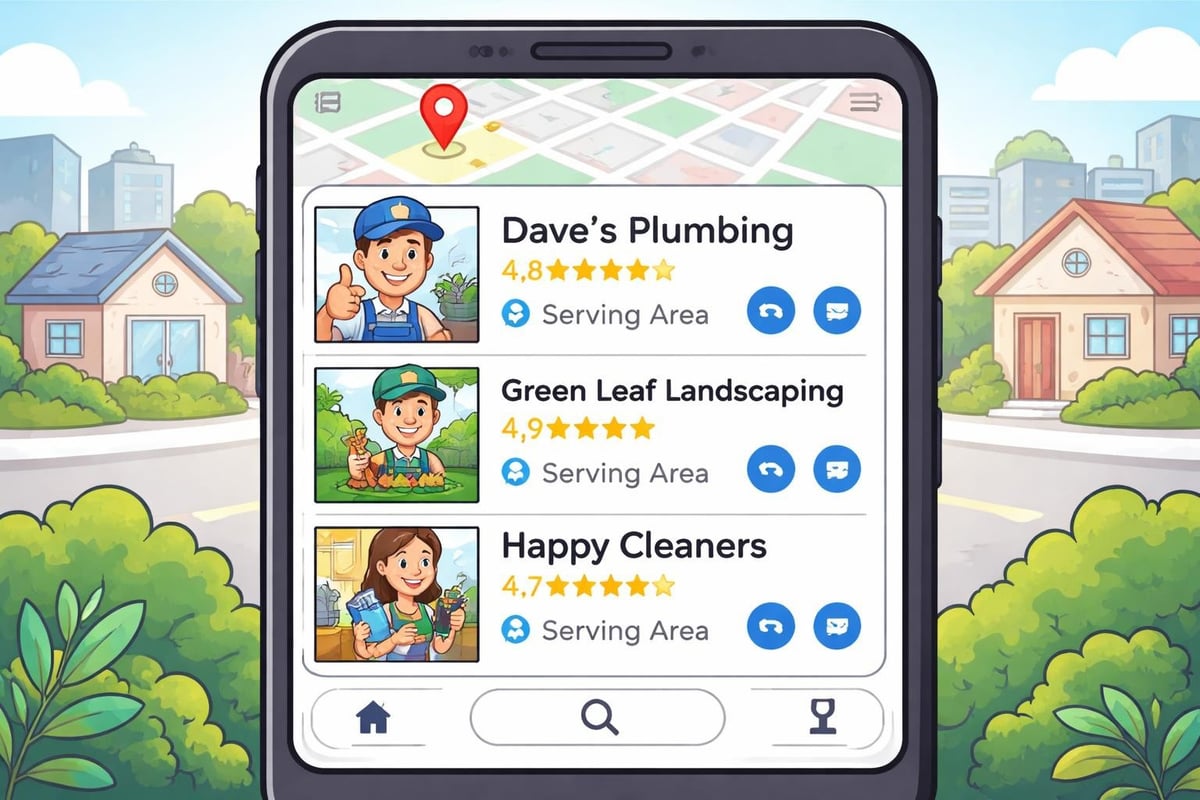
The beauty of local SEO for home services is that you're competing in your specific service area, not against every contractor in the country. A well-optimized plumber in Philadelphia only needs to outrank other plumbers in Philadelphia, making the competition more manageable and the results more achievable.
Optimizing Your Google Business Profile for Maximum Visibility
Your Google Business Profile (formerly Google My Business) is the single most important element of your local SEO strategy. This free tool controls how your business appears in Google Search and Maps, and it's often the first impression potential customers get.
Setting Up Your Profile Correctly
Getting the basics right sets the foundation for everything else. Start with these essential elements:
- Claim and verify your business through Google's verification process
- Choose the most specific categories for your services (primary and secondary)
- Add your complete service area including all cities and zip codes you cover
- Upload high-quality photos of your team, trucks, completed projects, and before/after shots
- Write a compelling business description that includes your services and areas
Your business name, address, and phone number (NAP) must be identical everywhere online. Even small variations like "St." versus "Street" can confuse Google and hurt your rankings.
The Power of Posts and Updates
Google Business Profile posts work like mini-advertisements that appear directly in your listing. We recommend posting at least once per week about:
- Special promotions or seasonal discounts
- New services you're offering
- Helpful tips for homeowners
- Community involvement or charity work
- Emergency service availability
| Post Type | Best For | Frequency |
|---|---|---|
| Offers | Seasonal promotions, limited-time deals | Monthly |
| Updates | New services, expanded areas | As needed |
| Events | Open houses, community events | Per event |
| Tips/How-to | Educational content, maintenance advice | Weekly |
Posts stay active for seven days, so consistent posting keeps your profile fresh and engaging. This signals to Google that you're an active, trustworthy business worth showing to searchers.
Building Local Citations That Boost Your Rankings
Local citations are online mentions of your business name, address, and phone number. They act like votes of confidence, telling Google that your business is legitimate and established in your community.
The most powerful citations come from authoritative directories and industry-specific platforms. For home service businesses, prioritize these directories:
- Yelp
- Angie's List (now Angi)
- HomeAdvisor
- Thumbtack
- Better Business Bureau
- Chamber of Commerce
Consistency is everything here. Make sure your NAP information matches exactly across every single listing. Effective citation management requires regular audits to catch and fix any discrepancies that pop up.
Industry-Specific Directories Matter
Beyond the big general directories, look for niche directories specific to your trade:
- HVAC contractors: ACCA, Air Conditioning Contractors of America
- Plumbers: Plumbing-Heating-Cooling Contractors Association
- Electricians: National Electrical Contractors Association
- Landscapers: National Association of Landscape Professionals
These specialized citations carry extra weight because they demonstrate expertise in your specific field. They're also where serious customers often search when they want qualified professionals.
Creating Location-Specific Website Content
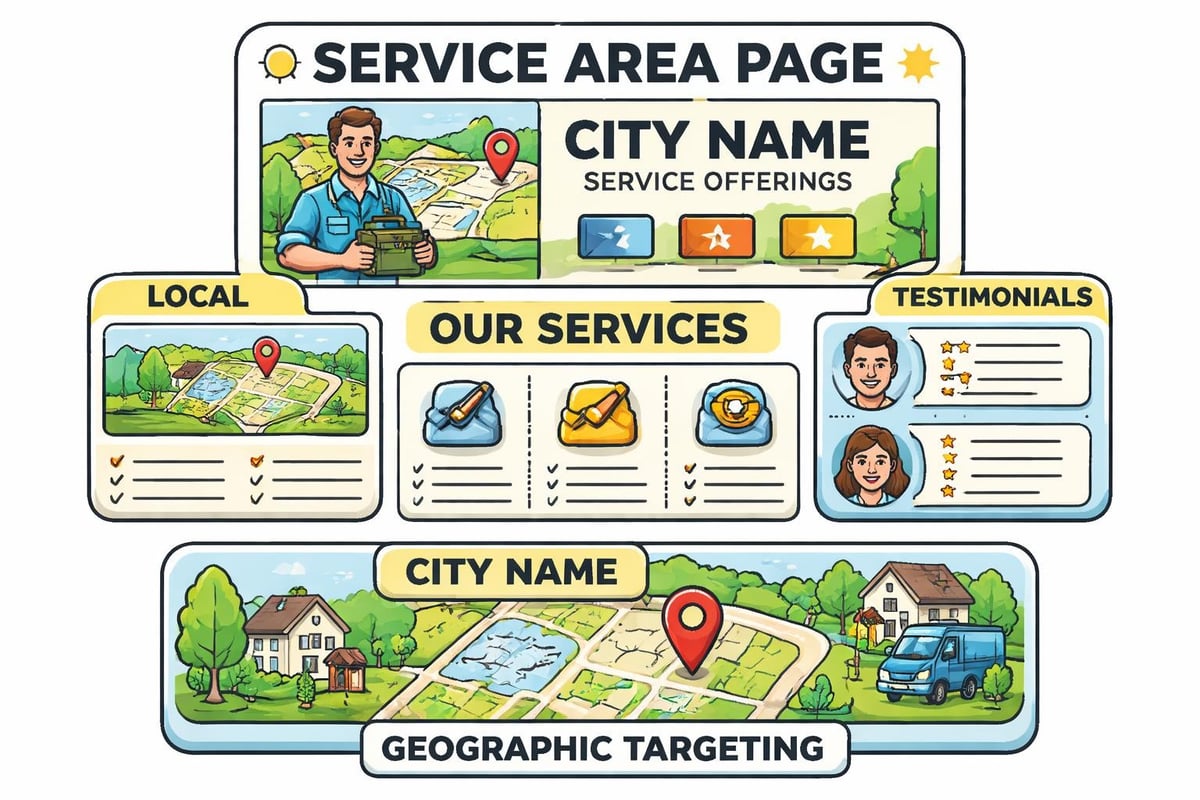
Your website needs dedicated pages for each service area you cover. A single homepage trying to rank for ten different cities simply won't compete with competitors who have dedicated pages.
Structure your location pages with this framework:
- Unique, valuable content about serving that specific area
- Local landmarks and neighborhood references
- Testimonials from customers in that city
- Service area map showing coverage
- Local phone number if available
Avoid these common mistakes:
- Cookie-cutter pages with just the city name changed
- Thin content under 300 words
- No local relevance or community connection
- Missing schema markup for local business
When you're creating content strategy across multiple locations, working with specialists who understand bespoke SEO services ensures each page gets the attention it deserves rather than using generic templates.
Service-Specific Pages That Convert
Beyond location pages, you need detailed pages for each service you offer. Don't lump "plumbing services" into one page. Create separate, comprehensive pages for:
- Emergency plumbing
- Drain cleaning
- Water heater installation
- Sewer line repair
- Bathroom remodeling
Each page should target specific keywords like "water heater installation in [city]" and provide genuine value to readers. Answer their questions, explain your process, showcase your expertise, and make it easy to request service.
Earning and Managing Customer Reviews
Reviews are the lifeblood of local SEO for home services. They influence both your rankings and your conversion rates. Google wants to show businesses that real people trust, and reviews are the clearest signal of that trust.
Here's what the numbers tell us: businesses with higher ratings and more reviews consistently outrank competitors with fewer reviews. According to consumer behavior research, 88% of consumers trust online reviews as much as personal recommendations.
Building a Review Generation System
You need a consistent process for asking satisfied customers to leave reviews:
- Time it right: Ask within 24-48 hours after completing the job
- Make it easy: Send a direct link to your Google Business Profile
- Be specific: "We'd love if you could share your experience on Google"
- Follow up: Send one gentle reminder if they haven't left a review
- Thank everyone: Respond to every review, positive or negative
| Review Platform | Priority Level | Why It Matters |
|---|---|---|
| Critical | Directly impacts local pack rankings | |
| Yelp | High | Popular for home services, influences rankings |
| Medium | Social proof, easy for customers | |
| Industry sites | Medium | Targeted audience, credibility boost |
Never buy fake reviews or offer incentives for positive reviews. Google's getting smarter at detecting manipulation, and the penalties aren't worth the risk.
Responding to Reviews Professionally
Every review deserves a response, and how you handle negative reviews shows your character. When responding:
- Thank customers by name when possible
- Address specific points they mentioned
- For negative reviews, apologize and offer to make it right
- Keep responses professional and never defensive
- Show your personality and authenticity
Think of review responses as content that future customers will read. A thoughtful response to a complaint can actually build more trust than a glowing review without a response.
Optimizing for Mobile and Voice Search
Most people searching for home services are on their phones, often in urgent situations. Your website needs to load fast, display perfectly on mobile devices, and make it incredibly easy to call you.
Mobile optimization checklist:
- Page load speed under 3 seconds
- Click-to-call phone number prominently displayed
- Simple, mobile-friendly forms
- Easy navigation with large, tappable buttons
- No intrusive pop-ups that block content
Voice search is changing how people find local services. Instead of typing "plumber Philadelphia," they're asking "Hey Google, who's the best plumber near me?" This means your content needs to answer questions naturally.
Structure content to answer common questions:
- "How much does [service] cost in [city]?"
- "Who provides emergency [service] near me?"
- "What's the best [service] company in [area]?"
- "When should I replace my [system]?"
Creating FAQ sections with natural, conversational answers helps capture voice search traffic. Learning from Moz’s local SEO insights shows how structured data and question-based content improve voice search visibility.
Building Local Links That Matter
Link building for local SEO focuses on quality over quantity. You want links from locally relevant, authoritative sources that make sense for your business.
Community Involvement Creates Natural Links
The best local links come from genuine community participation:
- Sponsor local sports teams or school events
- Partner with complementary local businesses
- Host or participate in community events
- Offer expertise to local news outlets
- Join and actively participate in business associations
When you sponsor the local Little League team, you get a link from their website. When you offer tips to the local news about preparing homes for winter, they link to your site. These authentic, locally relevant links carry significant weight.
Strategic Partnerships
Look for partnership opportunities with businesses that serve the same customers but aren't competitors:
- HVAC companies partnering with electricians
- Plumbers partnering with home remodelers
- Landscapers partnering with pool companies
- Roofers partnering with gutter installers
Create content together, refer customers to each other, and exchange links naturally. Google values these relevant, contextual links far more than directory spam.

Technical SEO Elements for Local Success
Technical SEO might sound intimidating, but several elements are crucial for local rankings. You don't need to be a developer to get these right, but they do require attention.
Schema Markup for Local Business
Schema markup is code that helps search engines understand your business information better. For home service businesses, implement:
- LocalBusiness schema on your homepage
- Service schema for each service page
- Review schema to display star ratings in search
- Geographic schema for service areas
Most website platforms have plugins or tools that make adding schema relatively straightforward. The payoff is better visibility in search results with rich snippets that stand out.
Service Area Configuration
If you serve customers at their locations rather than having them visit your office, configure your Google Business Profile as a Service Area Business (SAB). This lets you:
- Hide your street address if you don't have a public-facing office
- Define multiple service areas by city or zip code
- Appear in search results across your entire service region
Be specific but realistic about your service areas. Claiming you serve areas you don't actually cover can backfire when customers complain about unavailability.
Tracking and Measuring Your Local SEO Success
You can't improve what you don't measure. Tracking the right metrics shows what's working and where you need to adjust your strategy.
Key metrics to monitor monthly:
- Google Business Profile insights (views, clicks, calls, direction requests)
- Organic traffic from local search terms
- Keyword rankings for priority local terms
- Review quantity and average rating
- Phone calls and form submissions from organic search
- Conversion rate from local landing pages
| Metric | What It Tells You | Target Goal |
|---|---|---|
| Local pack rankings | Visibility in map results | Top 3 positions |
| Calls from GBP | Direct response from profile | Month-over-month increase |
| Organic local traffic | SEO effectiveness | 15-25% annual growth |
| Review velocity | Customer satisfaction & advocacy | 5-10 reviews/month |
Set up Google Analytics to track goals like phone calls, form submissions, and online bookings. Connect your Google Business Profile to your website so you can see the full customer journey.
Many home service businesses benefit from working with specialists who can provide comprehensive SEO audit services to identify technical issues and opportunities they might miss on their own.
Creating Content That Attracts Local Customers
Content marketing for local SEO isn't about writing for search engines. It's about creating genuinely helpful resources that establish you as the trusted expert in your area.
Blog Topics That Drive Local Traffic
Focus your blog content on topics your customers actually search for:
- Seasonal maintenance guides (winterizing pipes, preparing AC for summer)
- Common problem troubleshooting (why is my drain slow, what's that noise in my furnace)
- Cost guides for your area (what does [service] cost in [city] in 2026)
- Before/after project showcases from local jobs
- Local building codes and permit requirements
Each post should target a specific keyword phrase but prioritize being helpful over keyword stuffing. When you answer questions thoroughly, people share your content, link to it, and remember your business when they need services.
Video Content for Local Engagement
Video is incredibly powerful for home service businesses. Create short, helpful videos showing:
- Quick maintenance tips homeowners can do themselves
- What to expect during a service call
- Before/after transformations of local projects
- Meet the team introductions
- Customer testimonial videos
Post these on YouTube with local keywords in titles and descriptions, embed them on relevant website pages, and share them on your Google Business Profile. Video content often ranks in regular search results and appears in video search, giving you multiple visibility opportunities.
Competitive Analysis and Market Positioning
Understanding what your local competitors are doing helps you find opportunities they're missing. Conduct regular competitive analysis to see:
- Which keywords they rank for that you don't
- Their Google Business Profile optimization level
- Quality and quantity of their reviews
- Their content strategy and blog topics
- Their backlink profiles
Don't just copy what competitors do. Look for gaps where they're weak and you can dominate. Maybe they have terrible reviews and you can win on customer service. Maybe they don't have location pages for areas you serve. Maybe their website loads slowly and you can win on user experience.
Position yourself as the premium choice, the emergency specialist, the family-owned local business, or whatever angle genuinely represents your strengths. Similar to how SEO for lawyers requires unique positioning, home service businesses need clear differentiation.
Seasonal Strategies for Year-Round Success
Home services experience seasonal fluctuations. Smart local SEO for home services means preparing for peak seasons and maintaining visibility during slow periods.
Plan content and promotions around seasonal demand:
- HVAC: Prepare AC content in early spring, heating content in early fall
- Landscaping: Spring cleanup in late winter, fall cleanup in late summer
- Plumbing: Frozen pipe prevention in fall, outdoor plumbing in spring
- Roofing: Storm damage content before severe weather seasons
During slow seasons, focus on maintenance services and preventive care. Create content that educates customers about year-round needs rather than just emergency repairs.
Adjust your ad spending and SEO focus based on what services are in demand. If you offer both heating and cooling, shift your keyword targeting and content promotion as seasons change rather than trying to rank for everything equally all year.
Implementing effective local SEO for home services takes time, consistency, and expertise, but the payoff is substantial when you're showing up exactly when customers need you most. Whether you're just starting your local SEO journey or looking to take your current rankings to the next level, having an experienced partner makes all the difference. Shawn the SEO Geek specializes in helping home service businesses dominate their local markets with customized strategies built on two decades of proven results. Ready to turn local searches into booked appointments? Let's talk about your specific goals and build a strategy that delivers real growth.